
National Batik Day: Pertamina Creates Opportunities for Creativity and Economic Independence
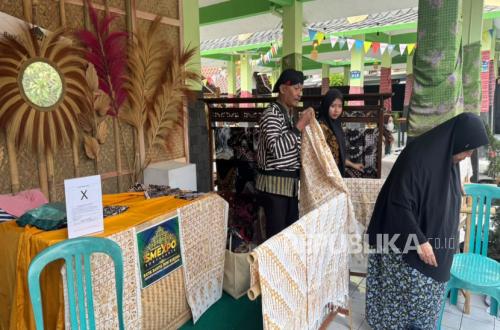
A piece of batik cloth holds more than just motifs and colours. Behind every stroke of the canting tool, there is skill, creativity, and the hope of building a more independent life.
This is the spirit that Pertamina continues to uphold through the empowerment of MSMEs engaged in batik crafts, including creating spaces for persons with disabilities to work and develop their potential. To commemorate National Batik Day on 2 October, PT Pertamina (Persero) continues to drive the growth of batik MSMEs across various regions.
Currently, 428 batik MSMEs are part of Pertamina’s empowerment programme, which includes assistance in strengthening business capacity, product development, and expanding market access. For some of these empowered MSME players, batik has even become a space to create more inclusive employment opportunities.
In Bantul, Yogyakarta, for example, Roona Batik, managed by Muhammad Syaucal, has grown into a fashion business with a production capacity of approximately 5,000 pieces per month and a monthly turnover of IDR 100 million. Of the 18 workers involved, some are persons with disabilities who play an active role in the production process.
A similar story is found at Batik Jinggar in Yogyakarta. This MSME, managed by Vitalia Noor Darmaningsih, does not only develop batik as a fashion product but also introduces innovation through motifs and designs. With a monthly turnover of around IDR 100 million, Batik Jinggar employs eight workers, including two persons with disabilities.
Meanwhile, in Riau, Canting Batik Tulis Riau, managed by Novita Hermawan, develops hand-drawn batik by highlighting local cultural richness. This business records a monthly turnover of approximately IDR 150 million and employs eight workers, five of whom are persons with disabilities.
Efforts to create workspaces for persons with disabilities are also carried out through the Sriekandi Patra programme in Boyolali, Central Java. This programme develops batik skills while simultaneously promoting the economic and social independence of its participants. The Sriekandi Patra group now possesses its own workshop, equipment, and business capital. The products generated are not limited to batik and Boyolali’s signature souvenirs, but have also been developed into batik education packages and collaborations with designers.
The Vice President of Corporate Communication at PT Pertamina (Persero), Muhammad Baron, stated that MSME empowerment is not only directed towards increasing business capacity but also towards how businesses can serve as spaces for the community to grow and become self-sufficient.
“For Pertamina, batik is an example of how cultural preservation can go hand-in-hand with community economic empowerment. We want to ensure that more people, including persons with disabilities, have the opportunity to create, earn an income, and develop their businesses,” said Baron.
According to Baron, the involvement of persons with disabilities in the MSME ecosystem demonstrates that inclusivity can grow from economic activities that are close to the community.
“When skills meet opportunity and market access, batik becomes more than just a cultural product; it becomes a path towards independence. This is the spirit we continue to encourage through Pertamina’s MSME empowerment,” he added.
These efforts align with Pertamina’s commitment as a state-owned energy company to support community empowerment, the creation of quality jobs, entrepreneurship development, and the strengthening of the creative industry. Through sustainable empowerment, Pertamina continues to encourage MSMEs to not only maintain cultural heritage but also to scale up, expand their markets, and create broader economic benefits.