
National agricultural revolution from Gorontalo's paddy fields
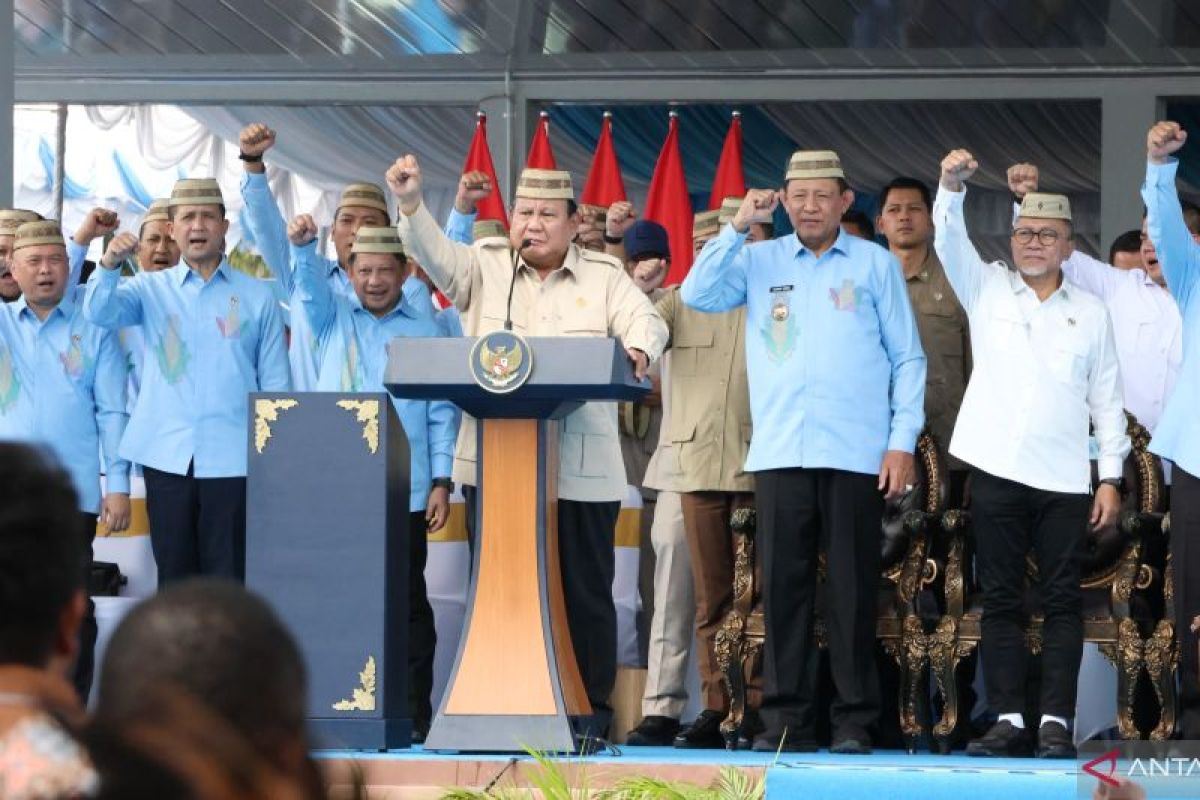
Amidst the expanse of paddy fields in Gorontalo Regency on Wednesday (24/6), President Prabowo Subianto chose not to simply stand on stage delivering a speech to the thousands of farmers and fishermen attending the 17th National Week of the Farmers and Fishermen Contact Association (PENAS KTNA). He opted to go directly into the rice paddies to witness a planting method different from the practices commonly applied across most of Indonesia’s agricultural land.
At the location, Prabowo observed a demonstration of the Modern-Advanced Agriculture System (PM-AAS), a cultivation approach being developed by the Ministry of Agriculture to increase rice productivity. The system’s name may not yet be familiar to many farmers. However, the figures accompanying it are attracting attention. From an average productivity of around five to six tonnes of unhusked rice per hectare, PM-AAS is claimed to be able to boost yields to more than 10 tonnes, even reaching 12.4 tonnes per hectare in several field trials.
For the government, such a productivity increase is not merely a matter of statistics. Amid the need to maintain national food security and reduce dependence on imports, every additional tonne of unhusked rice holds strategic significance. “What previously produced 5 tonnes of unhusked rice can now produce more than 10 tonnes, 12 tonnes. That means our productivity has increased by 100 percent,” Prabowo told reporters on the sidelines of the PENAS XVII event.
The statement also illustrates the policy direction being built by the government. With national rice production continuing to rise over the past two years, the government is now looking to the next stage: sustaining that increase and driving productivity higher over time. PM-AAS is one of the instruments being prepared to achieve that goal.
This system is not a technology wholly imported from abroad. Minister of Agriculture Andi Amran Sulaiman explained that PM-AAS is the result of nearly two years of research and field testing, combining cultivation experience in Indonesia with modern agricultural practices from several countries. Its primary foundation remains the jajar legowo planting system, which has been known to Indonesian farmers for generations. Building on that foundation, the Ministry of Agriculture adopted several cultivation techniques studied from Arkansas in the United States, as well as precision agriculture approaches developed in China.
From this combination emerged three main principles of PM-AAS: optimising the photosynthesis process through planting distance arrangements using 4:1 and 6:1 patterns, gradually increasing plant populations within a single plot, and applying precision agriculture to make the use of seeds, fertiliser, and water more efficient. At the field level, this approach is realised through direct seeding methods with a much denser plant population compared to conventional patterns, while still maintaining space for sunlight and air circulation. Plant density can increase by two to three times, while fertiliser dosage is adjusted to approximately one and a half times the standard recommendation to ensure the plants’ nutritional needs are met.
This approach brings yield increases that do not rely solely on expanding land area. Productivity can also be driven through engineering a more efficient cultivation system, provided the characteristics of the plants and environmental conditions are taken into account. To test its effectiveness, the Ministry of Agriculture has assigned the Agency for Agricultural Assembly and Modernisation (BRMP) as the main executor of PM-AAS development. A total of 15 provincial-level BRMPs are now running various demonstration plots in several regions. Banten has become the third province to carry out initial planting with a target area of 100 hectares. Meanwhile, in South Kalimantan, development is underway in Tabalong Regency covering 60 hectares and Barito Kuala Regency covering 50 hectares. These demonstration plots serve as field laboratories to see how the same technology adapts to different agroecosystem conditions. Nevertheless, PM-AAS is not the main cause of the current increase in national rice production.