
Nation Paralyzed by Flash Floods, WhatsApp Groups Become Lifeline
A group of technology and civil engineering experts has suddenly become the frontline of rescue efforts in Nepal. Through a specialised WhatsApp group, they are guiding evacuation teams as they struggle to search the dark passages deep underground, searching for survivors trapped in hydroelectric power plant (PLTA) tunnels following devastating flash floods.
This emergency messaging group was essentially formed by local engineers just before walls of water, mud, and rocks struck the Trishuli Valley region in Nepal on Wednesday (26/8). Over time, the WhatsApp group has transformed into a tactical command centre as crucial as helicopters and heavy machinery on the ground.
Local authorities suspect that some of the approximately 900 people reported missing from six power plant complexes—three of which are still under construction—managed to survive the deadly onslaught by taking shelter inside tunnels when the disaster struck.
However, simply locating the tunnel entrances has become a massive challenge. The floods have disgorged 2.2 million tonnes of mud and debris, completely altering the geographical contours of the valley.
“Can you send the layout image for Chilime?” wrote a government official in the engineers’ WhatsApp group as SAR teams searched the ruins of the Chilime power plant, buried in the Himalayan highlands near the Chinese border, according to Reuters.
Shortly after, one of the 500 members of the expert group immediately sent a blueprint of the powerhouse along with detailed maps of underground evacuation routes. This digital conversation has become vital navigation for teams in the red zone.
To date, no signs of life have been found within the 22-megawatt (MW) Chilime power plant tunnels or other facilities downstream. Nevertheless, the Nepal Independent Power Producers Association indicates that at least eight people remain trapped at Chilime, while the Nepal Electricity Authority stated that 46 lives are feared trapped at the Rasuwagadhi power plant in the southern region.
“The floods have changed the terrain contours around the tunnels and damaged their original structures, while mud, rocks, and debris have accumulated inside,” said Nepal Army spokesperson Raja Ram Basnet.
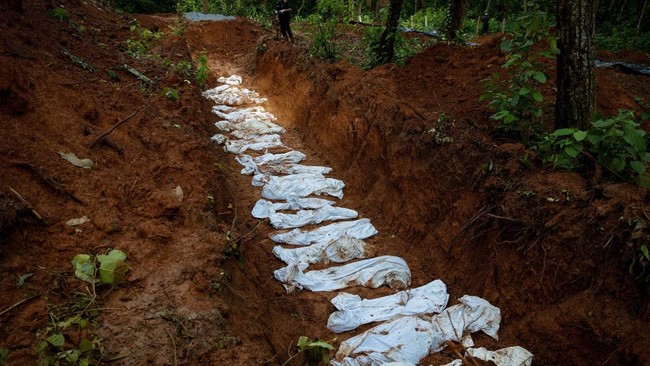
The flash flood disaster, triggered by a glacier collapse, has claimed over 1,200 lives, while 4,000 others remain missing. The tragedy has also paralysed 10% of Nepal’s total national power generation capacity.
At the Rasuwagulating power plant, rescue teams managed to push 250 metres into the tunnels before hitting a wall of total sediment blockage.
“We are working to reach back inside to search for victims,” said Amshu Kiran Shahi of the Nepal Electricity Authority’s Board of Directors, who believes dozens of workers may be surviving in underground air pockets that still have logistical reserves.
Project managers have also utilised the WhatsApp group network to contact former workers to map the labyrinth of tunnels that have changed shape. At the Upper Trishuli 3A power plant project, rescue teams had to work for six days just to clear the tunnel entrance buried by landslides and supply oxygen through pipes to maintain hope for victims potentially trapped in narrow cavities.
Behind this massive operation, dramatic rescue stories are emerging. Jan Jiwan Thakur, a civil engineer at Upper Trishuli 1, escaped death after receiving an early warning mere seconds before a wave of mud hit his office. Alongside 100 colleagues, he ran up the hillside, watching his workplace levelled to the ground within minutes.
Meanwhile, the families of the victims are left clinging to a glimmer of hope. Rajesh Shrestha, the father of an environmental engineer named Rajish (30) who went missing at Upper Trishuli 1, continues to watch the road outside his house.
“Every time I look outside, I imagine seeing him carrying his bag and coming home,” Shrestha said softly. “I survive only on the hope that he will return.”