
Nation in Chaos Following Massive Fuel Price Hikes; Government Reverses Course
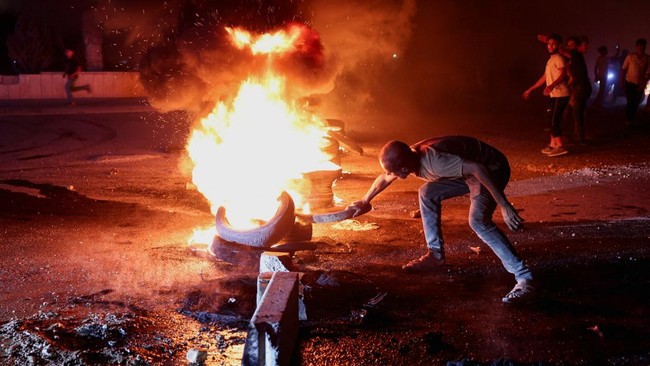
The Syrian government has decided to lower diesel prices for heating, agriculture, and the industrial sector several days after fuel price hikes triggered the largest wave of demonstrations since the fall of the Bashar al-Assad regime.
According to Reuters on Friday (18/09/2026), Syrian Energy Minister Mohammed al-Bashir stated that the policy is a government move to ease pressure after fuel price increases last weekend sparked protests across various regions. Protesters burnt tyres, blocked roads, and demanded the reversal of the price hikes.
According to United Nations (UN) estimates, approximately 90% of the Syrian population lives below the poverty line.
Bashir stated that the government will implement three diesel prices: 115, 150, and 175 Syrian pounds per litre. The specific price will be determined based on the fuel specifications and the sector using it.
This decision was made after Bashir met with President Ahmed al-Sharaa on Wednesday night to discuss the fuel crisis currently facing the country.
The government had previously increased the price of standard diesel by 40% on Saturday, from 125 to 175 Syrian pounds per litre. Simultaneously, petrol prices surged by approximately 26%-28%, while gas prices for households and industry rose by about 9%.
Bashir explained that diesel produced in domestic refineries will be sold at 115 pounds per litre. This special price applies to heating, agriculture, and other eligible users.
Meanwhile, a second type of diesel, obtained with assistance from what Bashir referred to as “friendly nations,” will be sold at 150 pounds per litre. This type of diesel is intended for productive sectors, services, and heavy vehicles or machinery.
Standard diesel will remain at 175 pounds per litre. The government has not changed the prices of petrol and gas.
Bashir noted that the government is still selling standard diesel below its production cost. According to him, that cost reaches 206 pounds per litre. However, the government has not yet explained the scale of the budget required for these subsidies or how long the policy will be maintained.
In addition to the pricing policy, the government also plans to revive several small electric oil refineries known in Syria as “burners.” These refineries have a combined crude oil processing capacity of up to 35,000 barrels per day (bpd).
The management of these refineries will fall under the Syrian Petroleum Company (SPC).
SPC CEO Youssef Qablawi stated that the company is preparing an implementation plan to restart these facilities. The fuel produced will be distributed through designated filling stations.
The announcement of the diesel price reduction was made on the same day Bashir was scheduled to face a parliamentary session regarding the fuel price hike decision.
However, Parliament agreed on Wednesday to postpone the session until Sunday at the request of the Ministry of Energy. The government requested additional time to prepare after MPs expanded the session’s agenda from solely discussing fuel to including oil, electricity, water, and mining.
Bashir previously stated that the temporary closure of the Baniyas refinery for major maintenance has made Syria more dependent on more expensive fuel imports. Once work is completed, the refinery’s processing capacity is expected to increase to approximately 130,000 barrels per day.
Energy price pressures in Syria have risen sharply since the beginning of the year. Since February, before the war in Iran drove global energy prices up, diesel prices in Syria have more than doubled. During the same period, 95-octane petrol prices increased by about 86%.
Meanwhile, Brent crude oil prices rose by approximately 44% during the same period.
Source: jawawa.id (https://jawawa.id/newsitem/nation-in-chaos-following-massive-fuel-price-hikes-government-reverses-course-1789728763)
Originally published by CNBC Indonesia (https://www.cnbcindonesia.com/news/20260918151410-4-769070/negara-chaos-usai-bbm-naik-gila-gilaan-pemerintah-langsung-balik-arah), translated from Indonesian