
NasDem to develop sugar palm cultivation in Maluku to support food security
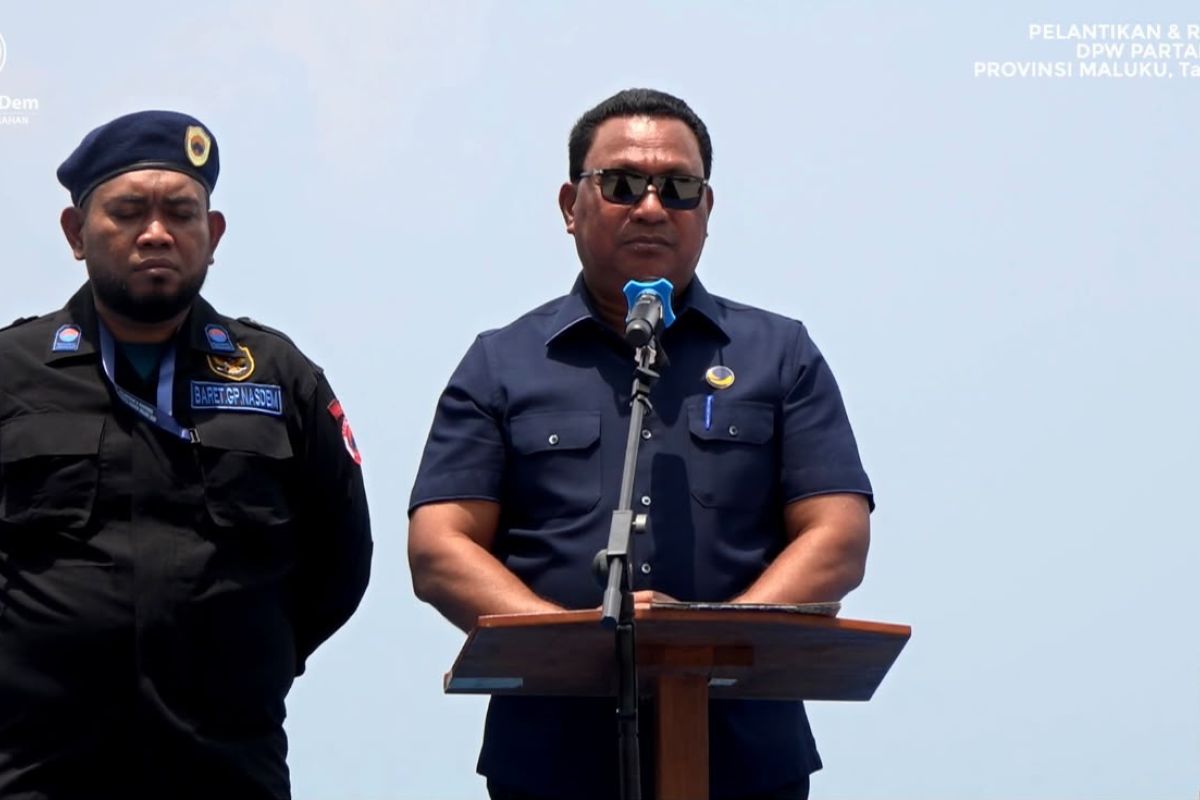
Jakarta (ANTARA) - The Chairman of the NasDem Party Maluku Regional Leadership Council (DPW), Abdullah Vanath, has expressed support for the food security programme initiated by President Prabiente Subianto through the development of the agricultural sector in Maluku, following the directives of General Chairman Surya Paloh.
One of the targeted commodities is the sugar palm (aren) plant. Abdullah believes that the development of sugar palm can act as an economic driver for the community while simultaneously helping to reduce poverty rates in Maluku.
In a statement received in Jakarta on Monday, he said that NasDem Maluku will encourage this development through the NasDem farmers’ wing organisation.
Sugar palm, he noted, can produce economically valuable products such as powdered and liquid palm sugar intended for export markets.
“This has been my ambition from the beginning. We will diversify the sap produced from sugar palm plants into powdered and liquid palm sugar, which we will then export to markets including Europe, Eastern Europe, and Arab regions,” he said.
Abdullah noted that sugar palm trees are highly resilient to dry seasons because their roots can penetrate the soil to depths of more than 12 metres. He believes this potential can be developed more extensively across Maluku.
He illustrated that if every village had farmers developing sugar palm trees, the economic circulation from sap production could potentially provide additional income for the community.
“Maluku consists of 1,200 villages. We have calculated that a sugar palm tree can produce at least 15 litres of sap per day. If a person has just three trees in one village, across Maluku’s 1,200-plus villages, the daily production would circulate money projected to reach almost half a trillion rupiah,” he said.
Furthermore, Abdullah stated that poverty alleviation is not solely the responsibility of the government. He argued that political parties must also play a role through concrete programmes that directly impact the community.
“I am firmly convinced that the task of reducing poverty among the Indonesian people is not the responsibility of the government alone. All organisations, including political organisations, must take responsibility for poverty alleviation in Indonesia,” said Abdullah.
Abdullah added that the development of the agricultural and fisheries sectors is part of NasDem Maluku’s strategy to promote community welfare while supporting food and energy security.
“If we can improve the welfare of farmers and fishermen through concrete steps that can be implemented, it would be equivalent to transforming poverty in Maluku into a better situation,” he concluded.