
NasDem Calls Circulating Impeachment Motion Against Gibran a Hoax
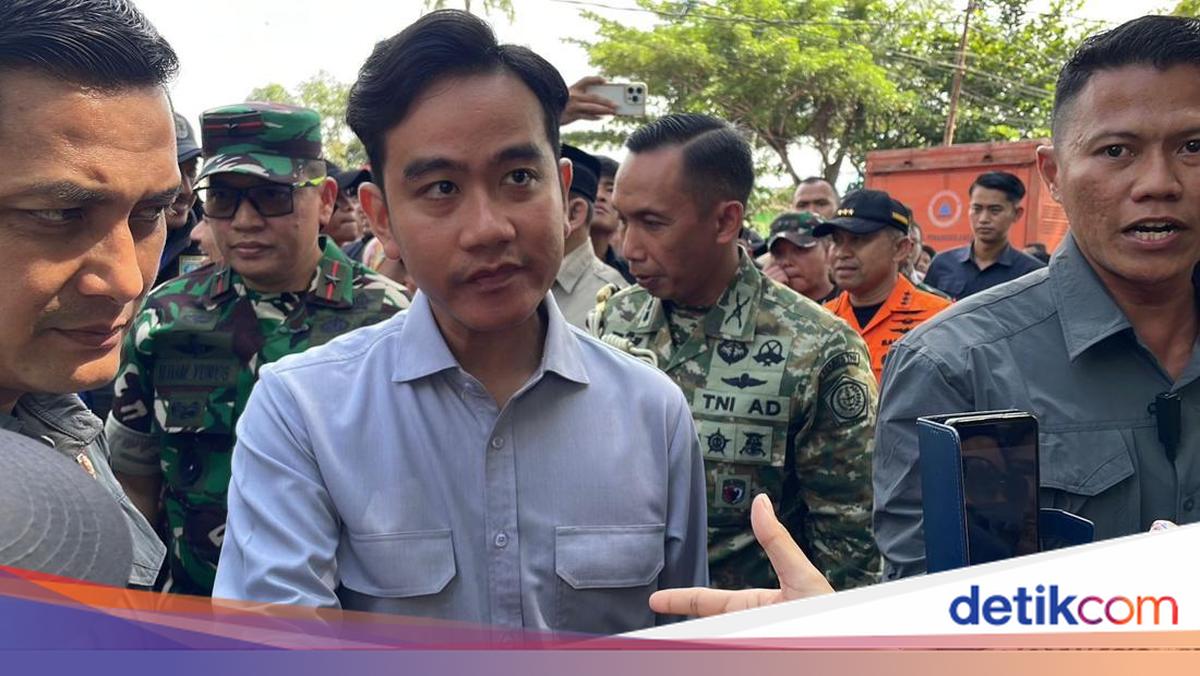
A letter proposing the impeachment of Vice-President Gibran Rakabuming Raka circulated following a Constitutional Court (MK) ruling. NasDem Party Treasurer-General Ahmad Sahroni said a motion attributed to Tonny Tesar, a member of the House of Representatives from NasDem’s faction, was false and a hoax.
According to the document, its proponents asked the House to follow up on the MK’s findings by removing Gibran as vice-president. Its reasoning stated that presidential and vice-presidential candidates must have completed at least senior secondary school or an equivalent level of education.
“To the leadership of the House of Representatives, we ask you to act immediately: bring this matter of principle before a plenary session of the House to exercise its oversight, interpellation, inquiry or right to express an opinion in order to investigate the administrative validity of Vice-President Gibran Rakabuming Raka’s nomination,” the document said, according to a copy seen on Thursday (8 October 2026).
“Process the proposal to remove (impeach) Vice-President Gibran Rakabuming Raka in accordance with the constitutional mechanism set out in the 1945 Constitution of the Republic of Indonesia and the House’s rules of procedure, and refer it to the Constitutional Court for a fair legal ruling,” it added.
Sahroni, who is also deputy chairman of House Commission III, said no such document existed and the report of an impeachment motion was a hoax.
“Hoax, hoax. It doesn’t exist, it doesn’t exist,” Sahroni said at the parliamentary complex in Senayan, Jakarta.
He said his party respected the Constitutional Court’s ruling. NasDem had not yet decided its position on the controversy over Gibran’s educational certificates and was waiting for direction from party chairman Surya Paloh.
“We respect the MK process. We haven’t received any direction from the chairman. We haven’t been called in. Perhaps later, yes, perhaps, but not yet. As of today, nothing. Things are still calm,” Sahroni said.
“We’ll wait for the chairman’s direction,” he added.
NasDem executive Irma Suryani Chaniago also denied the report separately, saying the information was untrue.
“Hoax,” Irma said.
Gibran and Jokowi respond
Gibran said he respected the Constitutional Court’s proceedings in a case in which the court found no evidence of a senior-secondary-school certificate equivalent in a challenge concerning the 2024 presidential election results. He said he would focus on helping deliver President Prabowo Subianto’s vision and programmes.
“We respect all the stages and processes at the MK. The most important thing now is that I continue to focus on working for the people and delivering the vision, mission and programmes of Mr President, our leader,” Gibran said, as quoted by Antara on Wednesday (7 October).
Asked about the court’s ruling that it could not disqualify him as vice-president despite the absence of evidence of a certificate or educational equivalency document, Gibran said he had continued to undergraduate study after completing education equivalent to senior secondary school.
“If I hadn’t completed senior secondary school, I wouldn’t have been able to go to university. I studied through to a bachelor’s degree in Singapore,” he said.
Indonesia’s seventh president, Joko Widodo (Jokowi), also commented on the finding that no senior-secondary-school or equivalent certificate for Gibran had been found. Jokowi said education systems differ from country to country, including the system Gibran followed at secondary-school level.
“Every country has a different education system. Here, the stages are primary school, junior secondary school, senior secondary school and university, or there are diploma programmes. Other countries have their own systems too,” Jokowi said at his home in Sumber, Banjarsari, as quoted by detikJateng on Thursday (8 October).
Jokowi said some systems allow students to progress from secondary school to university, while others offer a pathway programme before entry to a diploma or bachelor’s degree.
“There are systems like ours, with primary school, junior secondary school and then secondary school before university. But there are also systems that use a pathway programme before students enter diploma or bachelor’s degree courses. I think every country has a different system,” he said.