
NASA Telescope Could Fall Over Indonesia Today: How to Track It
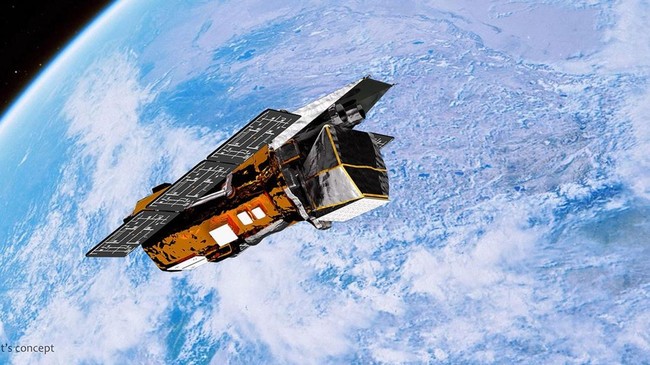
Jakarta, CNBC Indonesia — NASA’s Neil Gehrels Swift Observatory space telescope is expected to re-enter Earth’s atmosphere in the early hours of Wednesday, 4 November 2026. Any fragments that do not burn up completely could fall within a band stretching from 20.6 degrees south to 20.6 degrees north latitude, which includes parts of Indonesia.
Launched in 2004, the telescope has spent more than two decades observing gamma-ray bursts, black holes and some of the most powerful cosmic events. Friction with the upper atmosphere has gradually slowed its movement, while increased solar activity in recent times has accelerated its descent.
A US$30 million rescue effort, undertaken with the company Katalyst Space to raise it into a higher orbit, was attempted. However, the rescue craft, named LINK, experienced a control malfunction and the plan was abandoned.
On 20 October, Swift’s altitude fell below 275 kilometres and the satellite was declared out of service.
According to NASA’s calculations, debris that survives the burn-up could fall along a path crossing the equator, covering countries in South-east Asia, parts of Africa, Central America and areas of the Pacific Ocean. Indonesia lies within the possible re-entry zone.
NASA has stressed that the risk to people is very small, estimated at about one in 2,100. Most of the spacecraft is expected to disintegrate as it passes through the atmosphere, and any remaining debris is more likely to fall into the sea or sparsely populated areas.
How to track its movement
NASA does not provide a live tracking map, but the telescope can be monitored through:
NASA’s official blog: https://science.nasa.gov/blogs/swift — for periodic updates on the time and location of re-entry.
Satellite-tracking websites: enter NORAD ID 28485 on services such as Orbital Radar, N2YO or KeepTrack to see its real-time position and trajectory.
Space-Track.org: a US Air Force data portal that serves as a source of information for tracking services.
The re-entry time may change depending on atmospheric conditions. Its precise location will only be known shortly before the event.
Source: jawawa.id (https://jawawa.id/newsitem/nasa-telescope-could-fall-over-indonesia-today-how-to-track-it-1793775103)
Originally published by CNBC Indonesia (https://www.cnbcindonesia.com/tech/20261104120705-37-782205/teleskop-nasa-hari-ini-bisa-jatuh-di-wilayah-ri-begini-cara-pantau), translated from Indonesian