
NASA Satellite Falls to Earth and Burns Up over North Sumatra
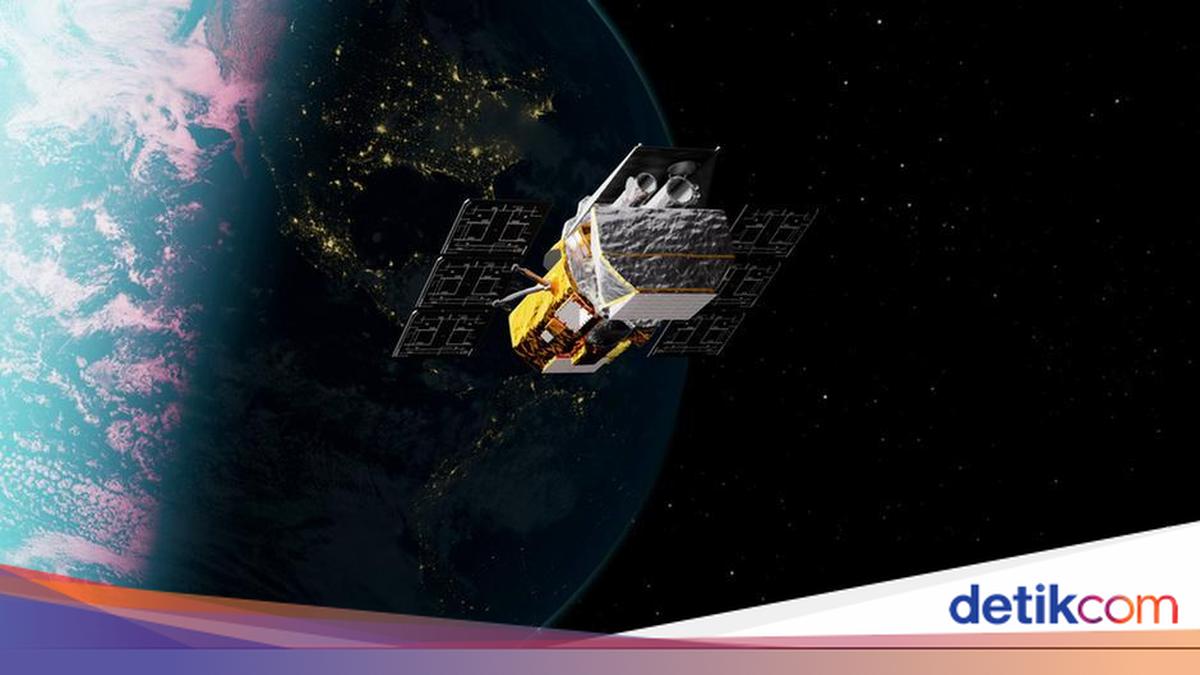
NASA’s Swift space telescope has been confirmed to have fallen and burned up in Earth’s atmosphere on Wednesday (4 November). The satellite, which spent two decades observing the universe’s most powerful energy bursts, entered the atmosphere over North Sumatra, Indonesia.
The US Space Force confirmed that the satellite re-entered the atmosphere at 07:39 local time in the United States (12:39 GMT). NASA said Swift was travelling at about 22 times the speed of sound as it entered the atmosphere above North Sumatra, around 322 kilometres north of the equator.
The satellite, named the Neil Gehrels Swift Observatory, weighed about 1,452 kilograms. NASA estimated that most of its body would burn up from frictional heat during re-entry, although some debris could reach the Earth’s surface.
NASA reported no damage or injuries caused by the falling satellite debris.
Low risk from falling debris
It is not known exactly how close the satellite’s re-entry point was to Medan, the capital and largest city in North Sumatra, which has a population of about 2.5 million. The province as a whole has around 16 million residents.
The US Space Force had previously estimated that the risk of debris falling in a populated area was very low. The chance of someone on Earth being injured in the incident was put at just one in 2,100.
Dean Sladen, an aerospace engineer at UK-based industrial components supplier Accu Components, said most satellites burn up before reaching the surface.
“Only a handful of small, charred fragments are expected to reach the surface; none will still be recognisable as a telescope,” Sladen said in an email before the satellite entered the atmosphere.
He said satellites of a similar size routinely re-enter Earth’s atmosphere. “In nearly 70 years of spaceflight, no one has ever been killed by falling satellite debris,” he said.
Sladen warned, however, that the risk of accidents caused by re-entering satellites could increase over the long term.
“That is why designing satellites so they can return to Earth safely is becoming increasingly important,” he added.
Two decades studying the universe’s energy bursts
Swift was a US$500 million (about Rp9.05 trillion) space telescope designed to study gamma-ray bursts, the most intense energy explosions known in the universe.
The observatory was equipped with three telescopes, allowing it to observe across different wavelengths.
Since its launch in 2004, Swift has also observed hundreds of supernova explosions, black holes destroying stars, X-ray flares from stars, asteroids and comets.
Its observations contributed to around 7,000 scientific publications. Swift officially ended operations on 20 October. The observatory’s mission was originally designed to last only two years, but it operated far beyond its initial term.
Without its own propulsion system, the satellite began experiencing orbital instability in recent months, until it eventually re-entered Earth’s atmosphere.
Attempt to save the satellite fails
Before Swift fell, NASA tried to extend its operational life through a rescue mission using a specially designed spacecraft.
In July, NASA and Arizona-based start-up Katalyst launched a spacecraft called LINK. Its mission was to approach Swift, attach itself to the satellite and pull it into a higher, more stable orbit.
However, LINK began spinning out of control soon after reaching space. In mid-August, mission managers called off the rescue attempt. NASA then allowed Swift to continue its journey back to Earth.
Swift’s fall on Wednesday marked the end of the observatory’s journey, which contributed to research into a range of high-energy phenomena in the universe over two decades.
Source: jawawa.id (https://jawawa.id/newsitem/nasa-satellite-falls-to-earth-and-burns-up-over-north-sumatra-1793944255)
Originally published by detikcom (https://news.detik.com/dw/d-8740940/satelit-nasa-jatuh-ke-bumi-terbakar-di-langit-sumatra-utara), translated from Indonesian