
NASA Satellite Burns Up in the Sky over North Sumatra
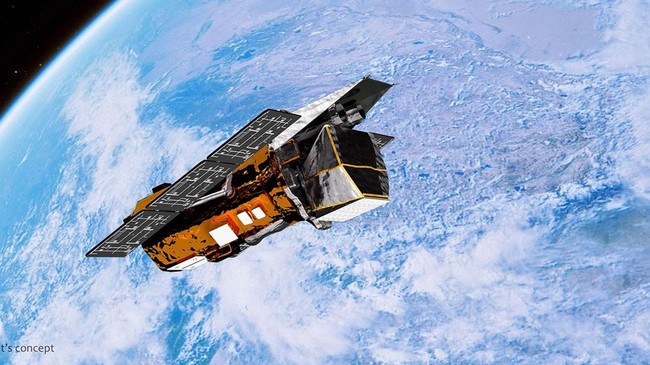
The life of NASA’s Swift space telescope satellite has come to an end. The 22-year-old satellite reportedly burned up in the sky over North Sumatra.
NASA said Swift re-entered Earth’s atmosphere at 7.39am EST (7.39pm WIB) on Wednesday, according to Live Science, cited on Friday (6 November 2026).
The US Space Force confirmed that the satellite re-entered the atmosphere at 7.39am local time in the United States (7.39pm WIB). NASA said Swift was travelling at about 22 times the speed of sound as it entered the atmosphere above North Sumatra, 322 kilometres north of the equator.
NASA estimated that there was only a small chance that satellite debris would fall in a populated area. No damage or casualties were reported.
The Neil Gehrels Swift Observatory is a spacecraft weighing 1,450kg. It was launched in November 2004 and was initially assigned a mission lasting just two years, but went on to operate for 22 years.
Swift has three telescopes for observing cosmic events across different wavelengths, including ultraviolet, optical and X-ray. The telescopes can turn to focus on different objects within minutes.
During more than two decades of operations, the satellite became an important tool for studying gamma-ray bursts, supernovae, black holes and a range of other phenomena.
NASA estimates that Swift has contributed to 7,000 research papers.
NASA had explored options to extend Swift’s operational life earlier this year. In August 2026, a robotic spacecraft developed by Katalyst Space Technologies attempted to push it into a higher orbit.
The mission failed after launch, leaving Swift on course to re-enter the atmosphere and burn up on Wednesday.
Source: jawawa.id (https://jawawa.id/newsitem/nasa-satellite-burns-up-in-the-sky-over-north-sumatra-1793940622)
Originally published by CNBC Indonesia (https://www.cnbcindonesia.com/tech/20261106093149-37-782870/satelit-nasa-jatuh-di-langit-sumatra-utara), translated from Indonesian