
NASA Reveals Why Forest Fires in Indonesia are Difficult to Extinguish
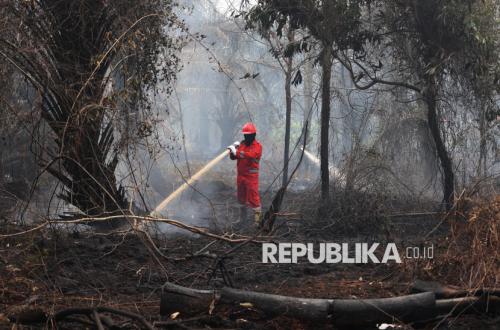
In an article published by the United States space agency (NASA) on Tuesday (1/9/2026), it was revealed that fires occurring in Indonesia take place in wet soil that dries out and burns slowly, leading to high levels of pollution. According to NASA, land fires in Indonesia are notoriously difficult to extinguish because they smoulder at low temperatures and often burn beneath thick deposits of peat.
According to NASA’s estimates, burning peat produces three times more particulate matter than tropical forest fires, five times more sulphur oxides, three times more organic carbon, and twice as much methane and carbon monoxide.
Peat fires present a significant challenge in Indonesia, which hosts 36 per cent of the world’s total tropical peatlands. As peat dries out due to prolonged dry seasons, Indonesia’s peatland landscapes have become fire-prone at various points over the last three decades, producing blankets of smoke for weeks and disrupting the activities of millions of citizens.
When fires occur annually in Indonesia—as seen during previous El Niño phenomena in 1997 and 2015—they have produced extreme heat in recent decades. Climate patterns, currently assessed by NOAA satellites and intensifying in August, typically trigger a sharp reduction in rainfall across Indonesia.
“Indonesia has only been in its fire season for three weeks, but we are seeing fire activity accelerating sharply, similar to 2015,” said Robert Field, a researcher from Columbia University.
“A strong El Niño makes the dry season drier across the most vulnerable regions of Indonesia and exacerbates the fires, just as we anticipated would happen,” added Field.