
NASA Reveals How Solar Activity Influenced Earth and Its Climate in the Past
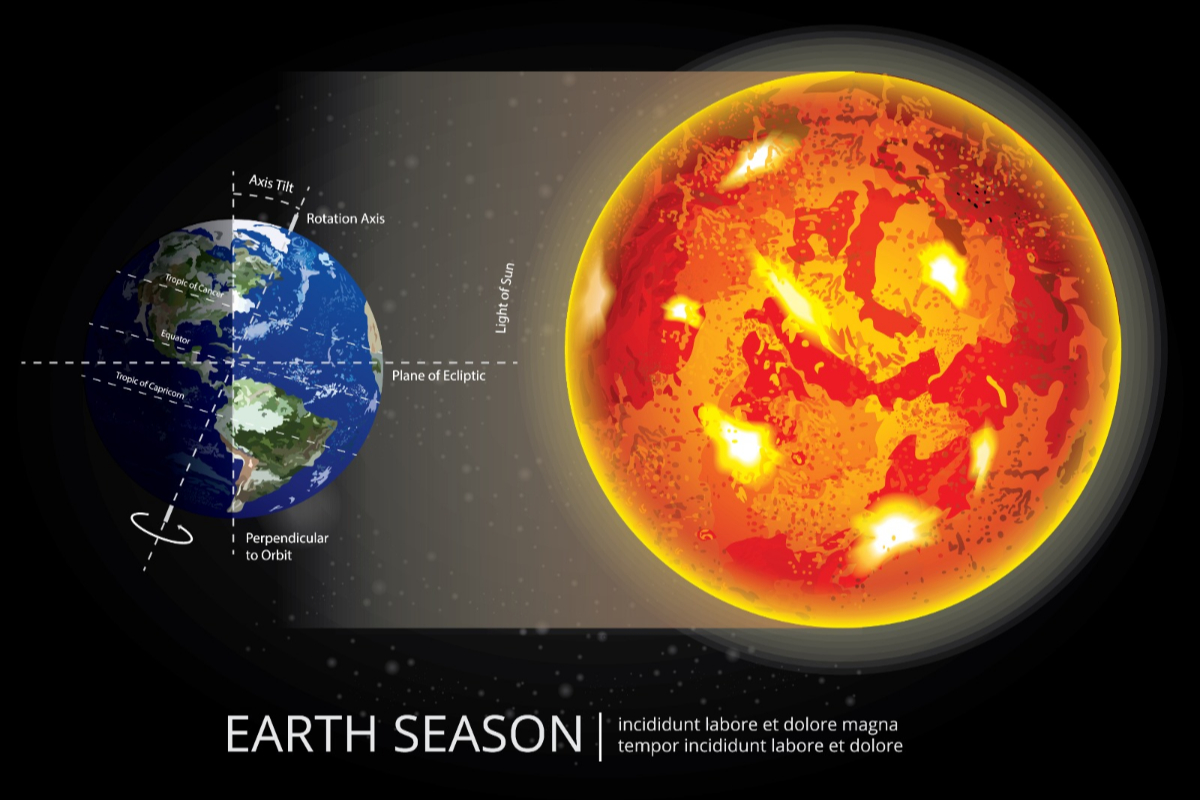
The Sun turns out to have a far more complex influence on Earth than simply providing light and heat.
Recent NASA-supported research reveals how solar activity and the solar system’s passage through the interstellar environment may have helped shape Earth’s conditions and climate in the past.
The findings come from two studies that traced the history of the Sun and its interactions with the space environment. They offer a new picture of the relationship between the Sun, the heliosphere, the atmosphere, and Earth’s conditions over billions of years.
One study focused on the heliosphere, the giant bubble formed by the solar wind and the Sun’s magnetic field. This structure acts as a shield for the solar system against some of the high-energy particles originating from outside it.
However, the size of the heliosphere has not always been constant. As the solar system travels around the centre of the Milky Way, the Sun can pass through interstellar regions with different densities and pressures.
Researchers found it likely that the solar system once passed through an interstellar cloud dense enough to compress the heliosphere significantly. In extreme conditions, the heliosphere could even shrink to a size smaller than Earth’s orbit.
If that occurred, Earth would potentially have been left outside the heliosphere’s protection and exposed to a greater interstellar environment. NASA says some of these events may have taken place millions of years ago.
Another study sheds light on a puzzle concerning Earth’s conditions around three billion years ago. At that time, the Sun is estimated to have had only about 70 percent of its current brightness.
In theory, a dimmer Sun should have made Earth much colder. Yet geological evidence shows the planet still had liquid water.
One possible answer is that the young Sun was far more active. High-energy particles from that activity are thought to have triggered chemical reactions in Earth’s atmosphere and produced greenhouse gases that helped maintain the planet’s temperature.
Although the Sun is the primary energy source for Earth’s climate system, NASA stresses that changes in solar activity are not the main cause of modern global warming.
Variations in solar energy can influence the climate, but the scale of those changes is not sufficient to explain the rise in global temperatures over recent decades.
The increase in greenhouse gases from human activity is the dominant factor in current global warming.
This research shows that the relationship between the Sun and Earth is far more complicated. By tracing the history of the Sun and its surrounding space environment, scientists can better understand how space conditions have influenced Earth’s atmosphere and environment throughout its history.