
NASA Rescue Craft Crashes Back to Earth
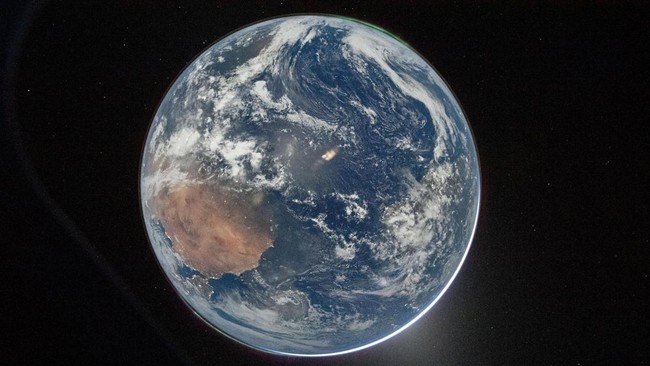
A privately manufactured spacecraft tasked with rescuing a NASA telescope has fallen back to Earth, less than three months after its launch. The mission, which cost US$30 million, ultimately ended without successfully assisting the 22-year-old telescope, according to a report by ABC News on Monday (28/9/2026).
The spacecraft, named Link and built by Katalyst Space Technologies, entered Earth’s atmosphere on Friday night and burned up upon re-entry. This ambitious rescue mission has ended in total failure.
Link was launched on 3 July 2026 with a noble task: to capture NASA’s Swift telescope, which has been operational since 2004, and push it into a higher orbit to allow for continued observation of the universe for several more years. The telescope had been gradually descending due to solar activity heating Earth’s atmosphere, increasing atmospheric drag.
However, problems emerged from the very beginning of the journey. Two of the three reaction wheels used to steer the spacecraft malfunctioned due to electrical system disturbances.
Subsequently, a faulty valve caused the spacecraft to spin rapidly, resulting in a loss of communication. Although control was eventually restored, too much fuel had been consumed, leaving insufficient power to complete the mission. In August, the mission was officially cancelled.
Despite failing to capture Swift, the control team utilised the remaining time for training. The one-metre robotic arm installed on Link was successfully operated, and the spacecraft managed to approach within 12-15 kilometres of the telescope to take photographs.