
NASA Prepares Mars Communication Network, Targeted to Operate by 2030
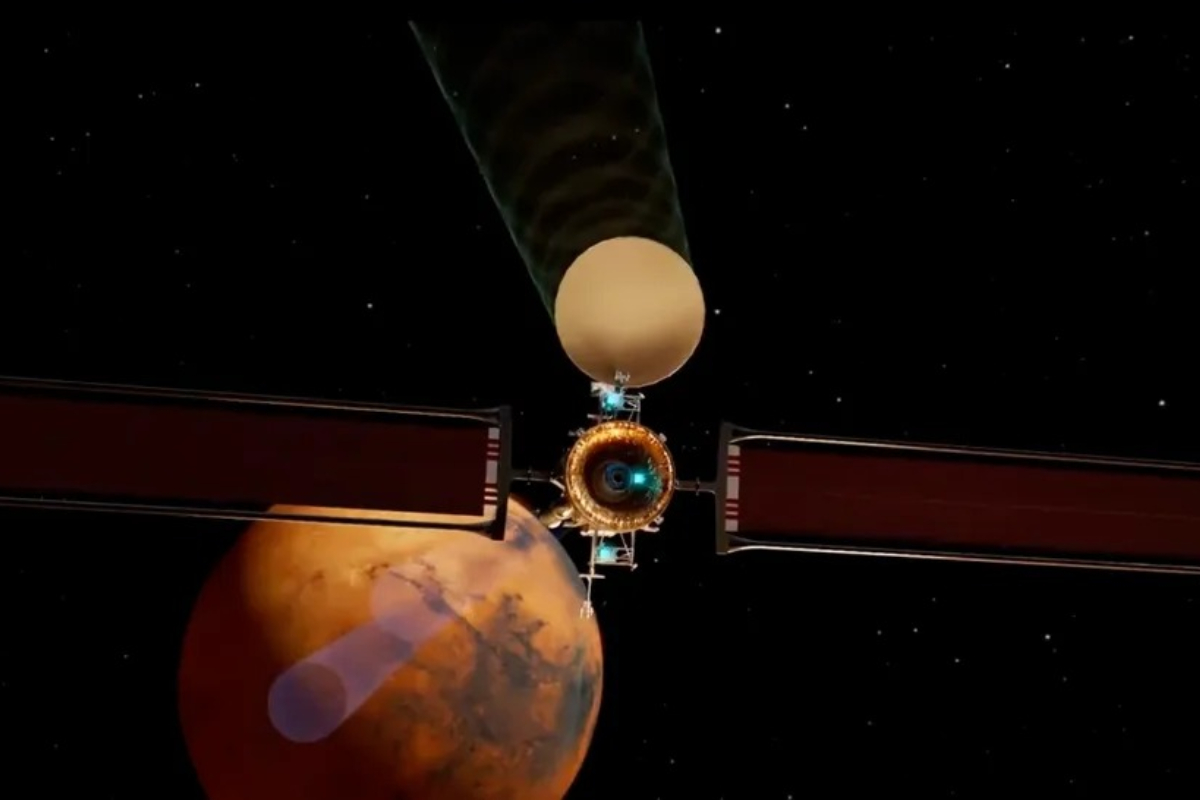
NASA has begun preparing communication infrastructure to support future Mars exploration. The United States space agency has appointed Jeff Bezos’s space company, Blue Origin, to develop the Mars Telecommunications Network (MTN), a communication network designed to connect various missions on the Red Planet with Earth.
NASA has awarded a contract with a maximum value of approximately $700 million to Blue Origin. Through this project, the company will design, develop, integrate, launch, and operate the Mars communication system.
The telecommunications spacecraft, which is a core component of the network, is targeted for delivery to NASA no later than 31 December 2028, while the MTN is expected to begin operations around 2030.
The MTN is designed as a high-capacity communication system that also supports the navigation of various NASA missions on Mars. Spacecraft orbiting Mars will be able to relay scientific data, images, navigation information, and critical communications from vehicles on the planet’s surface or in its vicinity.
The need for a new network is increasing as Mars exploration activities continue to expand. Currently, communication for rovers such as Curiosity and Perseverance is assisted by the Mars Odyssey and Mars Reconnaissance Orbiter. Both spacecraft have been operational since 2001 and 2005, respectively, meaning NASA requires new communication infrastructure to support a greater number of future missions.
Although the MTN can increase communication capacity and reliability, the network will not enable real-time communication between Mars and Earth. The issue lies not in internet speed, but in the distance between planets. Communication signals in outer space must travel vast distances at the speed of light.
According to NASA, the time required for a signal to travel between Earth and Mars can take several minutes, depending on the positions of the two planets. Consequently, astronauts on Mars will not be able to engage in live video calls with people on Earth as one would using video calling applications. Messages sent must wait until the signal reaches its destination, and the same applies to replies.
Therefore, the Mars communication network must be designed differently from the Earth-based internet. A relay system is used to receive and forward data from spacecraft on Mars to Earth. This technology allows various missions to continue exchanging information even though communication is not instantaneous.
With the MTN, NASA aims to build a stronger communication foundation for long-term Mars exploration. However, this project still faces natural limitations that technology cannot overcome. While the Mars internet may become faster and more reliable, the communication delay caused by the distance between Earth and Mars remains unavoidable.