
Narrow Alleys in Depok Transformed into "Money Land"
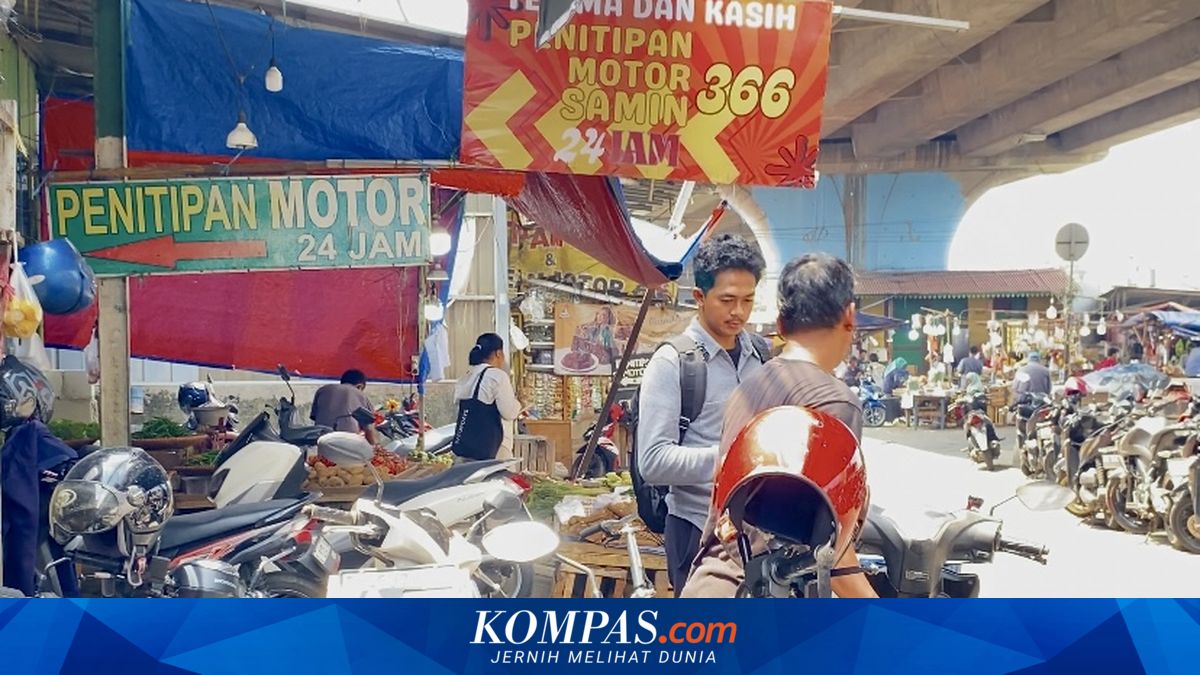
The area around Depok Baru Station and Depok Lama Station in Depok, West Java, is now filled with rows of motorcycles parked tightly along narrow alleys. The motorcycles are lined up from in front of shophouses to small lanes under the elevated road, forming a typical sight in transit areas. Signs and banners for motorcycle parking services are prominent, reading “24-Hour Motorcycle Parking”, “Can Stay Overnight”, with rates starting from Rp5,000 per day. Some are even located in the same row of shophouses, forming a sort of “parking corridor” filled with two-wheeled vehicles. This phenomenon reflects the high demand for parking, especially from workers who use the Electric Rail Train (KRL) daily to commute from Depok to Jakarta. One parking spot is located on Jalan Arif Rahman Hakim, not far from Depok Baru Station. At this location, hundreds of motorcycles are neatly arranged in the shophouse yard to the narrow parking lane. The owner of the parking service, Bambang (40), said that most of his customers are commuter workers. “Workers. Sometimes those who don’t go home, sometimes those who go back to the village,” said Bambang when met on Wednesday (29/4/2026). According to him, customers who leave their motorcycles overnight are not only shift workers but also migrants going home using the train. “Usually a month,” he said. “If for a month, the payment is unclear. Run out of fare, run out of money. Not according to the rates we set,” Bambang added. The rates charged are relatively cheap, namely Rp5,000 for parking from 05:00 to 24:00, and Rp15,000 if staying overnight. In a day, the number of motorcycles parked ranges from 100–200 units. During busy conditions, the net income per month can reach Rp8 million excluding employee costs and rent. “It’s not certain, but in a month, if it’s busy, it can be 8 million, that’s already net excluding employee costs and rent,” he said. Interestingly, most motorcycle parking still relies on a trust system. There are no official tickets, complicated recording, and not always equipped with CCTV. Bambang said this system developed from experience. He once used hanging numbers, but often had problems because they were lost. “Many fall on the train, then the wrong person takes it. Better for us to memorise the person,” said Bambang. “All regular customers. From Monday to Friday, they are our customers. If they get off the train just 100 metres away, we know. Which motorcycle is theirs,” he added. Nevertheless, this system still has risks. “Yes, helmets get swapped,” he said. However, he claims to have never experienced motorcycle theft.