
Narrative Builds Optimism About Indonesia’s Palm Oil Industry
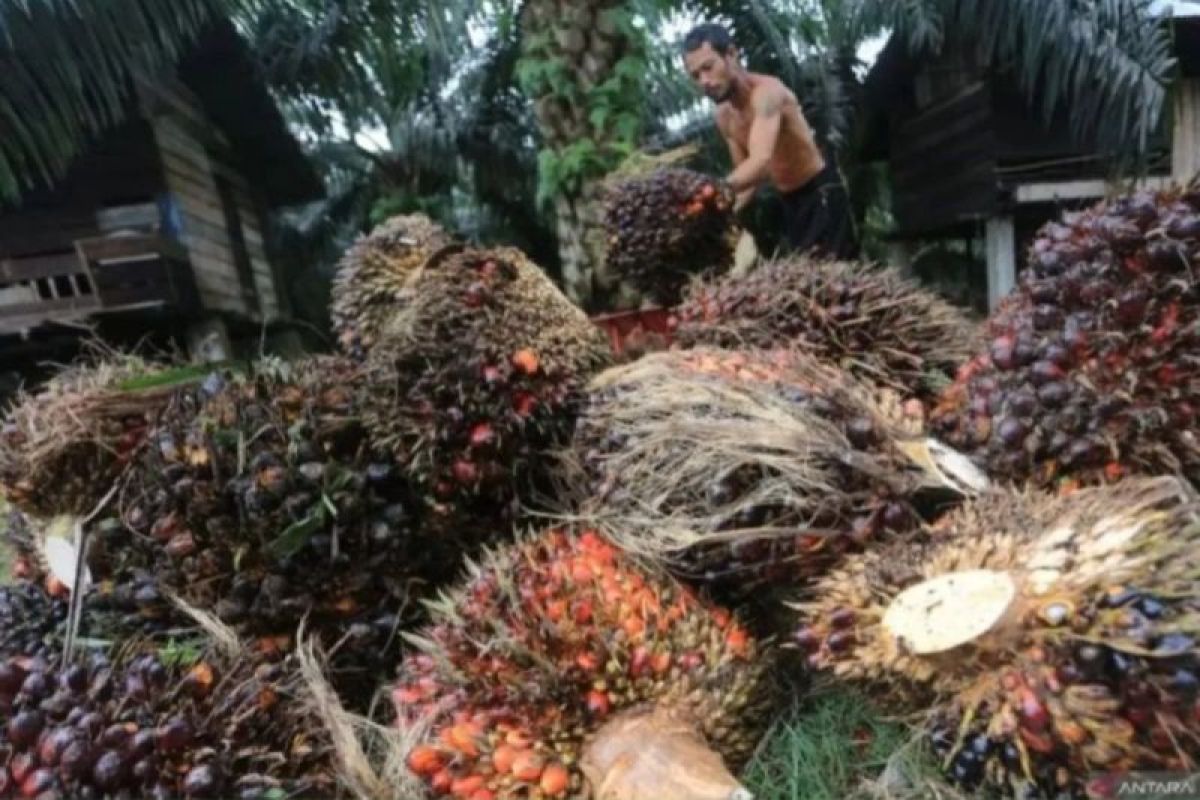
Palm oil communications have so far focused largely on answering accusations. It is time to put forward our own point of view: tonnes of oil per hectare, the area of land meeting traceability principles, the number of certified smallholders and emissions reductions.
Jakarta (ANTARA) - After two days listening to presentations by policymakers, experts and researchers from Indonesia and abroad on the national palm oil industry in Nusa Dua, Bali, one conclusion was undeniable: the world needs this strategic Indonesian commodity.
The question is no longer whether this wonder crop has a future. The more pertinent question, approached with optimism, is whether all stakeholders—and all of us—can manage the industry effectively.
Reasons for optimism
There is a strong statistical basis for this optimism. Indonesia supplies around 57 per cent of global palm oil production. At the 22nd Indonesian Palm Oil Conference (IPOC) 2026, held on 12–13 November 2026, all speakers agreed that global supply would tighten in 2027 and prices were expected to strengthen from the second quarter. Malaysia’s record-high stocks are set to fall as the impact of a strong El Niño weighs on production.
Demand is also shifting in ways that favour Indonesia. The country has become the first in the world to implement B50, meaning the domestic market now absorbs more than 17 million tonnes for energy needs. In China, imports of downstream palm oil products for industry are growing by more than 20 per cent a year. In Europe, meanwhile, ‘palm oil-free’ labels are starting to be abandoned.
Another asset we often overlook is resilience. Palm oil generated around US$36 billion in foreign exchange last year. As palm oil experts have repeatedly pointed out, the industry helped support the economy during the crises of 1998 and 2008, as well as the pandemic. Palm oil produces about 3.8 tonnes of oil per hectare, four to seven times the yield of other oil crops.
As long as the world needs food and energy from limited land, these advantages will remain irreplaceable. However, a favourable outlook will not materialise by itself. From the discussions, I noted five key challenges that will determine the industry’s prospects.
First and foremost is raising productivity. Over the past decade, domestic consumption has grown much faster than production. Smallholder oil palm replanting has covered only around 408,000 hectares, against a potential area of 2.8 million hectares. Smallholder productivity, meanwhile, has declined since 2018.
The smallholder replanting programme must therefore be accelerated, alongside the use of certified superior seeds. If this crucial work is not done, national crude palm oil (CPO) production will remain caught in a ‘dilemma’ between the B50 biofuel policy and the gains the country could otherwise secure from exporting crude palm oil.
The second major task concerns funding for B50. The biodiesel mandate must be supported by financing that can withstand market shocks. When crude oil prices are high, B50 can pay for itself. If oil prices fall, the difference is covered by export levies. Economic principles teach us that this additional burden will ultimately be passed on to fresh fruit bunch (FFB) prices.
Source: jawawa.id (https://jawawa.id/newsitem/narrative-builds-optimism-about-indonesias-palm-oil-industry-1795053137)
Originally published by Antara (Indonesian) (https://www.antaranews.com/berita/5864067/narasi-menguatkan-optimisme-industri-sawit-indonesia), translated from Indonesian