
Nagasaki Marks 81st Anniversary of Atomic Bombing Amid Nuclear Deterrence Debate
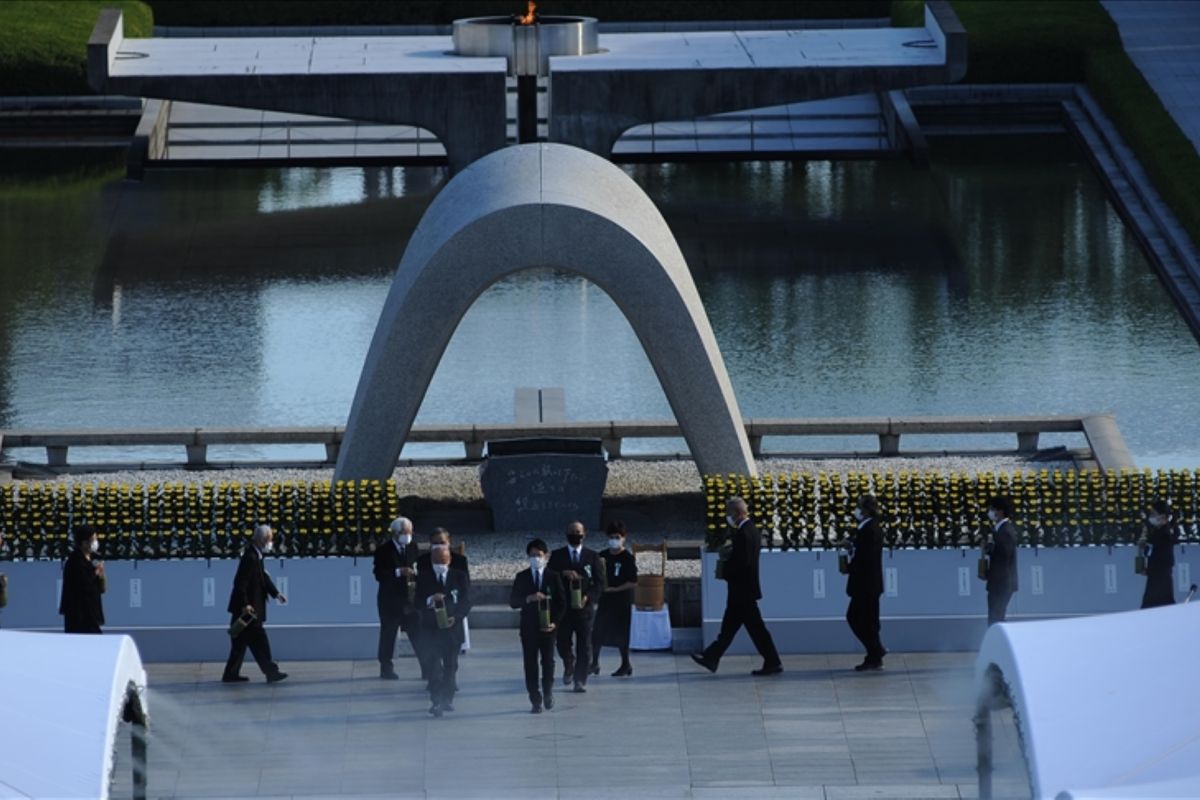
The Japanese city of Nagasaki on Sunday marked the 81st anniversary of the atomic bombing by the United States during the Second World War, amid intense debate over nuclear deterrence that has underscored the importance of calls to reject nuclear weapons.
At the ceremony commemorating the attack of 9 August 1945, Nagasaki Mayor Shiro Suzuki urged world leaders to strive for nuclear disarmament.
He stressed that humanity cannot coexist with nuclear weapons.
Nagasaki observed a moment of silence at 11.02 a.m. local time, marking the moment the ‘Fat Man’ atomic bomb was dropped by a US bomber and detonated over the city.
The attack came three days after the first nuclear bomb was dropped on Hiroshima, making Nagasaki the second and last city ever to suffer a nuclear bombing.
Prime Minister Sanae Takaichi delivered remarks at the memorial ceremony, while a statement from UN Secretary-General Antonio Guterres was also read out.
At the Hiroshima atomic bombing memorial ceremony on Thursday, Prime Minister Takaichi affirmed that her government ‘upholds’ the three non-nuclear principles of not producing, possessing, or permitting nuclear weapons, despite calls for Japan to reconsider those principles.
In May, the five-yearly review conference of the Treaty on the Non-Proliferation of Nuclear Weapons (NPT) failed to reach consensus for the third consecutive time, despite a full month of meetings in New York.
The nuclear attack on Nagasaki is believed to have killed 74,000 people by the end of 1945 and caused permanent health effects for many other victims.
Japan surrendered to the Allies on 15 August 1945, bringing the Second World War to an end.
Atomic bomb survivors, known as ‘hibakusha’, and their supporters are now racing against time to pass on the memory of the two atomic bombings, given that the average age of government-recognised survivors now stands at 86 years.