
Nadiem's Statement as Judge Questions Initiative Behind Chromebook Procurement Project at Education Ministry
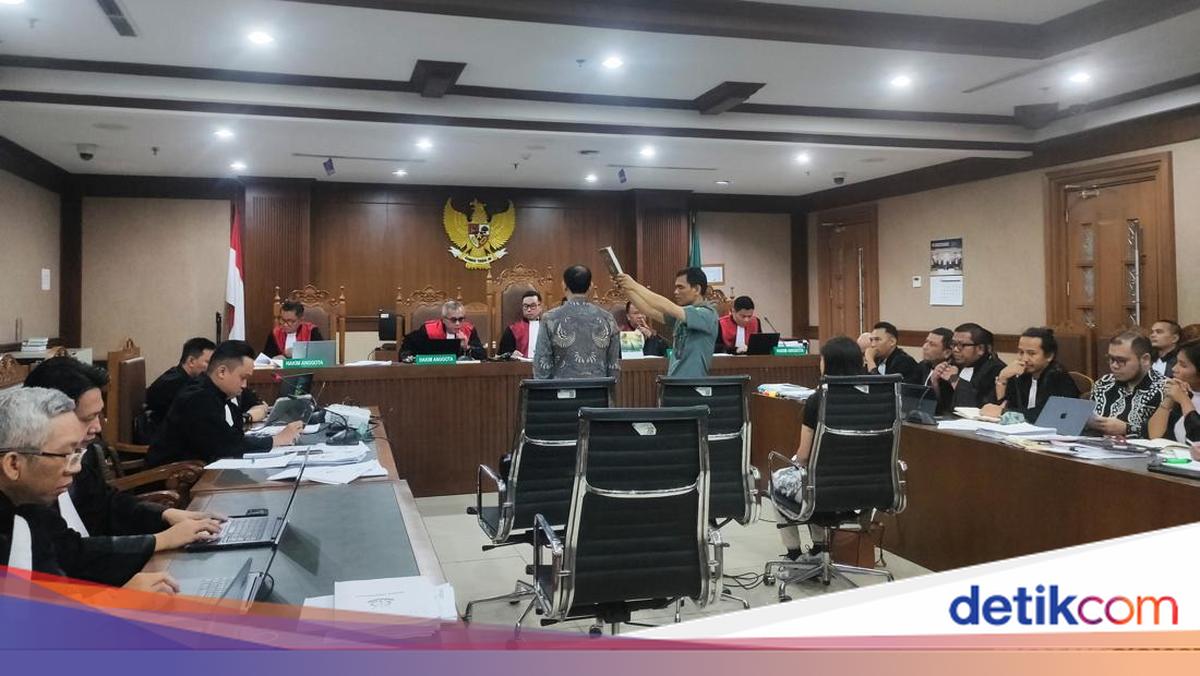
The judicial panel examined testimony from former Minister of Education, Culture, Research and Technology Nadiem Anwar Makarim regarding the initiative behind the selection of Chromebook and Chrome Device Management (CDM) procurement. The judges explored whether the shift from Windows procurement to Chromebook required ministerial approval.
Nadiem Makarim appeared as a crown witness in the alleged corruption case involving Chromebook and Chrome Device Management (CDM) procurement at the Jakarta Anti-Corruption Court on Tuesday, 9 March 2026. The defendants in the hearing are Mulyatsyah, director of the SMP Division at the Education Ministry in 2020; Sri Wahyuningsih, director of Elementary Education at the Directorate General of Early Childhood, Primary and Secondary Education for 2020–2021; and Ibrahim Arief, commonly known as Ibam, a consultant.
Initially, a debate arose between the prosecutors and Nadiem regarding the initiative for selecting Chromebook procurement. The judicial panel then intervened and took over the proceedings.
“So regarding this Chromebook selection, whose initiative is this? Why choose Chromebook in the first place?” asked Chief Justice Purwanto S Abdullah.
“Based on evaluation, as far as I know from the testimony of…,” Nadiem replied.
The judge expressed surprise if the Chromebook selection was based on evaluation when the evaluation results showed weaknesses in Chromebook. Nadiem stated that the technical team’s assessment findings were decided by the Directorate with the approval of the director general.
“Because if based on evaluation, as you mentioned earlier, it outlined the weaknesses,” the judge said.
“The findings from the technical team’s assessment, which were ultimately decided by the directorate with the director general’s approval,” Nadiem answered.
“So it was decided by the Directorate with the director general’s approval?” the judge asked.
“That’s correct. It has always been that way,” Nadiem replied.
The judge then explored whether Nadiem had the capacity as minister to accept or reject the Directorate’s decision. Nadiem stated that changing procurement from Windows to Chromebook did not require ministerial approval.
“As a minister, do you have the capacity to either accept or reject this directorate or director general’s decision, or not? Does your capacity as minister allow it?” the judge asked.
“Of course, as a minister, I have the prerogative to offer opinions or give orders. However, in reality, that did not occur. So, to address your earlier question—does ministerial approval need to be obtained to change from Windows procurement to Chrome? The answer is clearly no,” Nadiem replied.
The judge found it unusual if Windows procurement suddenly changed to Chromebook. The judge again asked Nadiem who selected the Chromebook procurement.
“Well, because here everything is affirmative, from Mr Ibrahim’s side he also does not deny that there are some weaknesses with Chromebook that had to be concealed, and from SKM’s side it is similar, no one knows who requested Chromebook. This becomes strange—suddenly there is Chromebook procurement. We want to know this. You too, as minister, do not have a position, so to speak, to select Chromebook like that. So now the question is: whose choice is the Chromebook?” the judge asked.
“That was my earlier answer. The choice was the result of the technical team providing a recommendation to the director with the director general’s approval, as far as I know. But I ask for correction; perhaps Mrs Sri and Mr Mul have different opinions, please,” Nadiem replied.
Previously, the indictment hearing for Mulyatsyah, Sri and Ibam was held on Tuesday, 16 December 2025. Prosecutors charged Mul, Sri and Ibam with causing state financial losses of 2.1 trillion rupiah in the case.
Prosecutors stated that the calculation of state financial losses of 2.1 trillion rupiah came from overpriced Chromebook laptop figures of 1,567,888,662,716.74 rupiah (1.5 trillion). Additionally, unnecessary and non-beneficial CDM procurement amounted to USD 44,054,426 or approximately 621,387,678,730 rupiah (621 billion).