
Nadiem's Admission of Ignorance Regarding the Shadow Minister
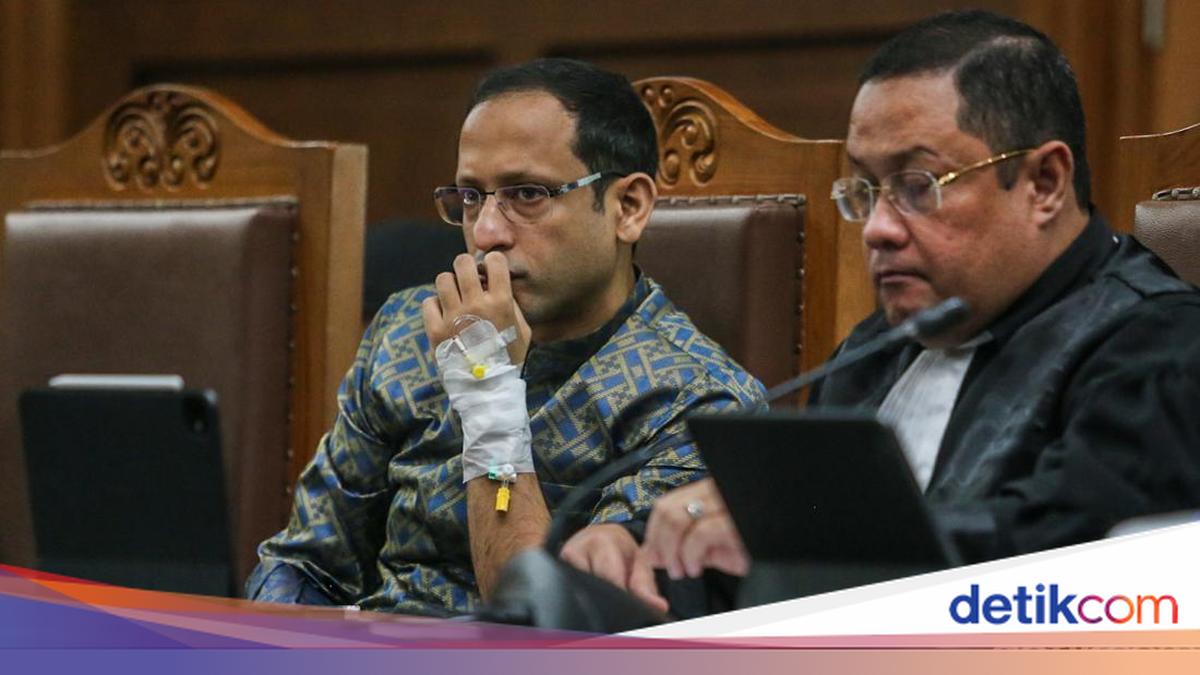
Former Minister of Education, Culture, Research, and Technology Nadiem Makarim was questioned by public prosecutors (JPU) regarding the figure of the ‘shadow minister’. Nadiem claimed he did not know about the shadow minister.
The question was posed by the JPU during the trial examination of the defendant held at the Central Jakarta Corruption Court on Monday (11/5). The JPU informed Nadiem that the shadow minister had even made a Director General fearful.
“Have you ever heard who this shadow minister is?” asked the prosecutor.
“No, I haven’t,” replied Nadiem.
“I’ll tell you. Jurist Tan is known as the shadow minister. There was even fear in the ministry, in a follow-up during your time leading as a minister,” explained the prosecutor.
For information, Jurist Tan is also a suspect in this case. However, he has not been tried because he is still at large. The name Jurist Tan has also appeared several times in the trial.
Director General Fears the Shadow Minister Figure
The prosecutor revealed how influential the shadow minister figure was, to the extent that a Director General found it difficult to meet the minister. The prosecutor also mentioned that the Director General at the Ministry of Education, Culture, Research, and Technology at that time was afraid of the figure Jurist Tan.
“A Director General was not even bold enough with the shadow minister named Jurist Tan. It even became a fact in the trial that you once said, ‘Are Jurist Tan’s words your words?’ Something like that,” said the prosecutor.
Nadiem then explained that he brought several people to serve as special ministerial staff (SKM) when he was the Minister of Education, Culture, Research, and Technology. One of the special ministerial staff was Jurist Tan.
“Allow me to clarify. All these things are being mixed up into one. As a minister, I entered with several specific special staff in their respective fields because of their competence, because of their integrity. People like Mas Nino, Pak Iwan, Jurist Tan, and also Fiona, and others, they are SKM (Special Ministerial Staff). Some of the SKM later became Director Generals like Pak Iwan who is a witness here. Outside of that, all my Director Generals came from within the ministry,” he said.
Reason for Bringing External Team
On the same occasion, Nadiem revealed the reason for bringing people from outside as special staff and technology team. Nadiem said the special staff and technology team were brought in to develop educational digitalisation applications.
“You also brought in outsiders, there’s a term ‘shadow’, ‘shadow’ what? Do you remember? ‘Shadow’ organisation or what? There was a shadow organisation. You brought in hundreds from outside, right. Those people. Can you explain to this panel of judges?” asked the prosecutor.
“As a minister, I entered with several specific special staff in their respective fields because of their competence, because of their integrity,” replied Nadiem.
Nadiem mentioned several parties he brought from outside who were made special ministerial staff. Nadiem said there were also staff who later became Director Generals.
“So they were chosen by me and approved by the President, based on their track record in the ministry. So that’s what is meant by the best people in the ministry being appointed and given the opportunity to lead,” explained Nadiem.
The prosecutor then interrupted upon hearing Nadiem mention ‘President’. Nadiem’s legal counsel immediately objected to the prosecutor’s interruption.
“Permission, Your Honour, sorry,” the prosecutor interrupted.
“Your Honour, I remind you,” replied the legal counsel.
“Please do not casually bring up the President’s name in the trial. I see no correlation between the answer,” clarified the prosecutor.
The judge asked everyone to listen to Nadiem’s explanation. The prosecutor asked Nadiem not to casually mention the President’s name.
“I’m just reminding you, don’t casually bring up the President’s name,” explained the prosecutor.
“What is being asked should be allowed; let the defendant have the opportunity to answer,” said the judge.
Nadiem continued his answer. Nadiem said the technology people he brought were outside the structure of the Ministry of Education, Culture, Research, and Technology. He said the technology team worked through a contract with one of the state-owned enterprises.
“The prosecutor’s question is why I brought in people from the technology field to help the ministry. This is my answer. So my answer is very relevant to the prosecutor’s question. Allow me to complete my answer to the prosecutor. The mandate from the first plenary cabinet meeting, a specific directive from the President to the Ministry of Education and Culture, is to implement technology’s role in education,” he said.
Asked to Build Educational Digitalisation
Nadiem said he was asked at that time to build an application that could be used in educational digitalisation. Meanwhile, at that time, said Nadiem, people in the Ministry of Education, Culture, Research, and Technology did not have experience in building large-scale applications.
“There are many capabilities and competencies in my ministry with many good people. But one thing that was completely lacking in competence was building world-standard applications on a large scale,” he said.
This became one of the reasons Nadiem brought in people from outside the Ministry of Education, Culture, Research, and Technology to help with his duties. He said the technology team was tasked with building applications used in Indonesia’s education system.
“So that’s my answer to the prosecutor’s question, what is the rationale, what is the reason for bringing in talented, idealistic young people to create software applications where that competence was not present in the ministry,” he said.
Nadiem’s Charges
In this case, Nadiem is charged with corruption related to the procurement of Chromebook laptops when he was the Minister of Education, Culture, Research, and Technology. The project is said to have caused state losses of Rp 2.1 trillion.
Besides Nadiem, there are three other defendants in this case. They are Sri Wahyuningsih, former Director of Primary Schools in the Directorate General of Early Childhood Education, Basic Education, and Secondary Education from 2020-2021, Mulyatsyah, former Director of Junior High Schools in the Ministry of Education, Culture, Research, and Technology in 2020; and Ibrahim Arief (Ibam), a consultant for the Ministry of Education, Culture, Research, and Technology during Nadiem’s era.
Sri and Mulyatsyah have been sentenced.