
Nadiem Sentenced to 10 Years in Prison for Chromebook Corruption Case
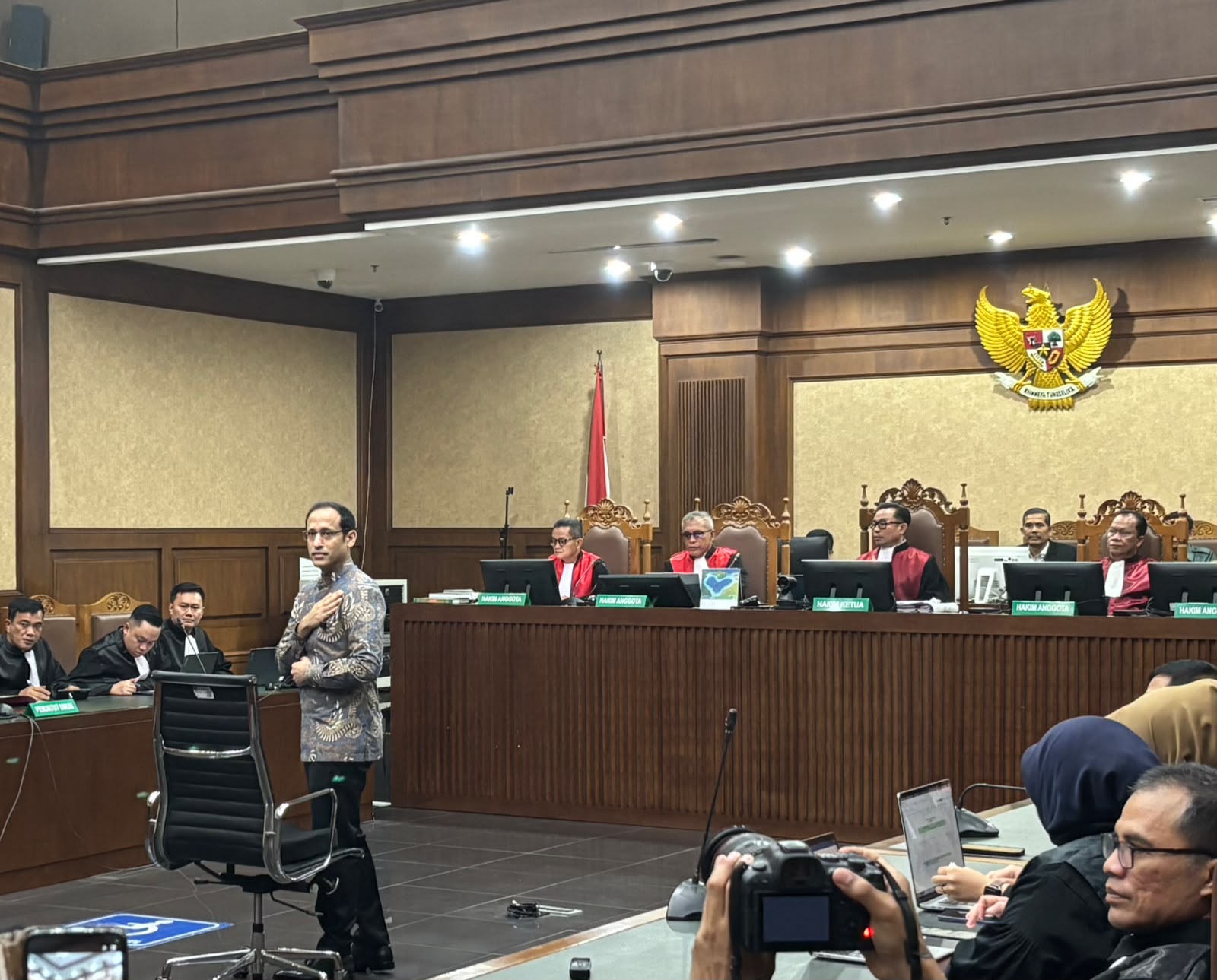
Former Minister of Education, Culture, Research, and Technology, Nadiem Anwar Makarim, has been sentenced to 10 years in prison in a corruption case concerning the procurement of Chromebook laptops and Chrome Device Management (CDM). The panel of judges assessed that the criminal acts committed by Nadiem were planned, structured, and systematic, resulting in substantial state losses.
Presiding Judge Purwanto S. Abdullah stated that Nadiem’s actions had a broad impact on the provision of education, particularly for students in the frontier, outermost, and disadvantaged (3T) regions. “The aggravating circumstances are that the act was carried out in a planned, structured, and systematic manner, resulting in very large state losses and having a broad impact on the provision of education, especially for children in disadvantaged, frontier, and outermost areas,” Purwanto said while reading the verdict at the Jakarta Corruption Court on Tuesday (30/6).
The panel of judges also considered that Nadiem’s actions contradicted the commitment of the government and society to eradicating corruption. As a minister, Nadiem was deemed to have been in a position to set an example, rather than abusing his authority. “The defendant’s actions contradict the commitment of the government and society in eradicating criminal acts of corruption. The defendant, as a minister who should have been a role model, instead abused his position,” the judge stated.
Furthermore, the judge mentioned that Nadiem’s very affluent economic condition was an aggravating consideration, as there was no economic necessity driving the criminal act. On the other hand, the panel also considered several mitigating circumstances. The judge noted that Nadiem had never been convicted before, behaved politely and cooperatively during the trial, and was previously known as a figure who contributed to innovation in education and technology.
In its ruling, the panel of judges declared Nadiem legally and convincingly proven guilty of committing corruption jointly. The judge stated that Nadiem was proven to have violated Article 604 in conjunction with Article 18 of the Law on the Eradication of Criminal Acts of Corruption in conjunction with Article 20 letter c of Law Number 1 of 2023 concerning the Criminal Code (KUHP).