
Nadiem Makarim Reveals Reasons for Leaving Gojek for Ministerial Post in Corruption Trial
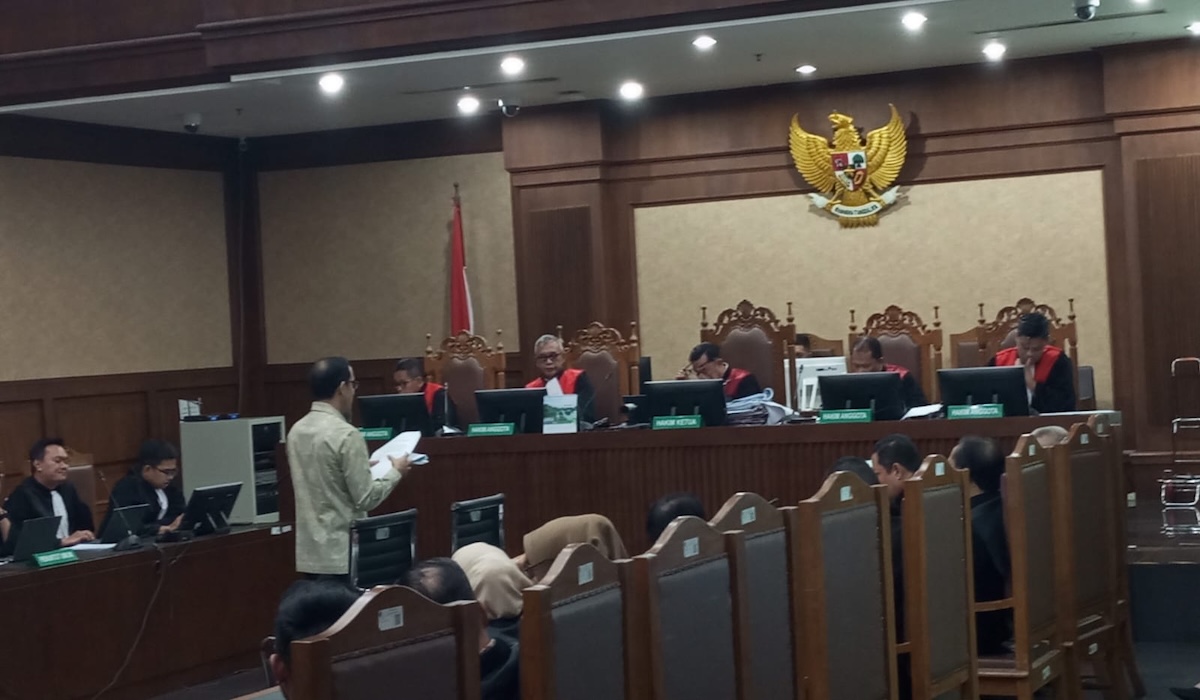
Former Minister of Education, Culture, Research, and Technology Nadiem Anwar Makarim has revealed his reasons for accepting President Joko Widodo’s offer to join the cabinet in 2019. He made the statement while reading his rejoinder to the prosecutor’s replication during a trial at the Corruption Court in Jakarta on Tuesday (23/6).
During the proceedings, the founder of Gojek admitted he had never initially imagined leaving his position in the private sector. ‘At that time, it never crossed my mind that I would join the government,’ Nadiem told the panel of judges.
Nadiem explained that his decision was made after lengthy discussions with President Jokowi regarding the future of technology and education in Indonesia. Although he was initially filled with anxiety due to his lack of experience in bureaucracy and received advice from relatives to refuse the offer because of the political risks, he ultimately chose to serve.
He felt a moral responsibility because he had been vocal in criticising the national education system. ‘For me, refusing the call meant I was only brave enough to criticise the education system without being willing to take real action within it,’ he said.
The statement was delivered amid the legal process currently ensnaring him. He is a defendant in a case of alleged corruption related to the procurement of Chromebooks within the Ministry of Education, Culture, Research, and Technology for the 2019-2022 period.
Previously, public prosecutors from the Attorney General’s Office had submitted a heavy sentence demand. The prosecutors requested that the panel of judges sentence him to 18 years in prison and a fine of Rp1 billion, subsidiary to 190 days of confinement.
In addition to the physical punishment, Nadiem is also required to pay restitution totalling Rp5.6 trillion. This amount consists of Rp809.5 billion and Rp4.87 trillion, which according to the prosecutors represents assets disproportionate to his lawful income during his tenure as minister.
If the restitution is not paid within one month after the verdict becomes legally binding, his assets will be confiscated and auctioned. Should the assets prove insufficient, the shortfall will be replaced with an additional 9 years of imprisonment.
Nadiem concluded his rejoinder by asserting that from the beginning of his term, he had endeavoured to assemble a team of experts to bridge his private-sector leadership style with the complexities of the bureaucracy in pursuit of the national education mission.