
Nadiem Asserts No Corruption Charges Proven in Chromebook Case
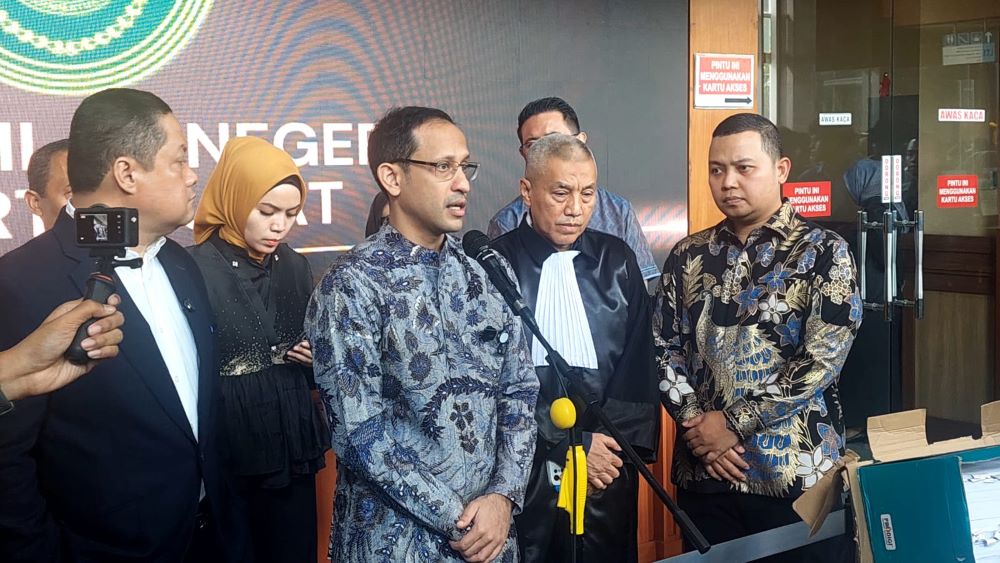
Former Minister of Education, Culture, Research, and Technology, Nadiem Anwar Makarim, delivered his defence plea (pleidoi) before the Judges of the Jakarta Central Corruption Court on Monday (2/6). In his defence, Nadiem emphasised that not a single element of corruption was proven in the procurement case of Chromebook laptops within the Ministry of Education, Culture, Research, and Technology (Kemendikbudristek).
Responding to the public prosecutor’s demand for a 27.5-year prison sentence, Nadiem stated that the policy to use the Chrome OS operating system actually resulted in state budget savings. “If I am found guilty, does it mean the state believes the ministry should have chosen a more expensive option?” Nadiende asked the panel of judges.
According to Nadiem, throughout five months of trial involving more than 50 witnesses and experts, the prosecutors failed to prove the substance of the indictments against him. He noted that trial facts showed the average price of the Chromebooks purchased by the ministry was Rp5.6 million per unit, which is lower than the 2020 market price that, according to prosecution witnesses, reached Rp6.3 million per unit.
Nadiem also highlighted discrepancies between audits conducted by the Audit Board of Indonesia (BPK) and the Financial and Development Supervisory Agency (BPKP). He noted that the BPK, as the authorised institution for declaring state losses, found no losses in the project. Conversely, he argued that the state loss calculations performed by the BPKP used methods that did not reflect actual market prices. Furthermore, Nadiem stated that the Chromebook devices purchased by the government are still widely utilised by schools; according to Chrome Device Management (CDM) data, 85 per cent of devices purchased since 2020 remain active as of 2025.
In his plea, Nadiem asserted that he never signed any technical documents related to the Chromebook procurement, stating that the decision regarding the choice of operating system rested entirely with the technical team. He also referenced WhatsApp conversation evidence presented by the prosecution, which he claimed showed him encouraging an objective decision-making process.
Addressing allegations of a conflict of interest with Google, Nadiem denied any reciprocal relationship between the technology company’s investments and the Chromebook procurement policy. He clarified that most of Google’s investments in Gojek and GoTo occurred before he assumed office as minister, and that following his appointment, his status was merely that of an ordinary shareholder without any controlling rights or corporate positions.
Reflecting on his personal experience, Nadiem admitted to a lack of experience in navigating the political landscape of the bureaucracy. He noted that his drive for professional efficiency and the reduction of bureaucracy was often misinterpreted as arrogance, leading to friction with internal parties unsettled by digital transparency. He concluded by warning that the criminalisation of transparent policies could deter top national talent from entering the public sector due to the fear of legal risks.