
Nadia Habibie: Kartini Day, a Momentum to Build Systems for Indonesian Women
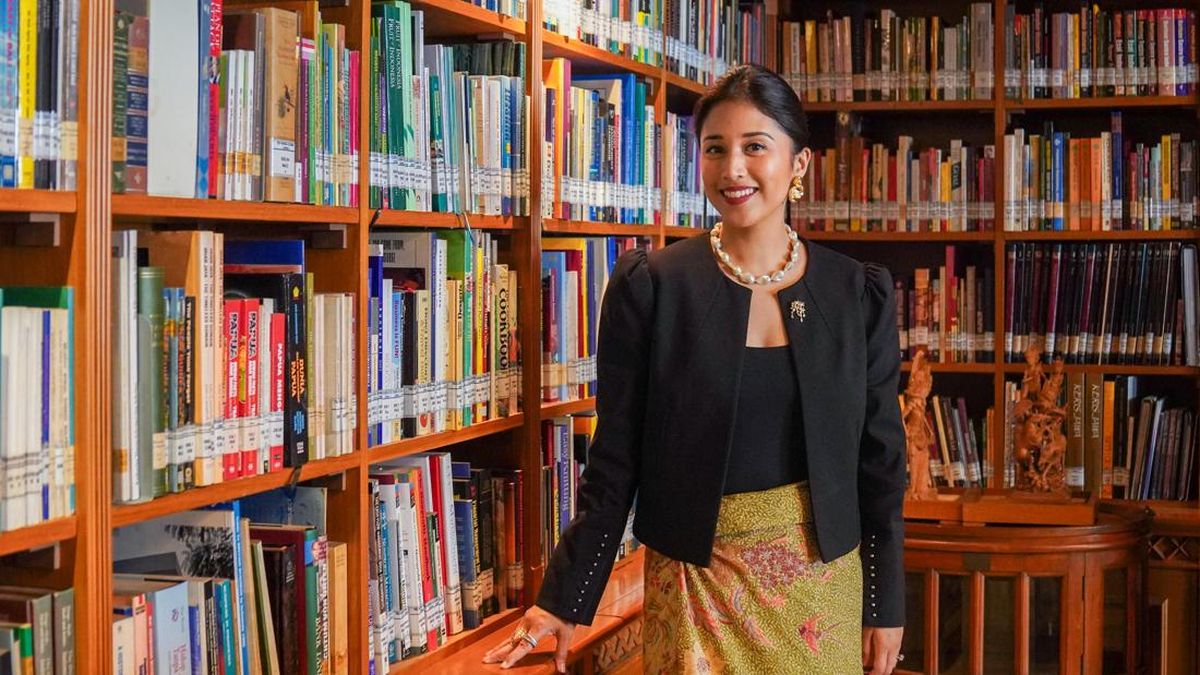
The name Raden Ajeng Kartini may never have been recorded as a minister, keynote speaker, or leader of a major institution. However, her legacy lives on to this day through her sharp, clear, and urgent writings.
Executive Director of the Habibie & Ainun Foundation and Secretary of the Executive Board at The Habibie Center, Nadia Sofia Habibie, stated that Kartini’s intellectual legacy remains relevant to this day.
“On this Kartini Day, I am reminded of the question I posed at the Indonesia Economic Summit: How do we move from mere participation to real influence?” said Nadia.
According to her, that question is not merely a symbolic reflection, but touches on the structural issues still faced by millions of women in Indonesia.
Three Faces of Indonesian Women
The granddaughter of Indonesia’s third President, Bacharuddin Jusuf Habibie, and Hasri Ainun Besari, assesses that the current reality of Indonesian women is not singular, but divided into several different groups that share similar root problems.
Data from the Central Statistics Agency (BPS) 2023 shows that around 64 percent of Indonesian women work in the informal sector, without fixed contracts or adequate social protection.
On the other hand, women are also the backbone of the local economy. Around 60 to 64 percent of MSME actors in Indonesia are women.
However, opportunities at the leadership level remain limited. Only around 35 percent of managerial positions are held by women, while around 3.5 percent of CEO positions are occupied by women.
Nadia explained that these figures depict three different realities—informal workers, small business owners, and professionals—who face similar barriers.
Nadia described these three faces of women with different figures, for example, Siti, Rara, and Dewi.
Siti is a garment worker in an industrial area. When her pregnancy began to show, her working hours were reduced.
A month later, her contract was not renewed. Administratively, no rules were violated. However, in practice, protection is not truly present.
On the other hand, a young professional named Rara has shown good performance for years. However, promotion never comes.
She cares for her sick parents, while family obligations are considered her personal responsibility, not a factor that the organisation needs to consider.
There is also Dewi, a small business owner who has built an online shop for years.
She employs workers, has regular customers, but struggles to access financing because she is considered to lack sufficient formal track record. At home, she also acts as a caregiver for her grandchild.
“They differ in age and arena. But the root is the same: they are always the ones who bear the burden, and the system never counts that as something that needs to be shared,” said Nadia.
The Same Root Problem
One of the biggest barriers faced by women is the burden of unpaid care work, which is often not recognised as part of economic activity.
International Labour Organization (ILO) 2024 data records that around 708 million women worldwide are outside the labour force due to family care responsibilities. This figure is far higher than for men, who number only around 40 million.
In the Asia-Pacific region, women spend an average of 4.1 times more time on care work than men.
According to Nadia, this issue is not because women do not care about their families, but because the responsibility has not been shared fairly and is not yet supported by adequate policies.
“The problem is that this trade-off is never calculated, never shared, and usually by default burdened on one gender,” said Nadia.
Therefore, continued Nadia, when the trade-off is too great to bear alone, the state needs to be present, not out of pity but as an investment.
“Every woman who is forced out of the labour force is lost productivity, uncollected state revenue, unrealised potential,” she explained.
Three Starting Points for Change
In her view, change can begin with concrete steps that touch the root of the problem.
First, recognising that caring for family is part of work. Then, the need for real pregnancy protection, affordable childcare services, and support for elderly care become the main foundation.
Countries like Singapore and Japan have shown that childcare and eldercare subsidies are not just social policies, but also economic strategies.
The International Monetary Fund (IMF) estimates that increasing women’s labour force participation by 5.9 percentage points could boost GDP in developing countries by up to 8 percent.
In Indonesia, the availability of childcare facilities has been proven to increase mothers’ employment opportunities by 13 percentage points, according to the World Bank.
Second, ensuring the system works for everyone. Women from various backgrounds need specific support, from digital, legal, to financial literacy, designed according to the needs of each sector.
“In every arena, inclusivity is not just a moral choice. It is an economic choice with multiplied impacts, to families, communities, and the nation,” said Nadia.
Third, building a mutually supportive ecosystem. Progress often occurs when there are parties that encourage and open the way.
Trade unions, business incubation programmes, professional networks, and career sponsorship systems play an important role in ensuring women have equal access to opportunities.
“A mentor guides. A sponsor advocates. I was fortunate to have a sponsor who put my name forward for opportunities I would never have claimed myself,” added Nadia.
From Inspiration to Transformation
Nadia emphasised that Kartini’s legacy
Source: jawawa.id (https://jawawa.id/newsitem/nadia-habibie-kartini-day-a-momentum-to-build-systems-for-indonesian-women-1776754258)
Originally published by CNN Indonesia (https://www.cnnindonesia.com/nasional/20260420150440-25-1350037/nadia-habibie-hari-kartini-momentum-bangun-sistem-untuk-perempuan-ri), translated from Indonesian