
Nabire Prepares New Rice Fields as Settlements Encroach on Farmland
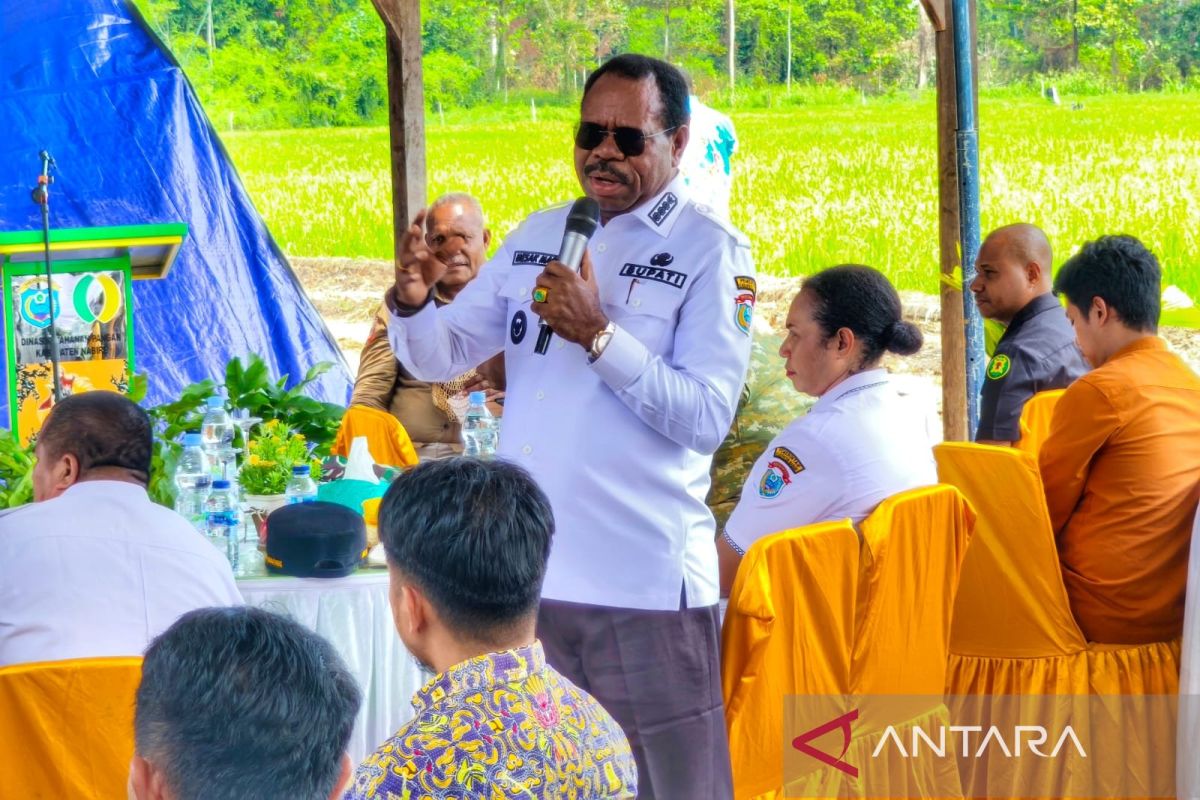
The Nabire Regency Administration in Central Papua is preparing new rice-farming areas as a step to anticipate the loss of agricultural land due to the growth of residential areas since Nabire became the provincial capital.
Speaking in Nabire on Wednesday, Nabire Regent Mesak Magai said the government has begun directing the development of rice production centres towards the districts of Topo, Lagari and Yaro, which are considered to still have considerable potential land.
“The existing rice fields are increasingly squeezed by residential development, so we must prepare new production centres,” he said.
He explained that agricultural areas in Wanggar and West Nabire have gradually undergone land-use change as construction and economic activity have increased.
For this reason, the regional government has begun identifying potential land whilst preparing agricultural infrastructure support, such as irrigation networks, farm roads and other supporting facilities.
According to him, the expansion of rice-farming areas forms part of a strategy to maintain the sustainability of local rice production whilst strengthening the region’s food security.
He said the development of new production centres is also expected to raise farmers’ incomes and guarantee rice supplies for residents amid growing food needs.
The Nabire Regency Administration is targeting the construction of new agricultural areas to be carried out in stages with support from the provincial and central governments so that local rice production continues to increase.
According to data from Statistics Indonesia (BPS), the area of active rice fields in Nabire Regency fell from 2,094.20 hectares in 2023 to 1,431.79 hectares in 2024, then shrank again to 999.22 hectares in 2025.
The decline has been influenced by various factors, ranging from the conversion of agricultural land into residential areas to a reduction in cultivable land caused by damage to irrigation networks and a shortage of agricultural labour.
In West Nabire District, for example, the rice-harvested area once reached 975 hectares in 2007, but shrank to around 326 hectares in 2009 because some farmers switched to planting other commodities and sold their land.