
Nabire Government Develops Biofortified Rice to Bolster Food Security
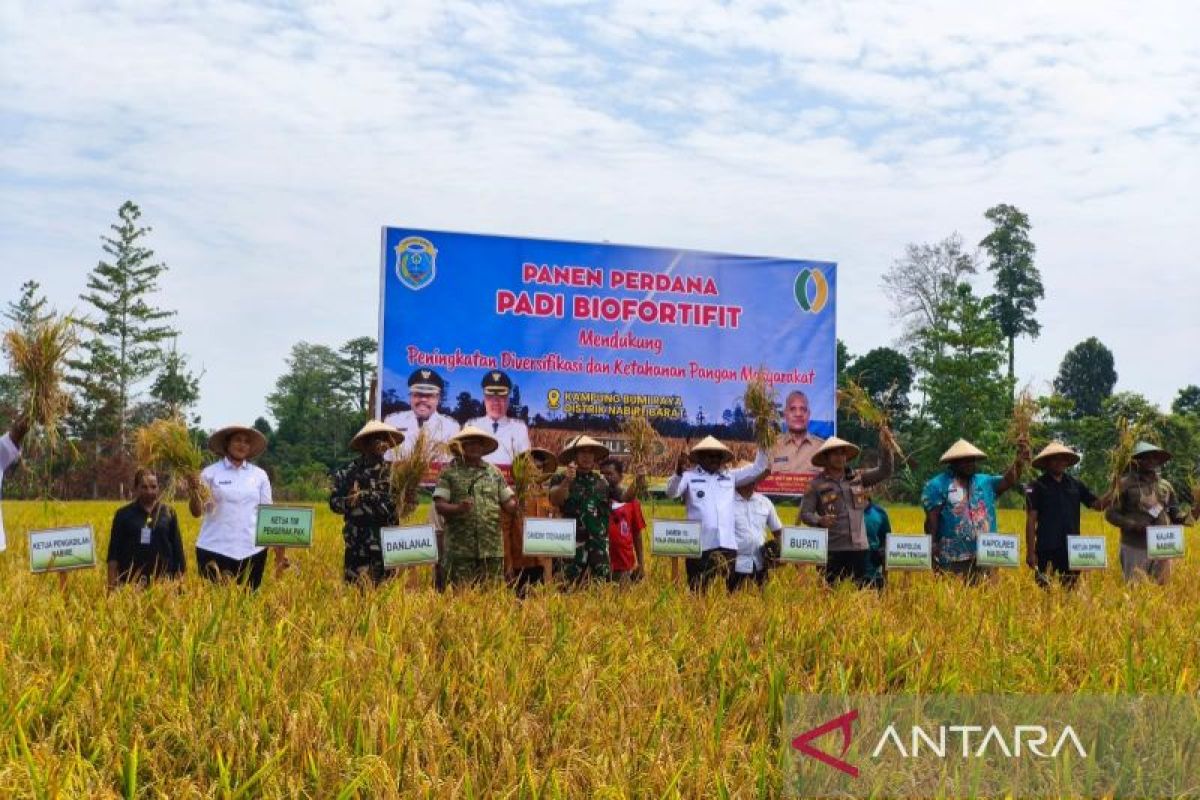
The Government of Nabire Regency, Central Papua, is developing biofortified rice as part of an effort to strengthen food security and improve the nutritional quality of the community through the use of nutrient-rich rice varieties.
Nabire Regency Food Security Head Yasor Victor Sawo stated that the development of biofortified rice is part of a programme to increase food diversification and security. “This programme is realised through the planting of a 5-hectare demonstration plot of biofortified rice, which was carried out on 21 April 2026, and part of it is now entering the harvest period,” he said.
He explained that the variety being developed is Inpari Arumba, a biofortified rice released by the Ministry of Agriculture that is rich in antioxidants beneficial for health. The variety is a cross between red rice and the Sintanur variety, with a harvest age of approximately 113 days and a fragrant aroma similar to pandan.
“The name Arumba comes from ‘Arum’, meaning fragrant, and ‘Abang’, meaning red, so it is a fragrant red rice,” he said. The development of this variety is the first of its kind in Nabire Regency, utilising Special Autonomy (Otsus) funds through the empowerment of the Cendrawasih Farmers Group in Bumi Raya Village, West Nabire District.
Based on the variety description, Inpari Arumba has a potential yield of approximately 6.1 tonnes of grain per hectare. However, the initial harvest from a two-hectare plot produced 4.48 tonnes of dry grain per hectare. The shortfall was attributed to limited water supply during the growth period, caused by the closure of the Bumi River irrigation channel, which is currently under rehabilitation. Despite this, the total 5-hectare demonstration plot is expected to yield 12.5 tonnes of rice.
Nabire Regent Mesak Magai stated that agricultural development is a key part of the local government’s strategy to improve community welfare according to regional potential. He explained that Nabire’s development is divided into three zones: coastal and island areas focused on fisheries, marine, and tourism; urban areas on agriculture, fisheries, and trade; and mountainous regions on livestock, cocoa, and coffee. “The Food Security Agency has made a positive breakthrough by developing biofortified rice, which we hope can improve food security and community welfare,” he said.