
Mystery of Missing Silver in the Sun Finally Solved After Decades
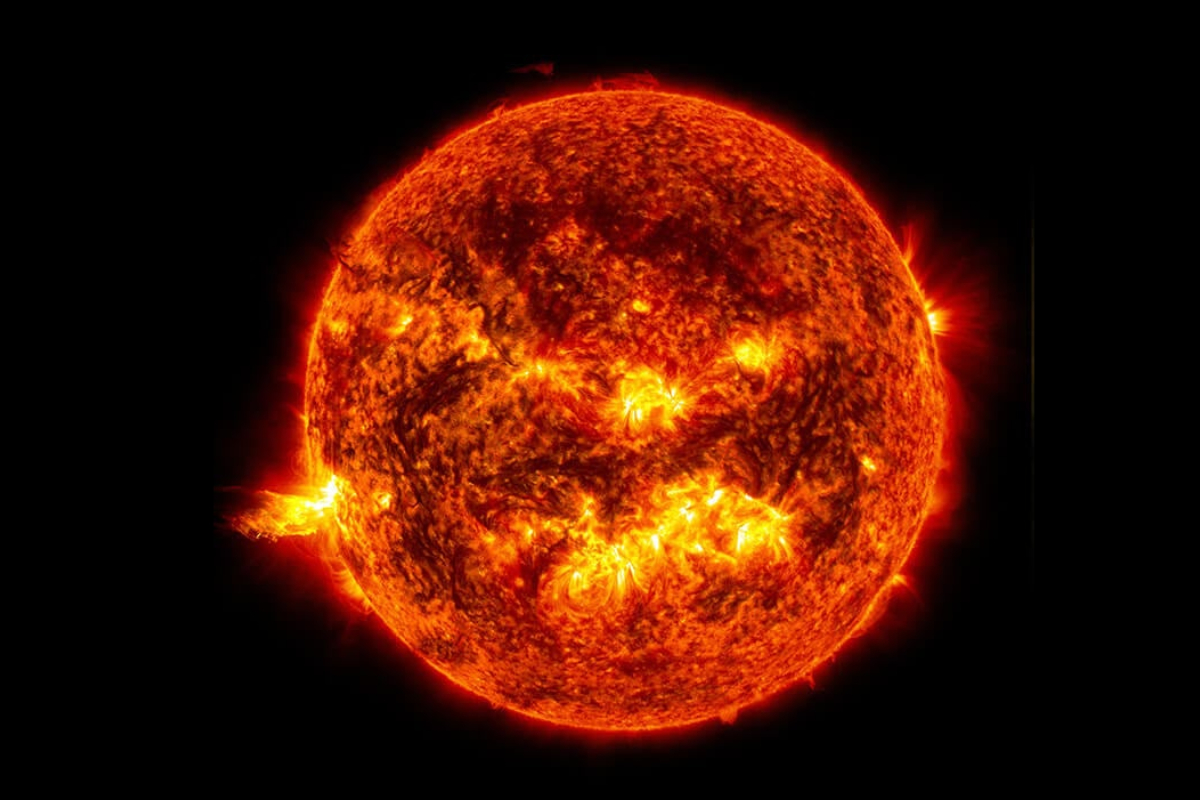
For decades, astronomers have grappled with a perplexing puzzle: the observed abundance of silver in the Sun appeared to be far lower than it should be. Theoretically, the Sun and the meteorites in our solar system formed from the same giant cloud of gas and dust around 4.6 billion years ago. Ancient meteorites, which serve as natural time capsules, have been the benchmark for the early solar system’s chemical composition. Yet, whenever scientists measured the Sun’s silver content, the figures consistently fell below expectations. Now, this anomalous mystery has finally been solved. Research led by Sema Caliskan from Uppsala University in Sweden has revealed that the Sun’s silver was never actually missing. The error lay in the modelling methods used to read the Sun’s light spectrum, which were not accurate enough. To determine a star’s composition, astronomers observe the spectral lines of light absorbed by atoms of elements in the star’s atmosphere. Each element has a unique ‘fingerprint’ of specific spectral absorption lines. However, the solar atmospheric models previously used by scientists were deemed overly simplified and ignored the highly turbulent dynamics of the Sun’s outer layers. Furthermore, the interaction of silver atoms with surrounding light had not been calculated with sufficient precision. By applying a new, far more complex and realistic atmospheric model, the research team thoroughly accounted for how silver atoms interact with light in the dynamic outer layers of the Sun. The results of the recalculation brought a major surprise: the Sun’s silver content is 55 per cent higher than previously believed. This significant increase automatically aligns the Sun’s silver levels with the chemical composition of ancient meteorites, officially resolving the discrepancy that had puzzled experts for decades. ‘This new knowledge about the Sun’s composition is very important for understanding stars, planets, and other cosmic matter, because the Sun is one of the main reference points in astronomy,’ said Sema Caliskan, the study’s lead author. The findings, published in the journal Astronomy & Astrophysics, hold significant importance for the field. Because the new modelling has proven successful on the Sun, the researchers plan to apply the same method to study other stars of various ages and types. This step is expected to help scientists trace the origins of silver formation in the universe and how this heavy element has been distributed throughout the Milky Way galaxy over cosmic history.