
Mystery of Bandung's Mysterious Boom After Anak Krakatau Eruption: ITB Expert Points to 'Acoustic Shadow Zone' Phenomenon
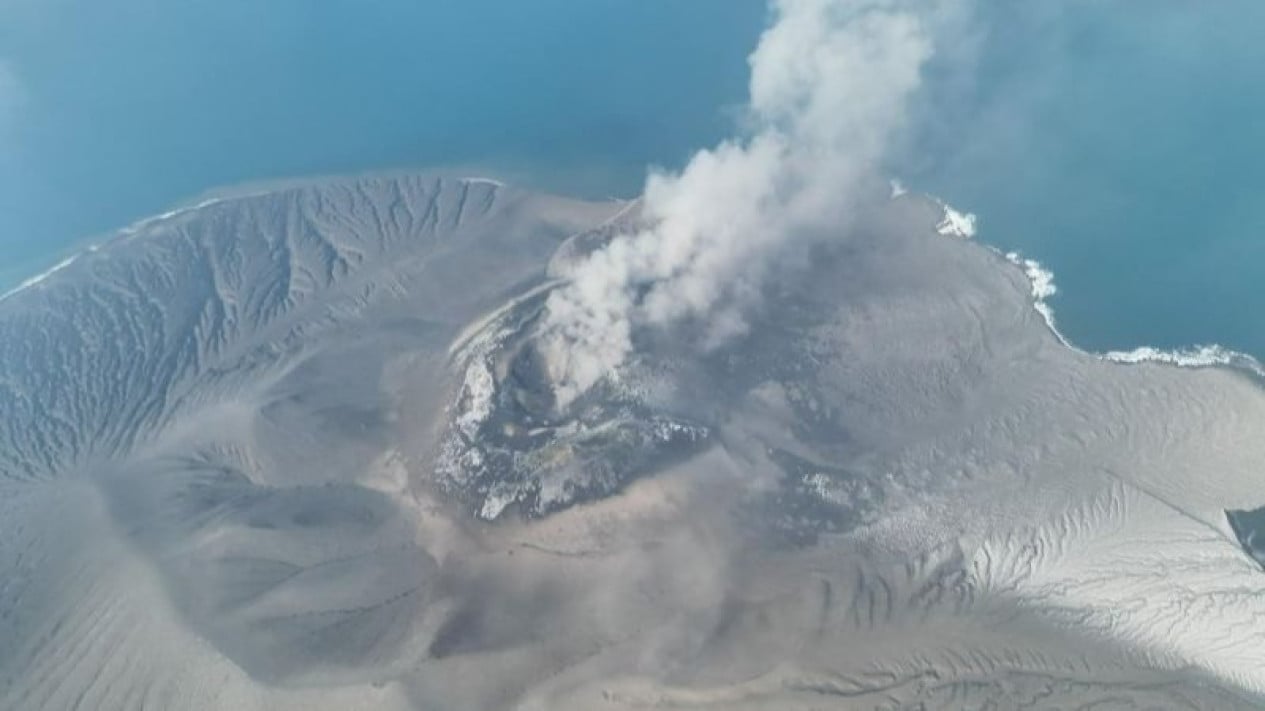
Volcanology expert from ITB Mirzam Abdurrachman considers the atmospheric phenomenon of the acoustic shadow zone to be the most plausible scientific hypothesis for answering the mystery of the mysterious booming sounds in Greater Bandung following the eruption of Mount Anak Krakatau.
The lecturer from ITB’s Faculty of Earth Sciences and Technology said that the acoustic shadow zone mechanism explains the technical reason why the sound waves of the eruption were not clearly heard in coastal areas close to the Sunda Strait crater, but instead bounced back and were heard very intensely in the mountainous region of West Java hundreds of kilometres away.
Mirzam explained that differences in temperature as well as wind direction and speed at certain altitudes can cause sound waves to undergo upward refraction until they pass through a shadow zone, before finally being bent back towards the ground surface at a distant location.
“Some of the sound energy moving above the shadow zone can undergo scattering due to atmospheric turbulence. Under certain conditions, these waves can also undergo diffraction so that some of their energy returns to the surface at a more distant location,” said Mirzam.
Nevertheless, Mirzam stressed that the occurrence of the Anak Krakatau eruption and the booming sounds in close succession is not yet sufficient to be final proof of a cause-and-effect relationship without scientific data verification.
“Not necessarily. Further study is needed to confirm the source. So, last night’s booming sound remains an interesting question, not a conclusion. A more in-depth study certainly needs to be carried out,” he said.
This opinion also bridges the disagreement between the Geological Agency, which strongly suspects a link between the booming sounds and the Krakatau lava fountain eruption, and the Meteorology, Climatology and Geophysics Agency (BMKG), which stated that there were no records of local seismic activity in Greater Bandung, nor any easterly winds that would support the occurrence of such a phenomenon.
To prove the correlation, he said, the research team must still match the time lag of the sound wave arrival, signal characteristics, regional topography, and the atmospheric dynamics of western Java.
Regarding the activity level of Mount Anak Krakatau, which remains at Level III (Alert), he also urged the public not to panic, to improve disaster literacy, and to comply with the safe exclusion zone of a 3-kilometre radius from the active crater.
Source: jawawa.id (https://jawawa.id/newsitem/mystery-of-bandungs-mysterious-boom-after-anak-krakatau-eruption-itb-expert-points-to-acoustic-shadow-zone-1788717041)
Originally published by VIVA.co.id (https://www.viva.co.id/berita/nasional/1926721-teka-teki-dentuman-misterius-di-bandung-pasca-erupsi-anak-krakatau-pakar-itb-sebut-fenomena-acoustic-shadow-zone), translated from Indonesian