
Mystery Metal Object Found in Palm Oil Plantation Turns Out to Be Chinese Space Debris
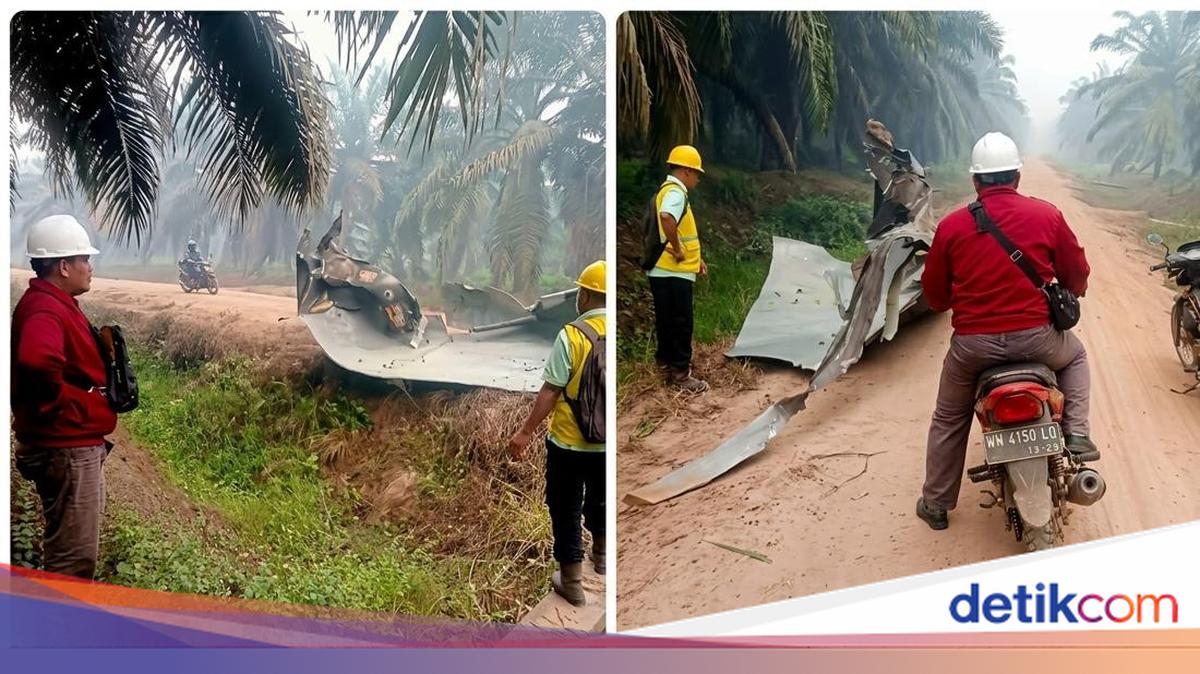
A loud boom heard in several parts of East Kotawaringin regency (Kotim), Central Kalimantan, on Sunday afternoon (18 October 2026) sparked a commotion after a mysterious object was discovered in a palm oil plantation.
The following morning, an employee found a metal object about six metres long in a plantation ditch belonging to PT Agro Bukit. Initially thought to be the wreckage of an aeroplane or helicopter, it was later confirmed as part of China’s Zhuque 2E satellite-launch rocket.
The discovery was made at block G/F 3839, in the plantation area at kilometre 26 on the Sampit-Pangkalan Bun road, at around 6.30am on Monday (19 October). Karmansyah, an employee, said the object was first found by a worker who was hunting birds.
“It was first found by an employee who was hunting birds. The location is block G/F 3839,” Karmansyah said on Monday afternoon, as quoted by detikKalimantan.
The large object was lying in a ditch, with several cables still connected. Its unusual appearance prompted the workers’ curiosity. A video of the discovery later circulated, drawing public attention because the object looked like an aircraft fuselage.
In the footage, someone can be heard struggling to identify the object.
“Right, we’ve found what looks like the wreckage of an aeroplane or a helicopter. This is in block G/F 3839,” the person says in the video.
According to Karmansyah, the object was about six metres long and estimated to weigh nearly 100 kilograms. Around 20 employees were needed to move it. Its material resembled lightweight steel, and it had several cable connections and welding marks.
“There’s no writing on it; it looks like something newly made. It has welds and, basically, connecting cables,” he said.
Residents hear a boom
The discovery attracted attention because residents in Kotim had heard a loud boom accompanied by shaking the previous day. Julianto, a local resident, said he heard it at around 4.30pm on Sunday (18 October).
“Yes, yesterday there was a very loud boom, like thunder, and there was shaking, but I don’t know whether the sound was connected to this object,” he said on Monday afternoon.
The boom was reportedly heard in Cempaga Hulu, Telawang, Mentawa Baru Ketapang and Baamang districts. Some residents initially thought it was thunder or an object falling from the sky.
The possible link between the boom and the metal fragment became a topic of discussion. However, an explanation emerged only after the relevant authorities investigated the origin of the object found in the palm oil plantation.
Chinese rocket fragment identified
Korem 102/Panju Panjung initially deployed personnel to the site to manage the discovery. Major Inf Andry Suwiatmojo, the regional military command’s intelligence officer, said it was coordinating with relevant agencies to identify the object.
“Our personnel are now at the site. We have also coordinated with relevant parties, including space agencies and those responsible for handling foreign objects, to identify what the object actually is,” Andry said on Monday afternoon (19 October 2026).
The discovery site was cordoned off with police tape. The public was told not to touch, tamper with or move the object until instructed by officials.
“As an initial point, we can confirm that the object does not belong to the military. We ask the public to remain calm while waiting for further information from officers at the site,” he said.
The object’s identity was later established after H Asan Sampit Airport coordinated with the National Research and Innovation Agency (BRIN) and the National Transportation Safety Committee (KNKT).
Zachrudien, the person in charge of the Civil Aviation Publication Team at H Asan Sampit Airport, said information from BRIN indicated that the fragment was part of China’s Zhuque 2E rocket, which carries satellites.
“Based on information received from BRIN, the fragment is part of China’s Zhuque 2E rocket, which fell in the Kotim area on Sunday (18 October 2026), at around 5.36pm,” Zachrudien said on Monday evening.
One clue used to identify it was the codes printed on the object: “2ZQE31-20-15” and “2ZQE31-20-15 240256KY”. KNKT noted the codes’ similarity to the Zhuque 2E rocket’s name and then consulted the Aeronautics and Space Research Organisation (ORPA), which operates under BRIN.
That consultation confirmed that the fragment was part of a Chinese satellite-launch rocket. Information provided to the airport also indicated that the fragment did not contain toxic substances.
“It has now been evacuated to Iskandar Air Force Base in Pangkalan Bun for further identification and safety,” Zachrudien said.
Meanwhile, KNKT coordinated with AirNav Indonesia and several aircraft operators. No reports of aircraft losing contact in connection with the incident were found.
An examination of the debris’ re-entry path through the atmosphere also showed a trajectory crossing the area where the fragment was found. Further inspection of the evacuated object is under way to establish more details about the rocket debris.
Source: jawawa.id (https://jawawa.id/newsitem/mystery-metal-object-found-in-palm-oil-plantation-turns-out-to-be-chinese-space-debris-1792428634)
Originally published by detikBali (https://www.detik.com/bali/berita/d-8714744/geger-penemuan-logam-misterius-di-tengah-kebun-sawit-ternyata-barang-china), translated from Indonesian