
Mystery Clouds Probe Into Boeing 787 Crash That Killed 260
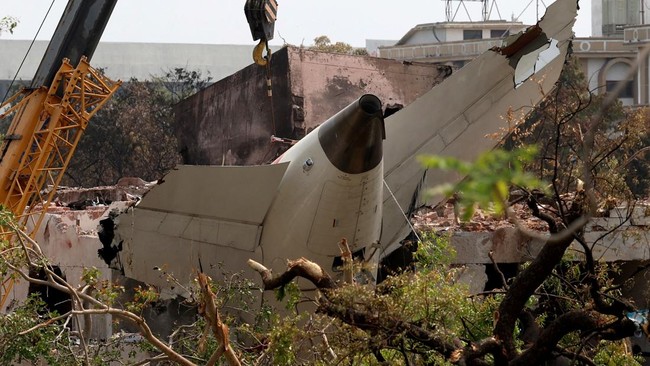
The investigation into the crash of the Air India Boeing 787 Dreamliner, which killed 260 people in June 2025, is not expected to be completed in the near future. Indian authorities are likely to delay the publication of the final investigation report as the analysis of the aircraft’s engines is still ongoing.
The GE Aerospace engines have become the primary focus of the investigation into the tragedy, which occurred shortly after the aircraft took off from Ahmedabad on 12 June 2025.
“Investigators conducted engine testing last April and visited France last month to analyse the engine management unit,” a source familiar with the investigation process told Reuters, as cited on Thursday (11/6/2026).
A preliminary report released last year revealed that the fuel control switches on both engines shifted almost simultaneously from the “RUN” position to “CUTOFF”. Consequently, the fuel supply to both engines ceased shortly after the aircraft took to the air.
According to Bloomberg News, as cited by Reuters, the final accident report is expected to be completed approximately three months after the engine study is finalised. The engines under investigation have reportedly been sent to the United States for further inspection.
Under international regulations, final air accident investigation reports should ideally be published within one year of the incident. However, for complex cases, authorities may issue an interim report if the investigation remains unfinished by the one-year anniversary of the accident.
Reuters previously reported that Indian officials are preparing an interim report ahead of the one-year anniversary of the tragedy, as the investigation process is deemed complicated and time-consuming.
To date, the Aircraft Accident Investigation Bureau (AAIB) of India, the Indian Ministry of Civil Aviation, Air India, the US National Transportation Safety Board (NTSB), Boeing, and GE Aerospace have not provided official responses regarding the progress of the investigation.
Amidst the investigation, attention has also turned to the cockpit voice recordings prior to the crash. Based on initial assessments by several US officials previously reported by Reuters, the recordings suggest allegations that the aircraft captain cut off the fuel flow to the engines. However, the AAIB maintained at the time that it was too early to draw definitive conclusions.
The captain’s father has since filed a petition with the Supreme Court of India requesting an independent investigation that considers other possible causes beyond intentional pilot action.
Meanwhile, the Indian Pilots Federation sent a letter on 5 June to the Indian Minister of Civil Aviation, the aviation regulator, and the Prime Minister’s Office. In the letter seen by Reuters, the organisation requested that an interim report not be released prematurely.
The pilot group is also urging investigators to obtain more technical data from Boeing and Air India to refute the pilot suicide theory that is reportedly being explored by the AAIB.
The previous preliminary report did not issue safety recommendations to Boeing or GE Aerospace, indicating that at the early stages of the investigation, no indications of technical issues with the aircraft or engines had been found.
The Air India crash marks the first fatal accident in the world involving the Boeing 778 Dreamliner since the wide-body aircraft began commercial operations in 2011.
Source: jawawa.id (https://jawawa.id/newsitem/mystery-clouds-probe-into-boeing-787-crash-that-killed-260-1781171607)
Originally published by CNBC Indonesia (https://www.cnbcindonesia.com/news/20260611154120-4-742061/pesawat-boeing-787-jatuh-tewaskan-260-orang-dipenuhi-misteri), translated from Indonesian