
Mysterious Fires Plague Seyegan Home in Sleman: Geologists' Key Findings
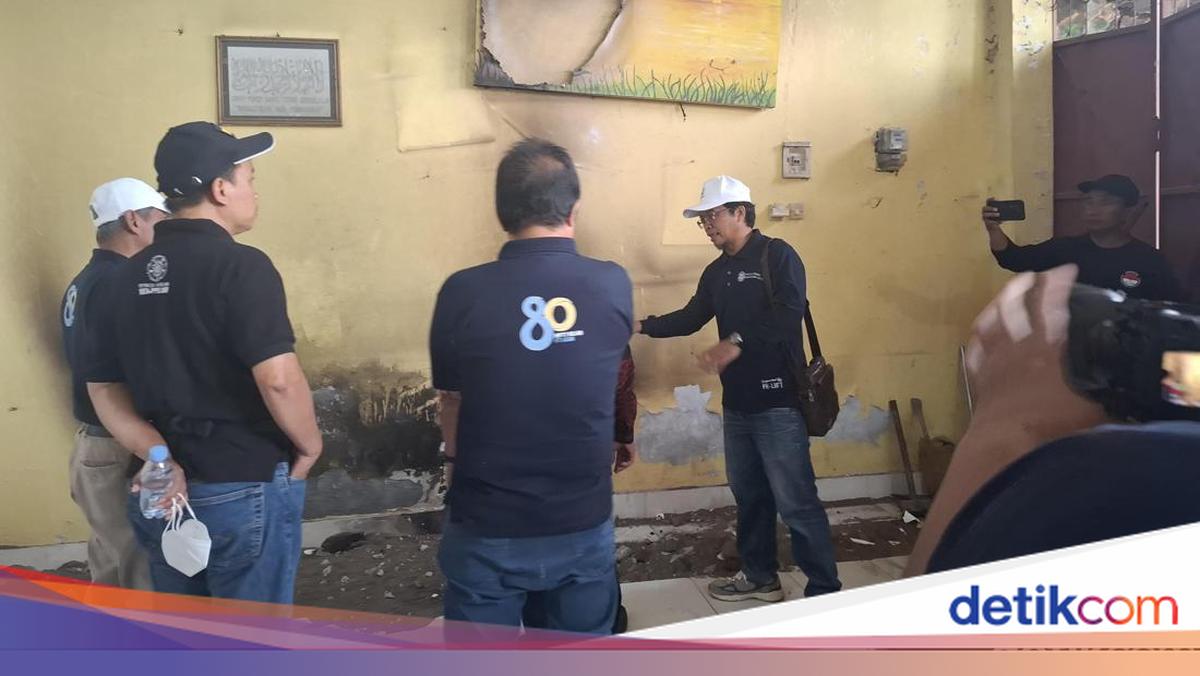
The home of Mutfiana in Seyegan, Sleman, has been repeatedly engulfed in mysterious fires over the past week. Geologists from Universitas Gadjah Mada (UGM) and UPN ‘Veteran’ have been deployed to investigate the cause.
Prof. Dr. Ir. RM. Basuki Rahmad, Dean of the Faculty of Mineral and Energy Technology (FTME) at UPN ‘Veteran’ Jogja, said his team identified a gas source approximately 300 metres from the house in a river area. He noted dark rock formations with water pools emitting gas bubbles. ‘We found gas bubbles strongly indicative of methane (CH4) directly beneath the Nepen Bridge,’ Basuki stated on Saturday (30/5/2026). A simple test using PVC pipes revealed weak gas pressure, though it still emerged from beneath the water surface.
Basuki explained the residential area is likely a former wetland. ‘This suggests the gas source is methane from the wetland, indicating the region was once a marshland,’ he said. The dark rocks found are suspected to store methane, which seeps through cracks when saturated. The team also found fault lines trending north, possibly channeling gas towards the house. ‘We detected fault lines and cracks extending northward, likely guiding the gas to Mr. Agus’s home,’ he added.
Dr. Sarju Winardi, an assistant professor in UGM’s Geology Department, said methane had accumulated in porous household items such as clothing and sofas. ‘Gas builds up over time in materials like fabrics and furniture; when sufficient, it ignites upon contact with oxygen,’ he explained. Thermal imaging showed higher temperatures at fire locations, consistent with combustion. ‘We measured temperatures with thermal cameras; fires occurred where heat was elevated, as expected during combustion,’ he added.
Dr. Sarju added that UGM geologists plan to retest methane levels next week and analyse water samples, as previous fires occurred near water pipes and wells. ‘We will measure gas content and check if water is contaminated with methane,’ he said. Methane-contaminated water doesn’t ignite underground but burns when released into air. ‘When water surfaces, methane escapes and ignites upon contact with oxygen,’ he explained. Methane behaves similarly to LPG but requires higher concentration to ignite. ‘Like household LPG, but lower calorific value; it needs higher concentration to ignite,’ he noted.
The house has experienced 39 fires across 34 different points in one week. Police and Gegana teams investigated, concluding septic tank leakage caused methane buildup. Despite repairs to the septic tank, fires continue. ‘We followed Gegana’s advice, moved clothes, but fires still occur,’ Mutfiana said. Police stated residual methane remains despite the repairs.