
Mysterious Annual Water Loss in Lake Toba: What is Happening?
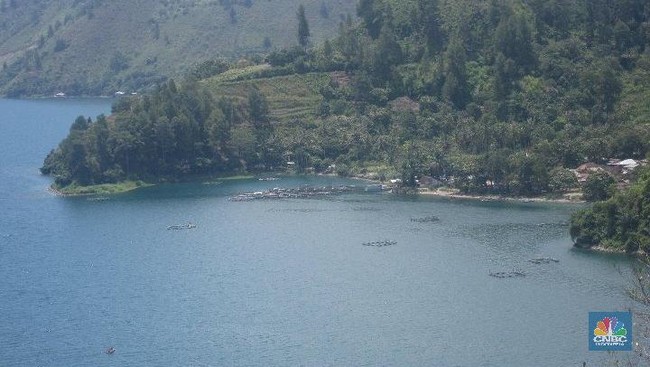
The decline in Lake Toba’s water levels in recent years has become a major concern for the public, impacting the fisheries, energy, and tourism sectors. Research from the National Research and Innovation Agency (BRIN) reveals that the changes in Lake Toba’s water levels are influenced not only by climate factors but also by evolving human activities in the region.
Hendri, a researcher from BRIN’s Centre for Climate and Atmosphere Research (PRIMA), discussed the findings of his study regarding the dynamics of Lake Toba’s water levels. The research utilised observation data from 1957 to 2020 to address public concerns regarding whether the water levels are truly declining and what factors are responsible.
“The research results show that a decline in Lake Toba’s water levels has indeed occurred, but the causes differ across different periods,” Hendri stated on Saturday (1/8/2026).
After conducting a statistical analysis of over six decades of observation data, the research team identified a turning point in 1984. “That year coincided with the commencement of operations at the Sigura-gura Dam and the hydroelectric power plant (PLTA). Consequently, the characteristics of the lake’s water level changes before and after 1984 need to be analysed separately,” Hendri added.
From 1957 to 1984, Lake Toba’s water levels experienced a declining trend of approximately 22 millimetres per year. This decline was primarily driven by climate variability, specifically the El Niño phenomenon, which caused reduced rainfall in the Lake Toba catchment area.
After 1984, the average rate of decline became much smaller, at approximately 2 millimetres per year. Although the long-term trend has remained relatively stable, the water levels continue to fluctuate annually. “During certain periods, extreme declines occurred, such as in 1987, 1990, 1998, and 2016, linked to a combination of El Niño and a positive Indian Ocean Dipole (IOD),” he added.
Further analysis indicates an increasing role of human activity after 1984, particularly related to hydroelectric operations and changes in land use. “Water usage for hydroelectric power operations has a more dominant influence compared to domestic activities. Additionally, changes in land use within the catchment area have contributed to changes in Lake Toba’s water reserves,” explained Hendri.
Satellite imagery analysis shows that between 1988 and 2020, the area of natural forest in the Lake Toba region decreased by approximately 29%. Conversely, the area of plantation forests has increased significantly, while residential and agricultural areas have also continued to expand.
“The reduction in natural forest cover is estimated to have diminished the catchment area’s ability to absorb and store rainwater, thereby affecting the fluctuations in the lake’s water levels,” he noted.
He emphasised that the changes in Lake Toba’s water levels are the result of interacting factors. “While climate variability remains a significant factor, the influence of human activity on the lake’s dynamics is becoming increasingly evident. Therefore, efforts to maintain the sustainability of Lake Toba should not only focus on climate change adaptation but also require more prudent land-use management and water resource utilisation,” he asserted.
He expressed hope that these findings would serve as a scientific basis for the government and stakeholders in formulating management policies for Lake Toba to ensure its ecological, economic, and social functions are preserved for future generations.
The Head of PRIMA BRIN, Albertus Sulaiman, stated that research on Lake Toba is crucial for providing a scientific foundation to understand the dynamics of one of the world’s largest volcanic lakes. He noted that the research findings are expected to serve as a reference for developing more accurate and sustainable regional management policies.
“Previously, the decline in Lake Toba’s water levels was often attributed solely to climate change. However, this research shows the issue is more complex, involving the interaction between climate factors and human activities. These findings provide an essential scientific basis for stakeholders to formulate more adaptive and sustainable management steps for Lake Toba,” explained Albertus.