
MYP Programme Becomes South Sulawesi's First Large-Scale Development Project
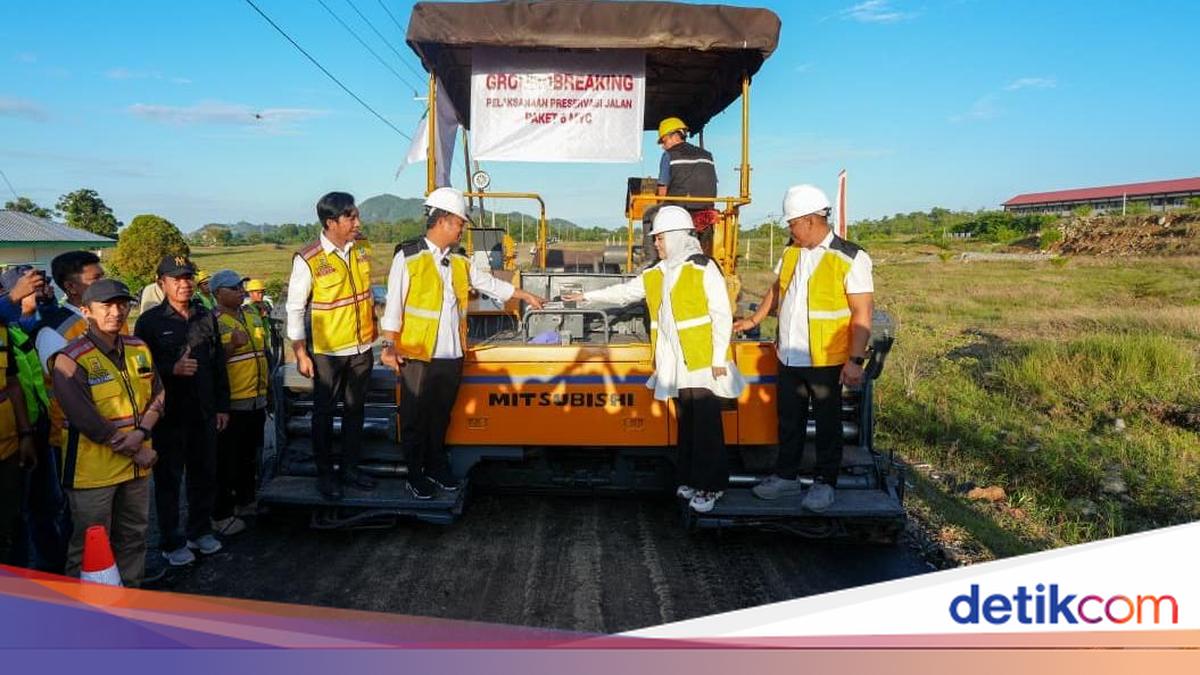
The Secretary General (Sekjen) of the Ministry of Public Works (PU) of the Republic of Indonesia, Apri Artoto, has praised the Multi Years Project (MYP) programme of the South Sulawesi Provincial Government. He noted that this is the first time the provincial government has undertaken infrastructure development on such a large scale.
The remarks were delivered during Apri’s working visit to Makassar, South Sulawesi, last week, where he was received by the Head of the Provincial Highways and Construction Development Agency, Andi Ihsan.
“The Secretary General appreciates the MYP programme of the South Sulawesi Government, because a programme like this is being carried out by the provincial government on a large scale for the first time,” said Andi Ihsan on Monday (7/9/2026).
The MYP programme for the 2025-2027 fiscal years was launched by South Sulawesi Governor Andi Sudirman Sulaiman in October last year. The total budget reaches Rp3.7 trillion, sourced from efficiency savings in the provincial budget (APBD).
The flagship project targets the repair of 1,000 kilometres of roads, irrigation networks serving 54,000 hectares of paddy fields, and the construction of two regional hospitals in Gowa and Luwu regencies. Construction progress continues to be accelerated, with completion targeted for next year.
“This appreciation from the Ministry of Public Works is certainly an encouragement for the provincial government to continue developing infrastructure in a sustainable manner,” explained Andi Ihsan.
He added that the meeting also discussed the knock-on effects of the MYP programme on economic connectivity and improved welfare for the people of South Sulawesi. The development programme covering 85 road sections is considered to play a strategic role in opening access between regions, facilitating people’s mobility, and supporting the distribution of goods and economic activity.
“In addition to discussing the MYP, we also proposed the continuation of road development in Seko, Rongkong, Sabbang and several other roads through the presidential instruction for regional roads in South Sulawesi,” Andi Ihsan concluded.
As previously reported, South Sulawesi Governor Andi Sudirman Sulaiman outlined four main reasons why the provincial government chose the multiyear development mechanism over single-year budgeting.
The first reason is to guarantee the completion and physical integrity of large-scale projects such as hospitals or roads. According to him, a one-year duration is insufficient to finish supporting facilities; moreover, phased road construction risks triggering new damage at joints due to differences in the age of concrete or asphalt and weather exposure.
The second reason focuses on cost and tender efficiency. Holding a single tender for a large-value package, such as Rp 500 billion, is considered far more economical and efficient than repeating the tender process ten times for Rp 50 billion each, which could potentially cause budget losses and double budgeting.
The third reason is to attract the involvement of national-scale contractors and state-owned enterprises (SOEs) to maintain quality of work, whilst still requiring a 40 per cent local content scheme so that local contractors can take part.
The fourth and final reason is to guarantee financing certainty and maintain the health of the regional cash flow. Through the multiyear scheme, the provincial government has the flexibility to prepare periodic payment projections in line with revenue realisation for the next two to three years.
This strategic step not only provides security in regional fiscal management but also effectively prevents the risk of default on payments to contractors.