
Myanmar’s Dawei port megaproject could offer a regional shipping shortcut, but viability doubts linger
analysis Asia
Myanmar’s Dawei port megaproject could offer a regional shipping shortcut, but viability doubts linger
Myanmar’s Dawei special economic zone could offer Thailand a shorter route to the Indian Ocean by bypassing the Strait of Malacca, but conflict, financing constraints and Russia’s role raise questions over whether the long-stalled project can be revived.
BANGKOK: Years after ending a joint venture with Thailand to build Southeast Asia’s largest industrial zone – including a deep-sea port that could offer a regional shipping shortcut – Myanmar is looking to revive the megaproject with Russia’s involvement and renewed interest from Bangkok.
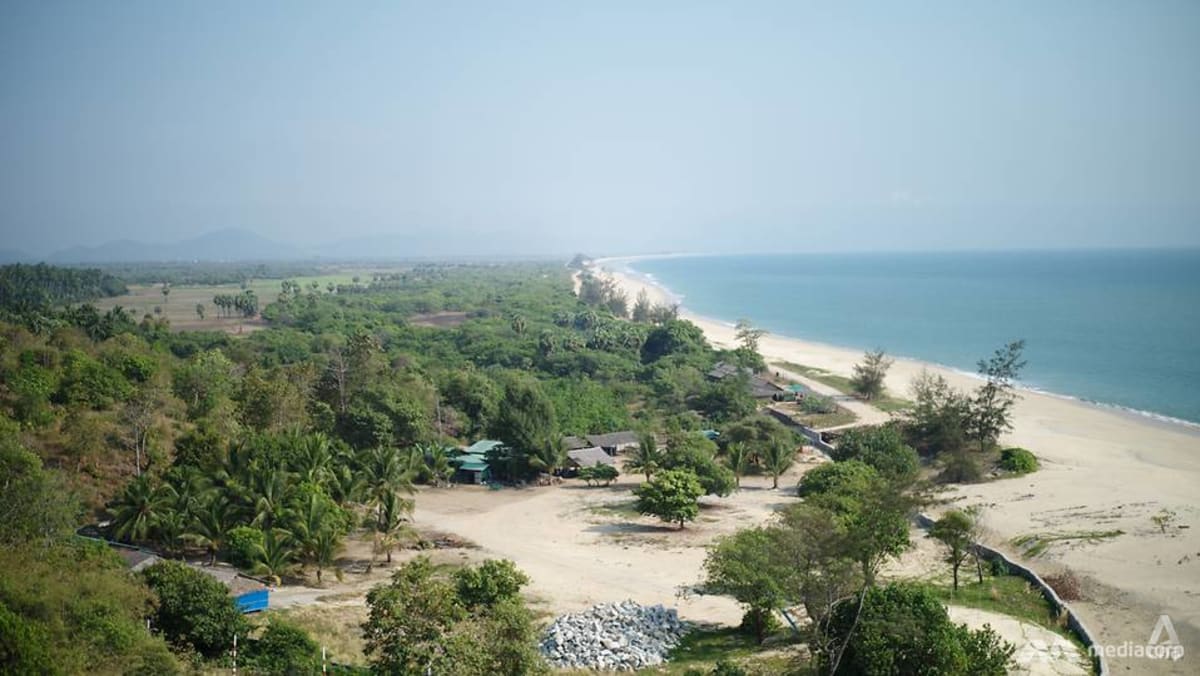
The Dawei special economic zone (SEZ) in southern Myanmar was conceived as one of Southeast Asia’s great new gateways when planning began about two decades ago.
The plan was to develop a regional town pinned in the deep south of a rural fishing peninsula, into a world-class deep-sea port on the Andaman Sea, surrounded by heavy industry and connected by road and rail directly to Thailand’s industrial heartland along its Eastern Economic Corridor (EEC).
Planners saw it connecting production centres as far east as Phnom Penh and Ho Chi Minh City with the Indian Ocean, potentially speeding the movement of goods between mainland Southeast Asia and markets to the west by several days by bypassing the Strait of Malacca.
Both countries had signed a memorandum of understanding in 2008 to develop the SEZ. But after struggles with financing, infrastructure requirements and disagreements, a development concession held by a Thai-led private consortium was terminated in 2020.
Naypyidaw is now formally trying to restart the project, and though it has not publicly named a master developer, it has an interested partner in Russia.
In July, it said work to set the geographical boundaries of the port was in its final stages, less than 18 months after Moscow and Naypyidaw signed an investment cooperation framework covering Dawei.
Russian involvement has subsequently expanded into proposals for a deep-water port, 660 MW power plant, oil refinery and other heavy industry.
Thailand is showing renewed interest in the merits of Dawei too. Under the leadership of Prime Minister Anutin Charnvirakul, Thailand’s relationship with Myanmar’s authorities has visibly warmed in recent months.
Min Aung Hlaing made his first official visit to Thailand as president in August, during which the neighbours agreed to cooperate on road, maritime, port and cross-border linkages, including the transport corridor to Dawei, which lies about 140 km west of the Thai border crossing at Phu Nam Ron in Kanchanaburi province.
“Our countries, Thailand and Myanmar, are ready for a new chapter in economic cooperation that is based on trust, confidence and the mutual benefit of the people of both nations,” Anutin said.
Min Aung Hlaing also used an accompanying business forum in Bangkok to explicitly promote Dawei.
Despite the latest developments, observers noted the area around the SEZ remains mired in armed conflict.
They also questioned if Russia’s interest would be sufficient for the project’s viability and what Thailand stood to gain from renewed engagement with Dawei.
GEOPOLITICAL BALANCING
Since the 2021 coup and outbreak of civil war, and as Myanmar’s international isolation has increased, Russia has grown to become a useful ally, said Ian Storey, principal fellow at the ISEAS-Yusof Ishak Institute in Singapore and author of “Putin’s Russia and Southeast Asia”.
Moscow considers Myanmar a viable partner in Southeast Asia due to its location, resources and potential as an energy customer, he said.
Myanmar has turned to Russia for three things: diplomatic validation, military equipment and help to resolve the country’s energy crisis, he said, adding that proceeding with investments in Dawei could deepen economic, political and military ties between the two nations.
“Dawei would give Russia a toehold in the Andaman Sea and therefore access to the Indian Ocean and the Straits of Malacca. It would be especially useful as a port of call for Russian submarines transiting between the Pacific and Indian Oceans,” he said.
Russia has acted as a diplomatic “shield” for Myanmar at the United Nations, Storey said, opposing stronger international pressure against Myanmar’s military and using its position on the Security Council to push back against scrutiny of the government.
Min Aung Hlaing became president in April following military-organised elections held in December and January that excluded major opposition parties and were widely criticised as neither free nor fair.
Moscow has also supplied Myanmar with fighter aircraft, helicopters and drones, according to a UN Special Rapporteur investigation, and promised to build a small modular reactor in Naypyidaw. So far, it has not delivered on any large-scale development project in Myanmar.
In return, Myanmar’s generals have endorsed Russia’s invasion of Ukraine and supplied spare parts and munitions to the Russian military. “It’s a very transactional relationship,” Storey said.
But Myanmar’s military-backed government still faces severe financing constraints and international isolation.
Following the coup, major international companies pulled out of Myanmar while Western sanctions, worsening conflict and an increasingly difficult business environment caused foreign investment to plunge by 74 per cent, according to ISP-Myanmar, an independent think-tank.
Myanmar has continued to earn substantial foreign currency from natural gas exports to Thailand and China, while Chinese investors accounted for nearly half of new foreign investment inflows between 2021 and 2025, ISP reported.
With such a reliance on the economic clout of China, inviting Russia to Dawei, a project with geopolitical symbolism beyond its present commercial value, serves primarily to rebalance its foreign relations, said Teerachai Sanjaroenkijthaworn, coordinator for the ETOs Watch Coalit
Source: jawawa.id (https://jawawa.id/newsitem/myanmars-dawei-port-megaproject-could-offer-a-regional-shipping-shortcut-but-viability-doubts-linger-1787784611)
Originally published by CNA (https://www.channelnewsasia.com/asia/myanmars-dawei-port-megaproject-could-offer-regional-shipping-shortcut-viability-doubts-linger-6341866)