
Myanmar Workers in Singapore Face Job Scams and Labour Exploitation Amid Civil War Crisis
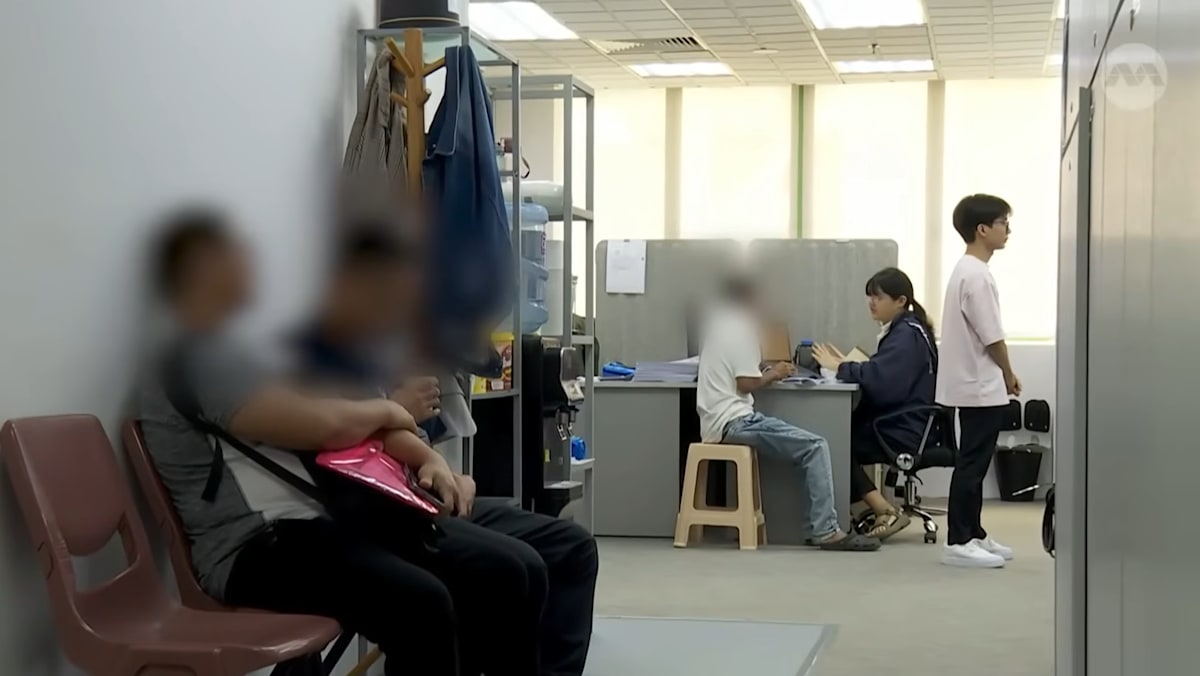
‘I’m scared to go back’: How some Myanmar workers end up exploited in Singapore
Non-governmental organisations say they are receiving more complaints from Myanmar nationals over issues like unpaid wages, as well as allegations of recruitment scams that lure workers into illegal work such as sexual services.
SINGAPORE: Believing she could work at a beauty salon in Singapore, Mary paid her agent more than S$5,800 (US$4,500) in fees to secure the job.
But when the Myanmar national arrived in Singapore, her agent told her the salon was temporarily closed and that she would work at the employer’s massage shop instead.
She was forced to give illicit massages there, she told CNA. When she refused to provide sexual services for a male client, she was fired.
Mary’s agent later suggested another job where she was again asked to do sex work, but when she refused once more, her employer started piling on more tasks.
Her salary was cut by more than 60 per cent. She was later told her pay would be converted to a commission-based structure, replacing her basic salary and housing reimbursement.
Mary eventually turned to the Humanitarian Organisation for Migration Economics (HOME), which helped her to file a case for wrongful dismissal. It also filed a case with the Ministry of Manpower (MOM) for employment breaches.
Mary is among a growing number of Myanmar nationals turning to non-governmental organisations (NGOs) like HOME for help over alleged job scams.
The cases come against the backdrop of Myanmar’s civil war, which has pushed more than a million people to flee since it broke out in 2021 and left many vulnerable and desperate.
CNA spoke to dozens of Myanmar nationals in Singapore – their names have been changed in this article to protect their identities – and to organisations that assist those in need.
What emerged was a familiar pattern: People driven from a broken economy and the threat of conscription, lured by promises of legal jobs, and left exposed once they arrived.
“Some of the women may feel coerced into performing sexual services that they did not promise to do because they’ve already paid such a large amount of agency fees and they’re afraid that if they refuse, they will be terminated and sent back home,” said HOME executive director Stephanie Chok.
“We’re also seeing situations of wrongful dismissals, where they get terminated after a very short while for very dubious reasons. So probably, this churn is just for the agencies to earn recruitment fees from a worker, fire the worker, and then bring another worker and earn (more) agency fees.”
PROMISES VS REALITY
Many arriving from Myanmar are fleeing active conflict, economic collapse and, since 2024, stricter conscription that has heightened fear among young people.
While there are no official numbers, estimates suggest there are about 200,000 Myanmar workers in Singapore, which is often perceived as a nearby and stable place offering better pay.
But for some, reality bears little resemblance to the paperwork handed to them.
In the case of Diana, for example, the job approval letter she was shown listed her as a food processing worker.
However, the 28-year-old, who paid about S$4,700 in agent fees for the job, was promised a beautician role and instead sent to a massage parlour.
Diana alleges she was molested and later fled to an NGO for help. With its assistance, she filed a police report and the case was eventually settled out of court.
In the cases of Zaw and Kyaw, who later turned to the Transient Workers Count Too (TW2) NGO for help, their agents were not upfront about their work permits.
The two men had fled Myanmar to avoid conscription, only to find out later that their promised two-year contracts as kitchen assistants turned out to be fake and their job approval letters stated they were “performing artistes”, with a validity of just six months.
Both had paid more than S$4,000 to an agent and travelled for days by land to reach Singapore.
“I’m stressed that I have no money left and have been issued a 14-day special pass. Everything now depends on whether MOM can resolve the case within this period,” Zaw said.
Special passes are issued by MOM to migrant workers who have valid employment claims, or who are assisting with ongoing investigations. This allows them to remain in Singapore until their cases have been fully resolved.
“I’m worried not only about my finances, but about my sick father in Myanmar right now,” Zaw added.
For Kyaw, the urgency is private and painful – his parents were detained by the military back home, leading him to keep his situation a secret from the rest of his family.
Mr Ethan Guo, executive director of TWC2, said such desperation to leave a war-torn country leaves people open to being taken advantage of.
“The difference with the workers from Myanmar is that they cannot afford to go home. They cannot afford to be sent back and to lose their jobs. So unfortunately, that means that they would do everything within their means to keep their jobs,” Mr Guo pointed out.
INVESTIGATIONS UNCOVER LARGER ISSUES
When complaints first reach NGOs such as HOME and TWC2, they commonly appear as routine employment issues. These include unpaid wages, unfair dismissals, workplace injuries or large recruitment fees.
It is often only during investigations that misleading or fraudulent recruitment practices surface.
At both HOME and TWC2, statistics reflect a sharp increase in Myanmar nationals seeking help in recent years.
TWC2’s records show assistance to Myanmar nationals rose from 1 case in 2022 to 131 cases in 2025. Meanwhile, HOME’s figures show a steady climb in the number of Myanmar nationals helped across both domestic and non-domestic categories.
Overall cases handled at TWC2 also rose to 1,605 in 2025, with Myanmar migrants forming a growing subset.
But NGOs warned these figures likely understate the true scale.
Under Singapore rules, migrant workers who are fired or whose permits end are usually repatriated by defa