
Myanmar Junta Leader Visits Malaysia: Is the ASEAN Stance Shifting?
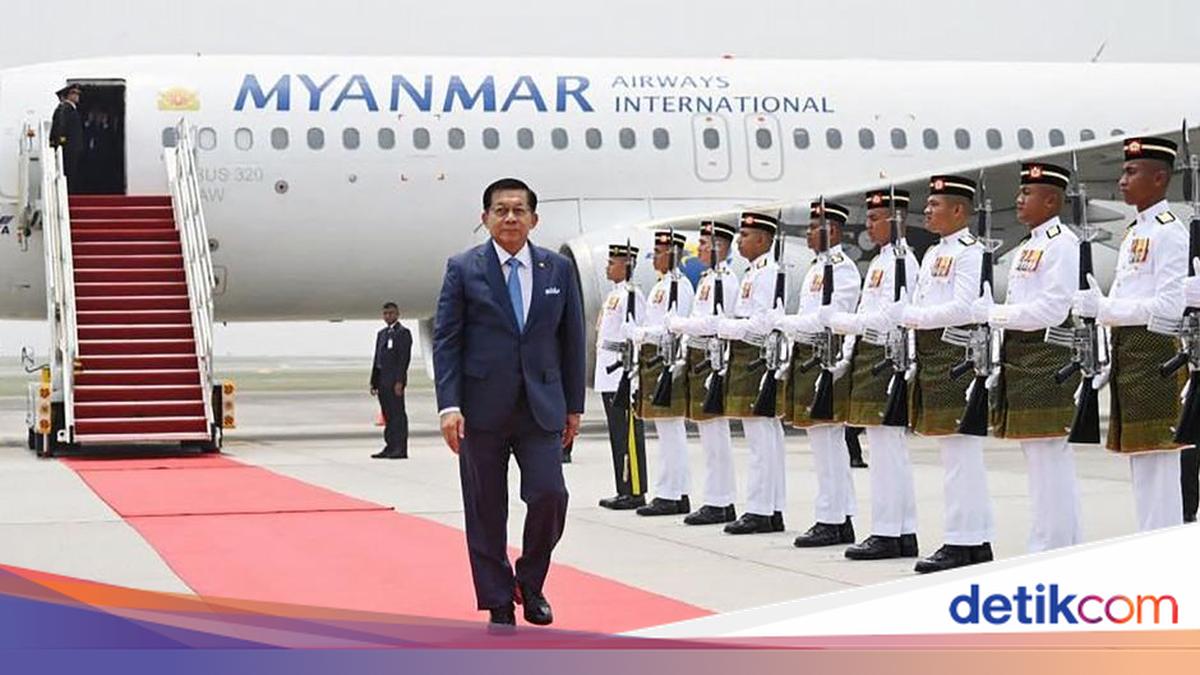
Myanmar President Min Aung Hlaing arrived in Malaysia on Wednesday (7/10) for a two-day visit to meet Prime Minister Anwar Ibrahim, amidst Kuala Lumpur’s plans to repatriate thousands of undocumented Myanmar nationals currently in the country.
The visit takes place as the United Nations (UN) and human rights groups warn of the risks faced by Myanmar citizens returning to a country still embroiled in civil war. Malaysia stated that approximately 5,000 Myanmar nationals have agreed to ‘voluntary’ repatriation, while nearly 1,500 people had already returned to Myanmar as of Sunday (4/10).
The Malaysian government stated that discussions between Anwar and Min Aung Hlaing would cover the repatriation of Myanmar nationals from all ethnic groups in a manner that is ‘voluntary, dignified, and safe’.
Malaysia pushes for Myanmar repatriation
Min Aung Hlaing’s visit follows Malaysia’s intensified efforts to repatriate Myanmar nationals. According to Anwar, around 10,000 Myanmar citizens have been deported from Malaysia since January. Myanmar state media reported that the number of people returned this year also approaches 10,000.
Malaysia maintains that these repatriations are voluntary. However, the UN and human rights organisations have questioned the safety of this policy due to the ongoing armed conflict in Myanmar.
Anwar stated that Myanmar must guarantee the safety of those returning. “Myanmar must ensure proper treatment of its own people so that there is no abuse, oppression, or human rights violations,” Anwar told the Malaysian Parliament. “However, for me, if any country wishes to bring back its citizens from our country, we welcome them,” he added.
The Malaysian government stated that bilateral talks would also discuss peace efforts through the ASEAN mechanism. The Malaysian Foreign Ministry noted that both leaders would review “ongoing efforts through the ASEAN mechanism” to find a resolution to the Myanmar conflict.
The visit also occurs amidst rising domestic pressure in Malaysia against Myanmar migrants and refugees, particularly the Rohingya. The Malaysian Human Rights Commission previously noted “increasing hostility, discriminatory rhetoric, and online attacks” against the Rohingya.
Concerns over Rohingya repatriation
Human rights groups have warned that the Rohingya could be included in the group affected by the repatriation policy. The Malaysian government has not yet clarified the ethnic backgrounds of the Myanmar nationals who have been returned.
Malaysia hosts more than 215,000 refugees and asylum seekers registered with the UN refugee agency. Over 126,000 of these are Rohingya from Myanmar.
The UN and human rights groups fear that Rohingya refugees could face renewed violence in Myanmar. Rohingya individuals do not possess full citizenship in their home country.
UN Human Rights Chief Volker Türk warned that the current situation is not an appropriate time for forced returns. “This is not the time to forcibly return anyone to a country plagued by severe human rights violations and abuses,” Türk said last week.
These concerns are particularly related to the situation in Rakhine State, where armed groups are fighting against the Myanmar military. Military airstrikes in the last two weeks have killed at least 58 people and wounded dozens more, according to Reuters. AFP reported that at least 50 people were killed in an airstrike on a market in Rakhine last week.
Human rights groups also warned of the risk of conscription for those being returned.
Min Aung Hlaing’s visit draws ASEAN scrutiny
The visit to Malaysia represents one of the significant diplomatic tours for Min Aung Hlaing since the 2021 military coup that overthrew the elected government of Aung San Suu Kyi and triggered a civil war in Myanmar.
The conflict has killed more than 100,000 people and displaced over 3.5 million, according to figures cited by Reuters.
ASEAN previously excluded Min Aung Hlaing and senior Myanmar officials from high-level meetings because the military government failed to implement the bloc’s agreed peace roadmap. However, several ASEAN nations have begun to resume visits from Min Aung Hlaing. Malaysia is the fifth ASEAN nation to welcome him, following Thailand, Laos, Vietnam, and Cambodia, which have hosted him since he assumed the presidency in April.
Anwar previously openly linked the visit to efforts to accelerate the repatriation of Myanmar nationals. In a podcast interview last month, he stated that relations with Myanmar could continue to develop if Myanmar is willing to accept its refugees back. “I want to tell him that we can be friends and trade. We can accept Myanmar, but they must take back their refugees,” said Anwar.
Richard Horsey, senior Asia adviser at the International Crisis Group, assessed that Malaysia’s need to secure Myanmar’s cooperation is a key factor behind the visit. “Under pressure to send back refugees, Anwar needs cooperation from Naypyidaw, and this visit is the price,” said Horsey.
Horsey added, “He says this is not recognition, but Min Aung Hlaing will present it exactly as such.”
Meanwhile, the Myanmar government has stated its commitment to “safe and dignified” repatriation. However, the ongoing civil war and violence ensure that the repatriation policy remains under intense scrutiny from the UN and human rights organisations.
Source: jawawa.id (https://jawawa.id/newsitem/myanmar-junta-leader-visits-malaysia-is-the-asean-stance-shifting-1791374501)
Originally published by detikcom (https://news.detik.com/dw/d-8696905/pemimpin-junta-myanmar-kunjungi-malaysia-sikap-negara-asean-mulai-berubah), translated from Indonesian