
Myanmar Junta Forces and Threatens Youth to Join Compulsory Military Service
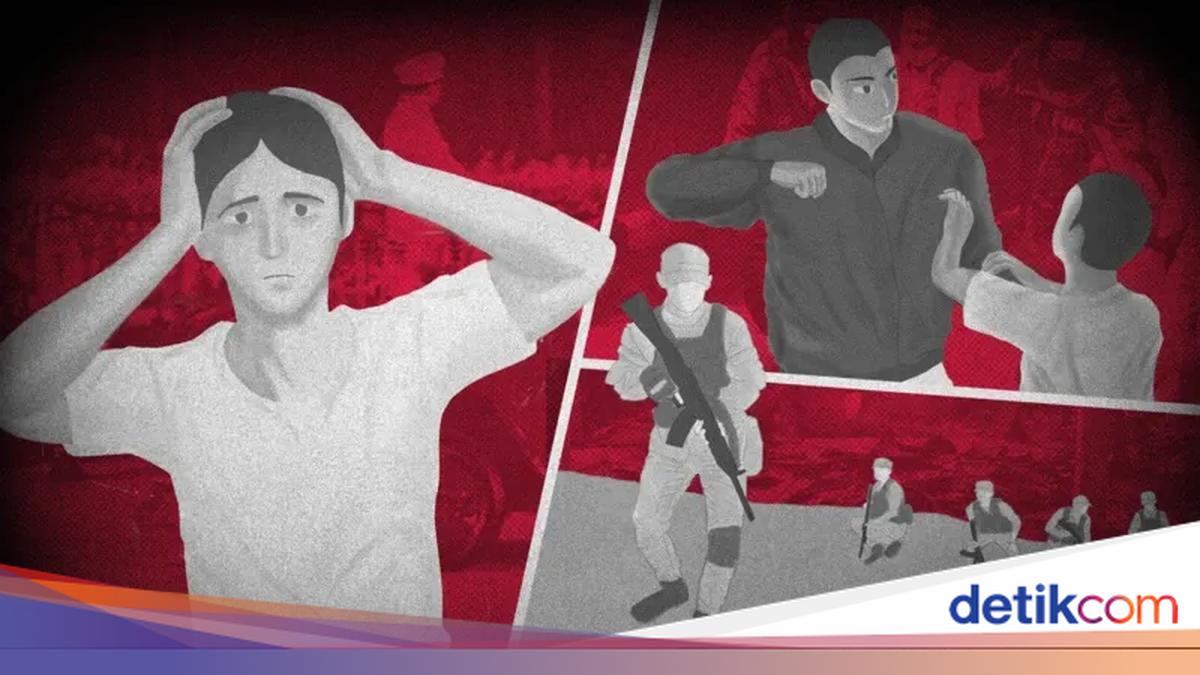
The Myanmar military government is recruiting young people to join compulsory military service and sending them to war zones. Instead of being voluntary as stipulated in the law, the junta is forcing, intimidating, and threatening young people to join battalions. This method is considered by human rights activists as ‘modern slavery and human trafficking’ which has ultimately triggered an exodus of young people abroad. Now, one generation in Myanmar has been lost.
The name of the military deserter in this story is disguised.
Maung Maung was forcibly abducted and intimidated by members of a paramilitary organisation while buying food near Sule Pagoda in central Yangon.
“They shouted at me, ‘You must say that you are willing to join compulsory military service voluntarily. If you refuse or try to go home, I will kill you’,” said Maung Maung, imitating the kidnapper’s words.
“I was terrified and didn’t know what would happen.”
Maung Maung’s abduction is part of the junta’s strategy to continue bolstering their personnel.
This addition follows the Myanmar military’s successive defeats since “Operation 1027” in October 2023.
This operation was initiated by the ‘Brotherhood Alliance’, consisting of three ethnic armed groups in northern Myanmar.
The alliance succeeded in capturing around 180 military bases and other towns in just a few weeks.
Taking advantage of this, the People’s Defence Force (PDF), an armed group formed by Myanmar’s exiled government, the National Unity Government (NUG), also attacked the junta in other areas.
It is these attacks from the two fronts that have weakened the junta’s strength and cornered their position since the coup in February 2021.
The Arakan Army (AA), one of the members of the ‘Brotherhood Alliance’, poses after capturing a town near Rakhine State, Myanmar.
To regain power, the junta has implemented compulsory military service since 2024 for men aged 18-35 and women aged 18-27.
This policy has triggered protests and conflicts across Myanmar.
In reality, instead of voluntary, soldier recruitment is full of coercion, threats, and intimidation.
“They accused me of being a PDF member, even though I am not. They pointed a gun at my head, handcuffed me, and took me to the police station,” said Aung Htun.
“They detained and tortured me. They pinched and twisted my toenails.”
Previously, the junta only recruited 12,000 per year from 2000 to 2020.
However, in the last two years, at least 110,000 young people have become military forces, referring to a report by the human rights organisation formed by military defectors, the Myanmar Defence and Security Institute (MDSI).
This figure is almost ten times the previous average recruitment.
The MDSI report also states that the soldier recruitment process has become more ‘systematic and organised’.
The first method is paid recruitment. That is, young people are lured with large salaries if they join compulsory military service. Usually, this trick succeeds in attracting those who are financially vulnerable.
The next method is a lottery. Village officials draw the names of young people who will be sent for compulsory military service from their village. Those whose names come up in the draw must join the junta.
If they refuse, they must replace the ‘lottery’ with money or ‘buy’ someone else who has been prepared and supplied by paramilitary organisations.
The last method, which is the most commonly used, is arrest or forced abduction, like in the cases of Maung Maung and Aung Htun.
“This is a form of human trafficking and modern slavery that systematically violates human rights,” said Major Naung Yoe, a military officer at MDSI.
Life in the military camp: ‘We fear seeing tomorrow’
The kidnappers transported Maung Maung by truck to Mingaladon, a garrison town area with many military installations on the northern outskirts of Yangon.
Maung Maung was taken to a two-storey building of 70 square metres and forced to sign a compulsory military service registration letter.
Maung Maung described the building as a ‘chicken coop or bird cage’ that was even ‘worse than prison’.
The windows were deliberately sealed shut and covered with green plastic sheets.
In the building, the detainees received harsh treatment.
One day, Maung Maung saw his friend punched and whipped after making a mistake.
Maung Maung and the other detainees also had to sit all day, making their bodies ‘stiff, tired, and sore’.
At night, they were forced to sleep packed together ‘like sardines’. If they didn’t sleep, they would be beaten and kicked.
“It felt like living in hell. I thought I was going to die,” said Maung Maung in fear.
Beatings did not only occur in the detention house but also in the military training camp.
“Every time we failed to shoot, throw grenades, or set up mines, they would beat us. They also used abusive language,” said Aung Htun in an interview with the BBC.
“We feared seeing tomorrow, feared being beaten again. We prayed for the training to end quickly.”
At night, Aung Htun even lost his appetite to eat and drink, he was so exhausted from training.
Moreover, the food served was ‘rotten, not fresh, and unfit to eat’.
In addition, the previously promised salary of 200,400 MMK (or about Rp1.6 million) was completely cut. Aung Htun only received Rp60,000.
Becoming frontline combatants
After completing training, the conscripts are sent to combat zones. Most are placed in infantry units, according to MDSI.
Some others are sent to the navy, air force, and technical units such as logistics, communications, artillery, and others—depending on their educational background and skills.
Aung Htun was forced to work in a logistics unit in the Bago region, north of Yangon.
“I had to monitor the enemy at night and wake up in the morning to carry ammunition