
MWC 2026: Satellites, AI, and 6G in the Spotlight as Telecommunications Industry Enters New Phase
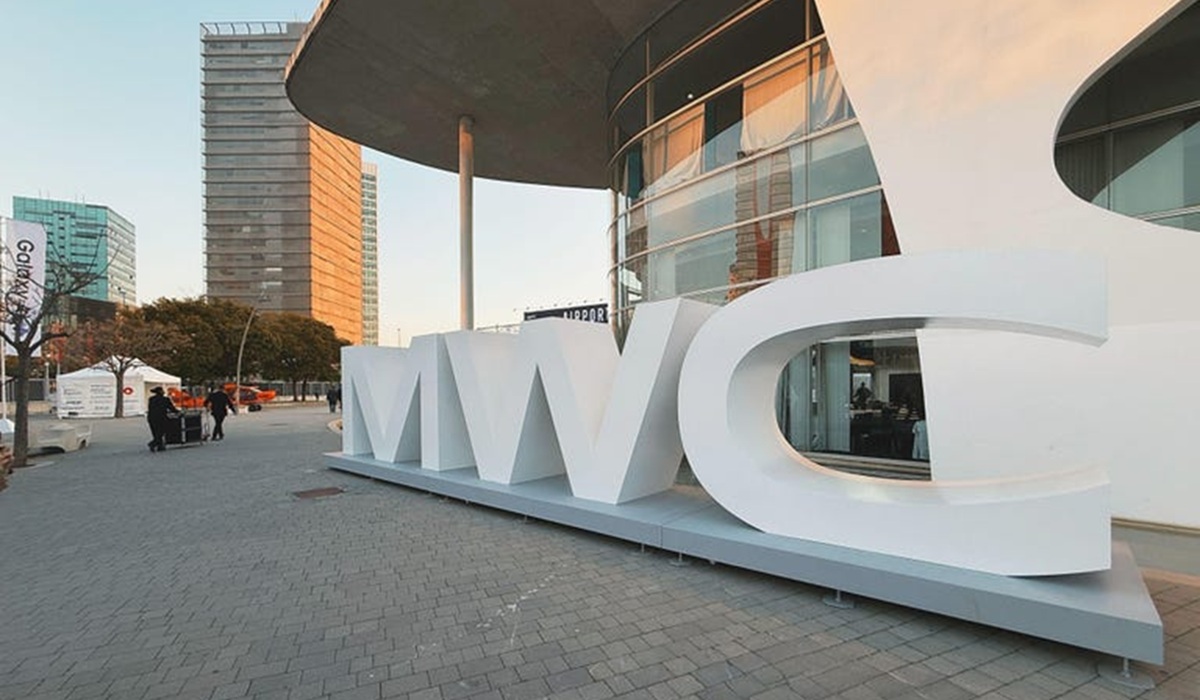
The annual Mobile World Congress 2026, held in Barcelona, demonstrated a major shift in the direction of the global telecommunications industry. Whereas the primary focus previously lay on challenges such as 5G monetisation, attention has now shifted to new opportunities ranging from satellite connectivity and digital sovereignty to advancements in artificial intelligence (AI) and 6G. Analysts from Ookla Research assess that this year’s MWC marks a crucial transition towards a new growth phase for the industry.
One of the main highlights is the growing role of satellite connectivity and non-terrestrial networks (NTN). This technology is no longer merely a complement but is beginning to form a core part of modern network architecture. Starlink announced plans for a second-generation satellite constellation supporting direct-to-device (D2D) communications, with services targeted to begin in 2028. Deutsche Telekom is reportedly an early customer for this technology. Meanwhile, AST SpaceMobile is strengthening its position through collaboration with Vodafone on the Satellite Connect Europe project. Analysts predict that future telecommunications services will integrate fibre, cellular, and satellite into a single seamless package capable of automatically switching networks during disruptions.
The industry is also balancing 5G investments with preparations for the 6G era. Technologies like 5G Standalone (SA) are now serving as an important foundation for next-generation services. A collaboration between Ericsson and Ookla has introduced new testing methods for 5G network slicing, enabling services with ultra-low latency and high reliability. Meanwhile, SoftBank is targeting an early 6G launch in 2029. Nokia even stated that commercial implementation of AI-RAN could begin in 2027, in partnership with Nvidia. Nevertheless, funding challenges remain a concern, particularly in the cautious European market for large-scale investments.
In addition to technology, digital sovereignty has become a major focus, especially in Europe. Many companies and governments are now demanding secure, locally controlled cloud and telecommunications infrastructure. Orange, along with Deutsche Telekom, Telefónica, TIM, and Vodafone, launched the “European Edge Continuum”, a federated edge cloud platform to support these needs. This move is seen as an alternative to the dominance of global cloud providers like Amazon Web Services. Furthermore, the development of security technologies such as post-quantum cryptography is beginning to be implemented to address future threats.
Artificial intelligence has become a theme dominating nearly all discussions at MWC 2026. However, the focus has evolved from mere chatbots to AI agents and network-level intelligence. Operators like LG Uplus and China Mobile have introduced innovations in call services, including real-time language translation. Meanwhile, AT&T highlighted strategies for edge computing to support large-scale AI workloads. Analysts note that AI is now not only used for operational efficiency but is also being focused on enhancing user experiences, particularly in communication services.
MWC 2026 illustrates that the telecommunications industry is entering a new phase of transformation. The integration of satellites, acceleration towards 6G, push for digital sovereignty, and the expanding role of AI form the main pillars of this change. Looking ahead, competition will not only be about network speed but also about who can deliver the most intelligent, secure, and integrated digital ecosystem.