
Muzani Clarifies Role as State Envoy for Khamenei's Funeral Amid Protocol Criticism
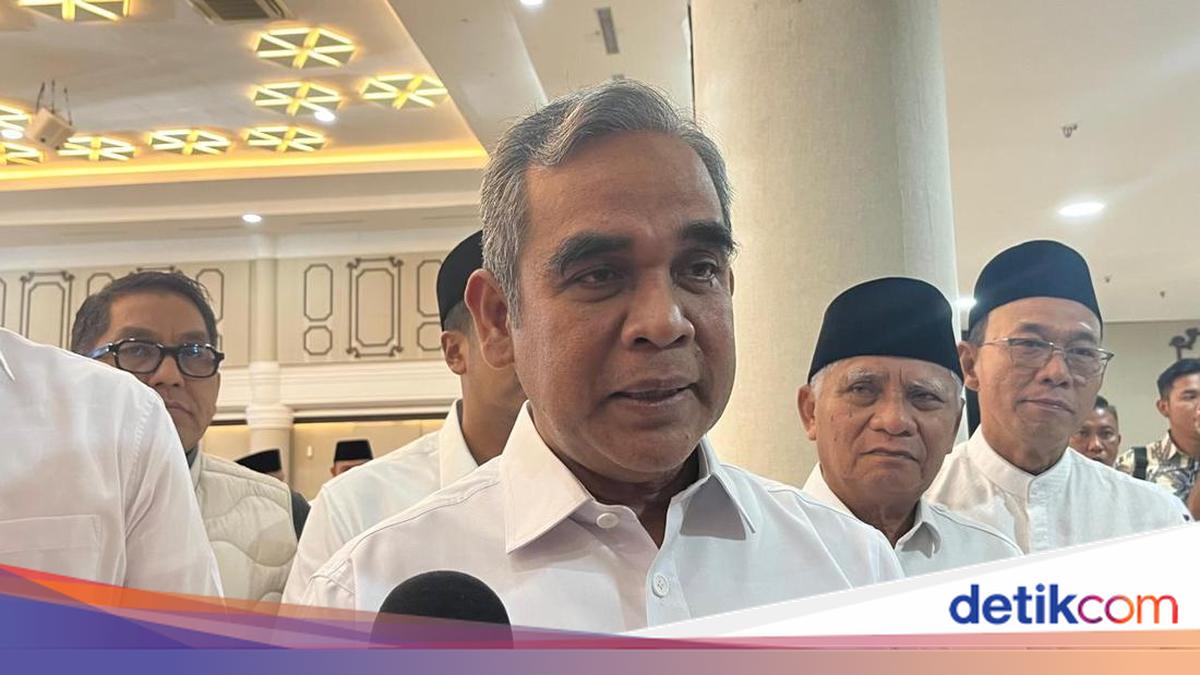
People’s Consultative Assembly (MPR) Speaker Ahmad Muzani has addressed his appointment by President Prabowo Subianto to attend the funeral of Iran’s former supreme leader, Ayatollah Ali Khamenei. Muzani explained that he is attending as an official envoy representing the state.
Muzani initially explained that he was contacted by Foreign Minister Sugiono regarding the plan to depart for Iran. He was directly asked by President Prabowo to attend the funeral procession of Ali Khamenei.
“Oh yes, I was indeed contacted by the Foreign Minister, that the President asked us to represent the people and nation of Indonesia to attend the funeral ceremony of Ayatollah Ali Khamenei following his passing,” Muzani told reporters at the House of Representatives (DPR) building in Senayan, Jakarta, on Tuesday (7/7/2026).
Muzani also expressed deep condolences over the death of Ali Khamenei. He reiterated that his presence there was at the request of the head of state.
“On behalf of the Indonesian nation, the people, and the government of Indonesia, I express our deepest condolences,” he said.
“Therefore, on that day, the President asked me and the Foreign Minister to attend the event. And God willing, we will depart soon. The departure is being arranged by the Ministry of Foreign Affairs. Perhaps tomorrow night, but everything will be coordinated by the Foreign Minister,” Muzani continued.
Muzani then clarified his position in the plan. He stressed that he is acting as a special envoy of the President.
“I was asked to depart representing the Indonesian nation at that time to attend the funeral ceremony of Ayatollah Ali Khamenei. Yes, as an envoy of the President,” he stated.
Muzani acknowledged that the President and the MPR are high state institutions of equal standing. However, he noted that the President has special authority to appoint someone to represent the country on the international stage.
“Yes, the MPR and the President are equal, both are state institutions. The President is the head of state. The head of state has the authority to decide who is deemed fit to represent the country. In this case, the person deemed fit is, of course, based on the President’s considerations,” he explained.
“Therefore, views that consider it important to give an opinion or decision of a President as head of state,” Muzani added.
MPR Deputy Speaker Bambang Wuryanto, known as Bambang Pacul, had earlier criticised the plan for Ahmad Muzani to attend the funeral of Iran’s former supreme leader Ayatollah Ali Khamenei. He criticised the mechanism of dispatching envoys between state institutions.
“If the President dispatches the MPR Speaker, I think the mechanism is not like that,” Bambang Pacul told reporters at the DPR, Senayan, Jakarta, earlier today.
Pacul said Ahmad Muzani and President Prabowo are both heads of high state institutions. According to him, Muzani could only be dispatched as a party cadre.
“Yes, because the mechanism of the relationship between the MPR and the President is that they are both high state institutions. If it is as a cadre, that is possible. But if acting as the MPR Speaker, it is different. So regarding that (envoy), I have not received the information,” he said.
He then explained the correct mechanism. He stated that the President and the MPR Speaker only have a consultative relationship.
“According to the regulations, the MPR leadership holds a meeting. Right? Then from the MPR meeting, it decides to give this consideration, then we go to pay our respects. The status of the President and the MPR Speaker in the meeting is consultative in nature. That applies to high state institutions,” Pacul explained.
“If the leaders meet each other, it is called a consultation meeting. Not commanding, but consultative. I want to consult on this matter, perhaps we endorse something, that is allowed. Clear,” he continued.
Pacul said Prabowo as President can only dispatch his bureaucrats or ministers. However, he did not want to label the action as a violation.
“I am not saying it is a violation. You are the ones saying that. Don’t later say ‘Pacul said this is a violation’, no. I am only stating that the procedural mechanism in our constitutional system among high state institutions is that the leaders’ meetings are consultative in nature. There is no procedure to command. That the President is the head of government, yes. But who is commanded? The ones commanded are his bureaucrats, understand? Yes, indeed. Clear, right? So, let’s straighten out the way of thinking first,” he said.