
Mutating Virus, Epidemiologist Warns That Outbreaks Will Continue to Recur
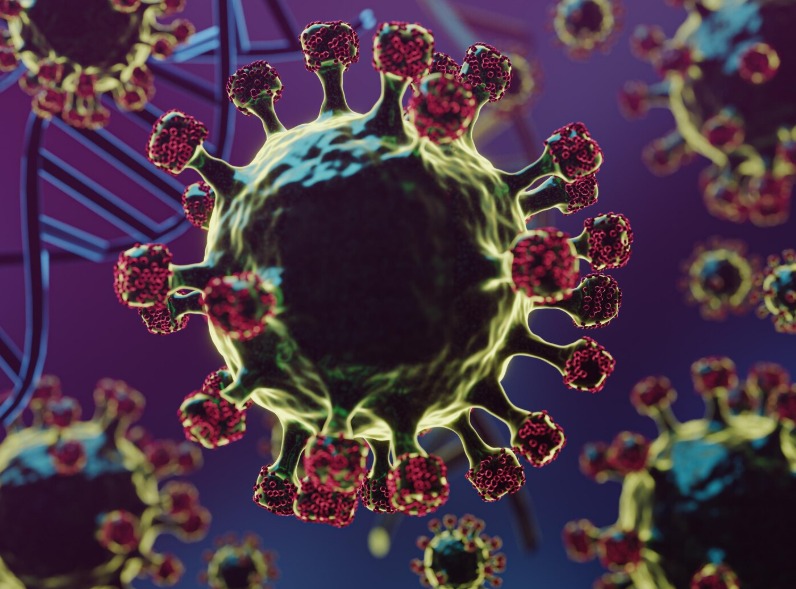
An epidemiologist, Masdalina Pane, warned that the potential for outbreaks of infectious diseases to recur will persist as viruses mutate and form new variants not yet recognised by the human body. She noted that the phenomenon currently observed is not the emergence of entirely new diseases, but rather re-emerging diseases—old illnesses that reappear as outbreaks in various countries.
‘If the disease is new it is called a new emerging disease. But what is happening now is re-emerging disease, diseases that have long existed and reappear as outbreaks,’ Masdalina said when contacted on Tuesday (19 May).
She pointed to Ebola and hantavirus, which have long been known. Ebola, for example, was a major outbreak in West Africa in 2014 in Liberia, Guinea, and Sierra Leone before surfacing again.
Masdalina explained that viruses can persist and trigger new outbreaks because they mutate and multiply. ‘If the variant changes, our bodies have not yet recognised it, so the illness recurs. That is why people can contract influenza repeatedly because the virus is different,’ she said.
She explained that viruses work by reproducing through multiplication rather than reproduction like living beings in general. In this process, viruses can undergo changes in characteristics that affect virulence.
‘In the early stages, virulence is usually very fierce. But over time it can lessen,’ she said. Nevertheless, changes in certain variants can trigger a surge in cases if the population’s immune system is not prepared to face the mutation.
Therefore, Masdalina believes disease surveillance systems must be strengthened to detect viral changes as early as possible. In Indonesia, monitoring is conducted through the Early Warning and Response System (SKDR), including surveillance of influenza and Covid-19. She said patients with influenza-like illness (ILI) symptoms in sentinel areas would undergo swab testing to detect the type of virus and its variant.
‘What is tested is not only positive or negative, but also the variant. Because the variant change is what can cause an outbreak,’ she explained.
In addition to surveillance, she regards strengthening the resilience of the health system as important so that health services do not collapse during surges, such as during the Delta variant Covid-19 when beds were scarce, oxygen was hard to obtain, and medicines were hard to obtain.
Masdalina also emphasised the importance of mitigation through increasing immunisation coverage, especially for diseases that can actually be prevented with vaccines such as measles, polio, diphtheria and pertussis.
‘Don’t wait until a new outbreak then we respond. The main thing is mitigation,’ she concluded.