
Must Know! 10 Key Terms Behind the US-Israel War vs Iran
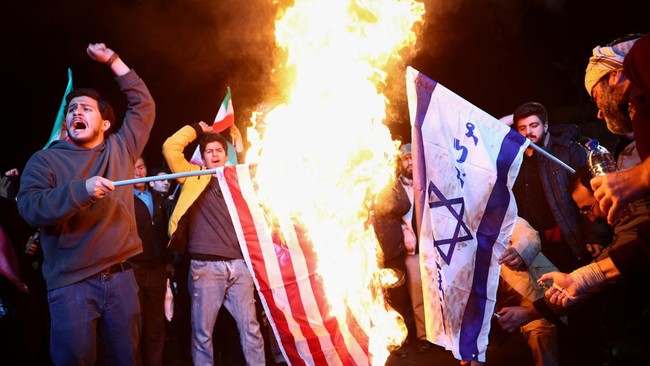
The war between the United States (US) and Israel against Iran has been ongoing for nearly two months. This conflict has not only triggered casualties and disruptions to global energy supplies but has also given rise to various terms frequently appearing in news coverage.
This conflict has even shaken vital global routes such as the Strait of Hormuz, which has long served as the passage for around 20% of the world’s oil supply. Threats to close this route by the warring parties have caused turmoil in the global energy market and sparked surges in energy prices in various countries.
Here are 10 important terms commonly used in this conflict, along with their meanings, as quoted from Al Jazeera on Monday (20/4/2026).
- Hormuz
The Strait of Hormuz is a narrow sea passage between Iran and Oman that connects the Persian Gulf with the Arabian Sea. This route is one of the world’s most crucial energy chokepoints because it carries around 20% of global oil distribution every day.
Since the conflict erupted, access to the strait has been restricted several times, even nearly closed, triggering fears of a global energy crisis. Historically, the name “Hormuz” is believed to be related to “Ahura Mazda”, the supreme deity in Zoroastrianism, meaning “The Wise Lord”.
- Shahed
The Shahed drone is a low-cost cruise munition from Iran, often referred to as a “kamikaze drone”. This drone carries explosives and is designed to strike targets directly.
Its main advantage is its cheap production cost and the ability to be launched in large numbers simultaneously. This tactic overwhelms enemy air defence systems, which must intercept multiple targets at once.
- Tomahawk
The term Tomahawk originally refers to the traditional axe used by Native American peoples in North America. In the modern context, Tomahawk is a high-precision cruise missile from the US capable of striking targets from over 1,600 kilometres away in various weather conditions.
This missile is known for its high accuracy and is often used in strategic military operations. However, its use has also drawn criticism.
Human rights groups have accused one Tomahawk strike of hitting a school in Iran and killing nearly 170 children at the start of the conflict.
- Minab
Minab is a city in Iran located near the Strait of Hormuz and known as a fertile agricultural region or “oasis”. The city is famous for its abundant production of oranges and dates.
The name “Minab” is believed to come from Persian, meaning “blue water” or “clear water”, reflecting the richness of water resources in the area.
However, in this conflict, Minab has come under the spotlight after civilian facilities in the region were reported to have been affected by military strikes.
- Bab al-Mandeb
Bab al-Mandeb, meaning “Gate of Tears”, is a strategic strait connecting the Red Sea with the Gulf of Aden. This route is the main trade link between Asia and Europe via the Suez Canal.
In this war, the Houthi group in Yemen, allied with Iran, has several times threatened to close this route. These threats have heightened concerns over disruptions to global supply chains.
- Epic (Fury)
“Epic Fury” is the codename for the joint US and Israel military operation against Iran, launched on 28 February. This name frequently appears in official White House statements.
Etymologically, “epic” means a grand or heroic tale, while “fury” means anger or rage. Combined, the term reflects the large scale and high intensity of the military operation.
This term is also used to build a narrative of strength and legitimacy in public communications.
- Ayatollah
Ayatollah is a high title in Shia Islam given to scholars with deep expertise in Islamic law, theology, and religious sciences. The term means “Sign of God”.
In the Iranian context, Ayatollahs play important roles not only in religious affairs but also in politics.
Iran’s Supreme Leader, Ayatollah Ali Khamenei, was reported killed in the conflict on 28 February and replaced by his son, Mojtaba Khamenei. This situation represents a major development that has shaken Iran’s power structure.
- Kharg
Kharg Island is Iran’s main oil export centre located in the Persian Gulf. The island serves as the backbone of the country’s energy distribution to global markets.
Due to its vital role, Kharg has become a strategic target in the conflict. In March, a massive US air operation struck more than 90 military points on the island, though it was reported to have avoided major energy infrastructure.
- Kafir
The word “kafir” comes from Arabic, literally meaning “one who covers the truth”. In many contexts, the term is translated as “unbeliever”.
This term has come back into the spotlight after the US Secretary of Defence was seen with an Arabic tattoo that sparked public debate. In the conflict, the term is often used in ideological narratives that reinforce polarisation between the warring parties.
- Khatam Al Anbiya
Khatam al-Anbiya is the name of the headquarters of Iran’s Islamic Revolutionary Guard Corps (IRGC). Literally meaning “Seal of the Prophets”, it refers to Prophet Muhammad as the final prophet in Islam.
This name reflects the strong religious dimension in Iran’s military structure. The IRGC spokesperson, Ebrahim Zolfaghari, once drew public attention with harsh rhetoric against the US, including mimicking the communication style of US President Donald Trump.