
Muslim Nations: Rich in Resources, Poor in Cooperation
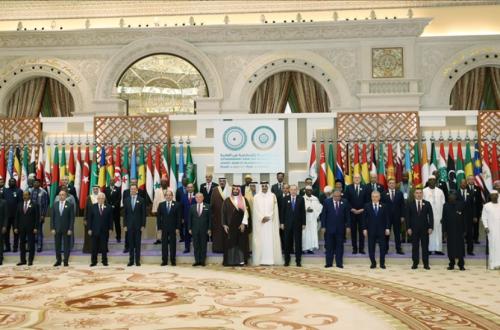
A statement by Indonesian Ulema Council (MUI) Deputy Chairman KH M Cholil Nafis, urging Islamic countries to redirect the energy of their people from internal disputes towards building civilisation, deserves serious attention. The appeal, made during an MUI visit to Egypt and Saudi Arabia on 5 November 2026, touches on a longstanding issue in the Muslim world: why have Muslim nations, despite their abundant resources, been unable to build collective strength?
Muslim nations have extraordinary potential: oil and gas, minerals, agricultural land, strategic trade routes and markets with very large populations. They also possess historical, cultural and intellectual legacies that once formed the foundations of advances in world civilisation. Yet this wealth has not been fully converted into economic, technological and scientific strength, or international political influence.
Ironically, there are stark disparities in prosperity among Muslim nations. According to the World Bank’s classification, GCC countries such as Saudi Arabia, the United Arab Emirates, Qatar, Kuwait, Bahrain and Oman are high-income economies. Indonesia, Malaysia and Türkiye are upper-middle-income, while Yemen, Somalia, Afghanistan, Sudan and Niger face poverty, conflict and limited economic capacity (World Bank, 2026).
This gap is deeply troubling. Some Muslim countries enjoy prosperity and wealth surpluses, while others continue to grapple with hunger, poverty, displacement and the devastation caused by conflict. Allowing some of the community to live in abundance while others remain trapped in extreme poverty runs counter to Islamic values. Qur’an 59:7 warns that wealth should not circulate solely among the rich. Islamic brotherhood should be put into practice through the redistribution of economic opportunities, development assistance, investment, technology transfer and capacity-building in less-developed countries.
The problem is a lack of capacity to consolidate resources through cooperation between countries. Muslim nations are wealthy individually, but not yet strong collectively.
The Organisation of Islamic Cooperation (OIC), founded in Morocco in 1969 and comprising 57 member states, provides an institutional framework for building solidarity across the Muslim world. Yet the OIC has mostly been known for political statements, summits and condemnations of issues affecting Muslims, particularly Palestine. All of these are important, but insufficient. Solidarity should not stop at expressions of concern; it should be manifested in economic, diplomatic, educational and technological strength.
There is still considerable potential for trade among OIC member states. The share of intra-OIC trade rose from 19.16 per cent in 2023 to 20.36 per cent in 2024 (OIC, 2025). This shows that trade by Muslim countries still takes place predominantly with countries outside their own community. Yet trade integration could create a larger market, strengthen industry and reduce reliance on global supply chains.
Energy-rich countries could supply the needs of other countries’ industries. Those with agricultural advantages could strengthen food security across the group, while countries with manufacturing capabilities could develop cross-border industries. Indonesia could expand cooperation with the Middle East in food, the halal industry, renewable energy and investment, while Türkiye and Malaysia could become partners in technology and manufacturing development.
In science and technology, the Muslim world should not remain merely a consumer. Muslim countries need to build their own research capacity, world-class universities, technology industries and innovation ecosystems. The Islamic Development Bank (IsDB) should be strengthened so that it does more than finance projects in individual countries: it should also build collective capacity through research consortia, cross-border scholarships, joint technology-development centres and integrated university networks.
None of these agendas will be easy to achieve without political and security stability. Conflicts between countries and among Muslim groups consume resources, damage infrastructure and deter investment. Differences in schools of thought, geopolitical interests and political orientations should not become reasons for hostility. Respect for sovereignty, the diplomatic resolution of disputes and rejection of aggression should be shared principles.
The Qur’an reminds Muslims in 3:103 to hold fast together to the rope of God and not become divided. Qur’an 8:46 also warns that disputes can lead to a loss of strength. Unity does not mean erasing differences, but bringing them together in pursuit of common interests that are pleasing to God.
The OIC needs to renew its role. It must move beyond declarative diplomacy and empty talk towards measurable cooperation. Trade, investment, education, research, technology, food security and energy initiatives should have clear targets, financing and evaluation mechanisms. More than that, the OIC needs a specific agenda to narrow disparities between member states through development financing and capacity-building in poorer countries.
Indonesia should take a more active role. As the world’s most populous Muslim-majority country, it has experience in governance and diplomacy, economic strength and a tradition of tolerance that can help bridge the different interests of Muslim countries. Indonesia could drive development diplomacy and reconciliation.
The revival of the Muslim world has been proclaimed since the 1970s, but we have spent too long dwelling on nostalgia for past greatness and rhetoric about brotherhood. Revival requires a shared vision, far-sighted leadership, effective institutions and collaboration that delivers tangible benefits. Solidarity should be measured not by the number of conferences or declarations, but by the ability to improve people’s welfare, master scientific knowledge, achieve economic independence, reduce inequality and contribute to world peace.
Muslim nations do not lack the wealth needed to build a civilisational power. What is still lacking is the political will to turn dispersed wealth into collective strength. It is deeply inappropriate for the Muslim world to speak of brotherhood and unity while the suffering and inequality experienced by fellow Muslims remain so stark.
Source: jawawa.id (https://jawawa.id/newsitem/muslim-nations-rich-in-resources-poor-in-cooperation-1794185441)
Originally published by Republika (https://opini.republika.co.id/berita/to7l8f393/negerinegeri-muslim-kaya-sumber-daya-miskin-kerjasama), translated from Indonesian