
Musim Mas Completes Five-Year Programme for Independent Smallholders in Aceh, Strengthening Oil Palm Farmers’ Livelihoods
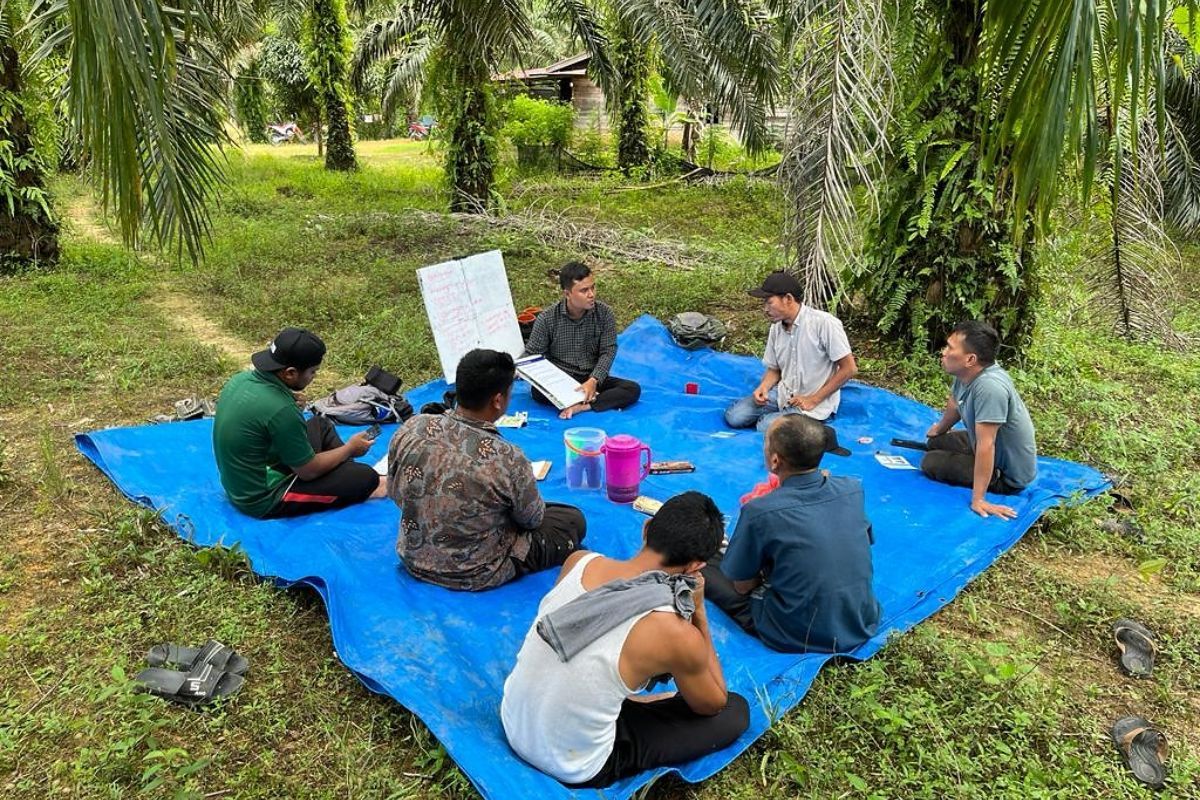
Singapore (ANTARA/PRNewswire) – Musim Mas has announced the completion of a five-year collaborative programme in Subulussalam, Aceh, demonstrating that supply-chain partnerships can improve independent smallholders’ livelihoods while helping to reduce deforestation outside company concessions. Aceh was selected as a priority area because 87% of the biodiversity-rich Leuser Ecosystem lies within the province.
The initiative received support from several supply-chain partners, including AAK, through funding and other forms of collaboration. It focused on independent smallholders farming outside company concession areas. Activities included skills development, responsible farming practices, financial education and environmental monitoring, addressing interconnected challenges faced by farmers and the environments in which they work.
The programme forms part of Musim Mas’s Independent Smallholder Programme, which provides farmers with training in sustainable plantation practices. Musim Mas also uses a train-the-trainer approach with government Agricultural Extension Officers (PPL) to strengthen local capacity and knowledge. Over five years, the programme trained 117 PPLs. With support from Musim Mas field assistants, they subsequently reached 2,239 independent smallholders in 48 villages. This substantially exceeded the original targets of training 40 trainers and reaching 1,000 smallholders.
Strengthening local capacity to drive long-term change
Independent smallholders received training in Good Agricultural Practices (GAP) aligned with the principles of No Deforestation, No Peat and No Exploitation (NDPE). The programme was later expanded with advanced training modules for PPLs and farmers, covering adult learning skills, public speaking, financial literacy and oil palm plantation management. PPLs also received further training, including preparation for Indonesian Sustainable Palm Oil (ISPO) requirements, soil health and household composting.
This approach also helped ensure that knowledge and skills continue to develop in local communities, allowing the programme’s benefits to endure after the project ends.
Linking farmers’ livelihoods with environmental conservation
The programme integrated productivity improvements with environmental conservation. It was based on the understanding that sustainable livelihoods are an important factor in reducing deforestation risks. Key results included:
Adoption of Good Agricultural Practices increased across 48 villages, helping to improve yields and encourage responsible use of agricultural inputs.
Independent smallholders’ financial literacy improved, including their use of banking services and their ability to record daily expenses.
Based on the Roundtable on Sustainable Palm Oil (RSPO) sampling methodology, 82% of surveyed independent smallholders now apply GAP on their farms.
The Women Smallholders Programme reached more than 200 participants with training in health, nutrition and financial literacy.
A model for extending the programme’s benefits
The completion of the Subulussalam programme marks an important development, demonstrating that this model can be scaled to address complex sustainability challenges in the palm oil supply chain.
By strengthening local capacity, using data for monitoring and promoting cross-sector collaboration, the initiative could serve as a model for other sourcing areas, adapted to local conditions.
The partners agreed that sustainability efforts must continue. Building on the results achieved, the programme’s benefits could be extended by continuing to engage local stakeholders, developing training materials and exploring follow-on initiatives to improve community welfare.
“This initiative reflects our commitment to working together across the supply chain to support farmers and promote responsible sourcing practices. By investing in independent smallholders’ livelihoods, we are helping to build a more resilient and sustainable supply chain,” said Sengbee Ng, Sustainable Multi-Oils Manager at AAK.
“Collaboration plays an important role in advancing sustainability amid the complexity of supply chains. Our Independent Smallholder Programme shows that a collaborative approach can respond to needs on the ground by bringing together different stakeholders across the supply chain to create greater benefits. We are proud of this partnership because its benefits are directly felt by independent smallholders and local government,” said Olivier Tichit, Director of Communications and Sustainability at Musim Mas.
About Musim Mas
Musim Mas Group is an integrated palm oil company operating in 14 countries and one of the world’s largest palm oil producers. Its business spans the entire supply chain, from plantations, palm oil mills, refineries and palm kernel crushers to oleochemical and specialty fats plants and functional products. Musim Mas produces a range of value-added palm-based products and derivatives. It also develops innovative, value-added solutions for customers, supported by research and development (R&D) centres in Singapore and Indonesia. Inter-Continental Oils and Fats (ICOF), part of Musim Mas Group, conducts the group’s international marketing activities.
In 2004, Musim Mas became the first large-scale Indonesian company to join the Roundtable on Sustainable Palm Oil (RSPO). In October 2024, the Science Based Targets initiative (SBTi) officially validated Musim Mas’s greenhouse gas emissions-reduction targets. Musim Mas also runs Indonesia’s largest independent smallholder programme to improve farmers’ livelihoods and promote more sustainable oil palm farming practices.
Source: jawawa.id (https://jawawa.id/newsitem/musim-mas-completes-five-year-programme-for-independent-smallholders-in-aceh-strengthening-oil-palm-farmers-1792936344)
Originally published by Antara (Indonesian) (https://www.antaranews.com/berita/5810883/musim-mas-rampungkan-program-lima-tahun-untuk-petani-swadaya-di-aceh-perkuat-mata-pencaharian-petani-sawit), translated from Indonesian