
Museum Bali: A Showcase of the Island of the Gods' Culture
A human skeleton is displayed on the ground floor of the East Building of Museum Bali. The skeleton, with its legs bent, is believed to be that of a modern human (Homo sapiens). Next to the skeleton, which was found at the Gilimanuk site in Jembrana, Bali, are a number of grave goods.
One of the museum’s guides, Tania Pardosi, explained that the grave goods were buried with their owner because ancient humans believed in life after death. “Grave goods could include items like a wok and jewellery,” she told detikBali on Tuesday (4/8/2026).
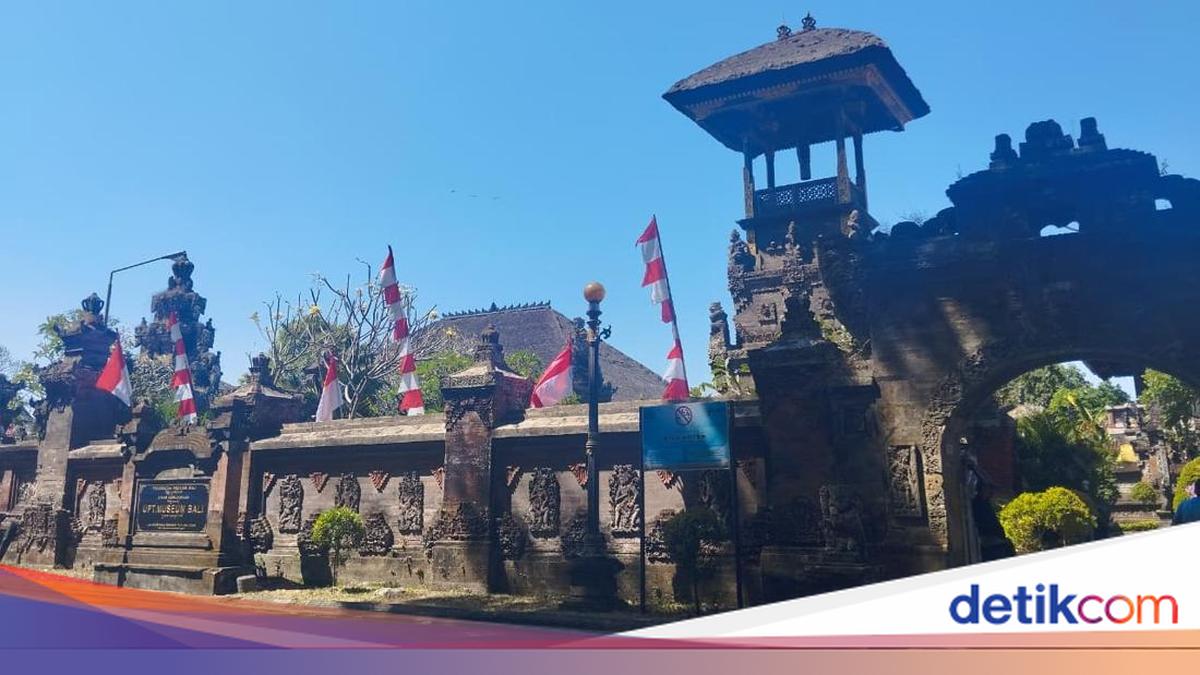
detikBali visited Museum Bali on Tuesday. The museum, managed by the Bali Culture Office, is located at Jalan Mayor Wisnu, Number 1, Denpasar.
The construction of Museum Bali was initiated by the Assistant Resident of South Bali, W. F. J. Kroon, in July 1910. Today, the museum holds 16,891 items across various classifications, including 321 philological objects (ancient manuscripts), 7,801 numismatic items (coins, paper money, tokens, and medals), and 2,765 fine art objects.
Admission to Museum Bali is Rp 30,000 for domestic tourists. Meanwhile, tickets are priced at Rp 100,000 for foreign tourists, Rp 10,000 for university students, and Rp 5,000 for school students. The museum is open from 8:00 AM to 4:30 PM Central Indonesian Time and is closed on national holidays.
A sarcophagus is also exhibited on the ground floor of the East Building. However, the stone coffin and the Homo sapiens skeleton on display are replicas. “The originals are in Gilimanuk, at the Gilimanuk Prehistoric Man Museum,” Tania explained.
The museum management displays prehistoric collections, such as those from the hunting and gathering, farming, and perundagian eras, on the ground floor of the East Building. Visitors can also learn about ancient, middle, and modern Balinese history in this room.
Meanwhile, the second floor of the East Building showcases collections related to the pinnacles of Balinese culture in religious ritual aspects, such as Dewa Yadnya, Resi Yadnya, Pitra Yadnya, Manusia Yadnya, and Bhuta Yadnya. Objects on display include a priest’s bell, a chicken cage for a three-month ceremony, and a cremation tower.
Another guide, Filipus Salim Santoso, explained that the second floor of the East Building also features agricultural technology and colonial-era relics. Various ancient farming tools on display include a penampad, used for cutting grass and levelling soil, and a lampir, used for ploughing rice fields. “The lampir was placed on the back of a cow or buffalo to plough the fields, but now farmers use tractors,” said the Udayana University archaeology student.
Colonial-era relics on display include binoculars, bullets, hats, rifles, telephones, and radios. Some of the museum’s exhibited collections are placed in glass cases with spotlights shining on them. However, some historical items are displayed openly so visitors can observe them more closely.
Visitors can learn about the history of currency and money that once circulated on the Island of the Gods in the Buleleng Building. The collections exhibited there include shells and jewellery that once functioned as a medium of exchange; gold, silver, and bronze; and kepeng coins used for ritual purposes, such as pis tapis, pis jan, and pis penyeneng.
The Karangasem Building displays objects related to Cili (Dewi Sri), who is believed to be a symbol of fertility. Meanwhile, the final exhibition room, the Tabanan Building, showcases various Balinese kris.
The museum management has also placed QR codes that visitors can scan with their mobile phones to access information about the history of the displayed objects. detikBali scanned a QR code related to the prehistoric era and Cili, and information was promptly provided in a video format.
The Head of the Regional Technical Implementation Unit for Museum Bali, Ida Ayu Made Sutariani, explained that the museum holds 16,891 collection items. These historical objects come from various sources, including a Dutch auction house, the estate of painter Walter Spies, and archaeological excavations.
For example, Museum Bali acquired several kris and a small stupa from a Dutch auction house. “Unfortunately, we do not know the history of how the Dutch auction house came to possess these kris,” she explained.
Dayu, as Sutariani is known, explained that not all of the collection items can be displayed. Museum Bali displays these historical objects according to a theme that changes every two years. Items that are not displayed are conserved to prevent damage.
According to Dayu, Museum Bali is a place to learn about the history of cultural development on the Island of the Gods. This is reflected in the museum’s diverse collections. “Museum Bali is a showcase of Balinese culture,” she added.
Source: jawawa.id (https://jawawa.id/newsitem/museum-bali-a-showcase-of-the-island-of-the-gods-culture-1786269049)
Originally published by detikBali (https://www.detik.com/bali/wisata/d-8610972/museum-bali-etalase-kebudayaan-pulau-dewata), translated from Indonesian