
Museum as a Node of Diplomacy
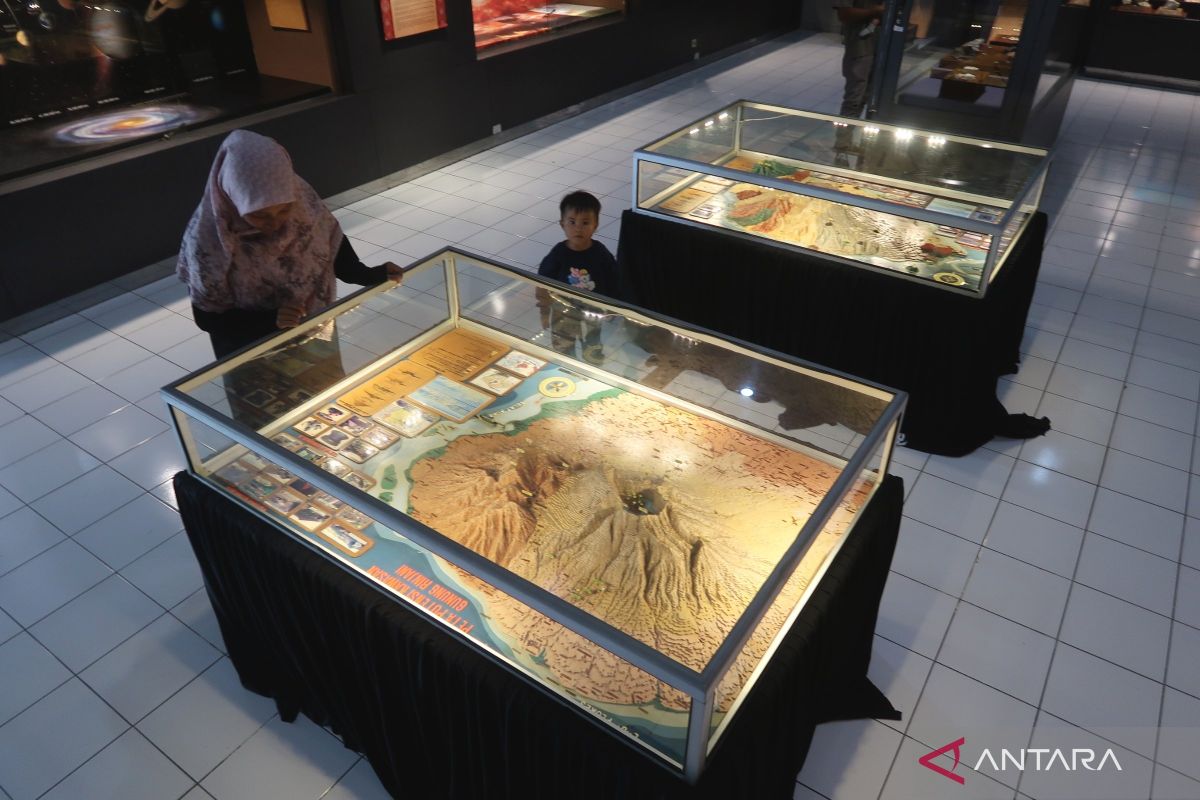
The West Nusa Tenggara (NTB) State Museum is redefining its role, moving beyond being a dusty repository of ancient artefacts to become a vibrant space for soft diplomacy. A diorama of Mount Samalas and Mount Tambora, standing approximately 90 cm tall and surrounded by yellow decorative lights, serves not merely as an exhibit in the dim, cool gallery but as a portal to the past. Visitors are invited to understand how a new civilisation emerged from uninhabited, devastated land following catastrophic eruptions, evolving into a densely populated area rich with religious, cultural, social, and economic activity, alongside complex political dynamics.
A book published by the NTB Museum, titled ‘Gunung dan Segara: Jejak Samalas dan Tambora dalam Peradaban’ (Mountain and Sea: Traces of Samalas and Tambora in Civilisation), explains that these eruptions were not just geological events but moments of transformation that reshaped nature, forced human adaptation, and allowed culture to find new forms. The eruption of Mount Samalas in 1257 and Mount Tambora in 1815, which impacted the global climate, have left a profound mark on the history and culture of humanity worldwide. Foreign tourists, particularly from Europe, often ask numerous questions about how these two volcanoes, located only about 150 kilometres apart, caused such a massive impact on the planet, altering the course of history, changing ways of life, and shaping collective memory.
Through Samalas and Tambora, West Nusa Tenggara possesses a strong connection with countries across the globe. Geological and archaeological evidence of the two eruptions can be found in ancient manuscripts and scientific journals, representing a valuable asset for regional development by highlighting historical and cultural narratives. The museum’s function has evolved into a bridge for culture, strengthening identity and building understanding between communities and nations. In the modern era, it has become a living space connecting past stories, present experiences, and a lens for viewing the future. Visitors do not merely observe artefacts neatly arranged in dark-wood-finished glass vitrines, but also grasp the stories and philosophies behind the journeys that shaped the community’s character. The museum plays a strategic role in supporting the creative economy, delivering quality tourism, strengthening international networks, and encouraging academic collaboration. Its community-close programmes, ‘Kotaku Museumku’ and ‘Kampungku Museumku’, represent a brilliant effort to turn the museum into a stage for soft diplomacy, introducing the identity of West Nusa Tenggara’s people to the world.