
Muryati’s Efforts to Preserve Bantul’s Traditional Rolled Sagon Snack
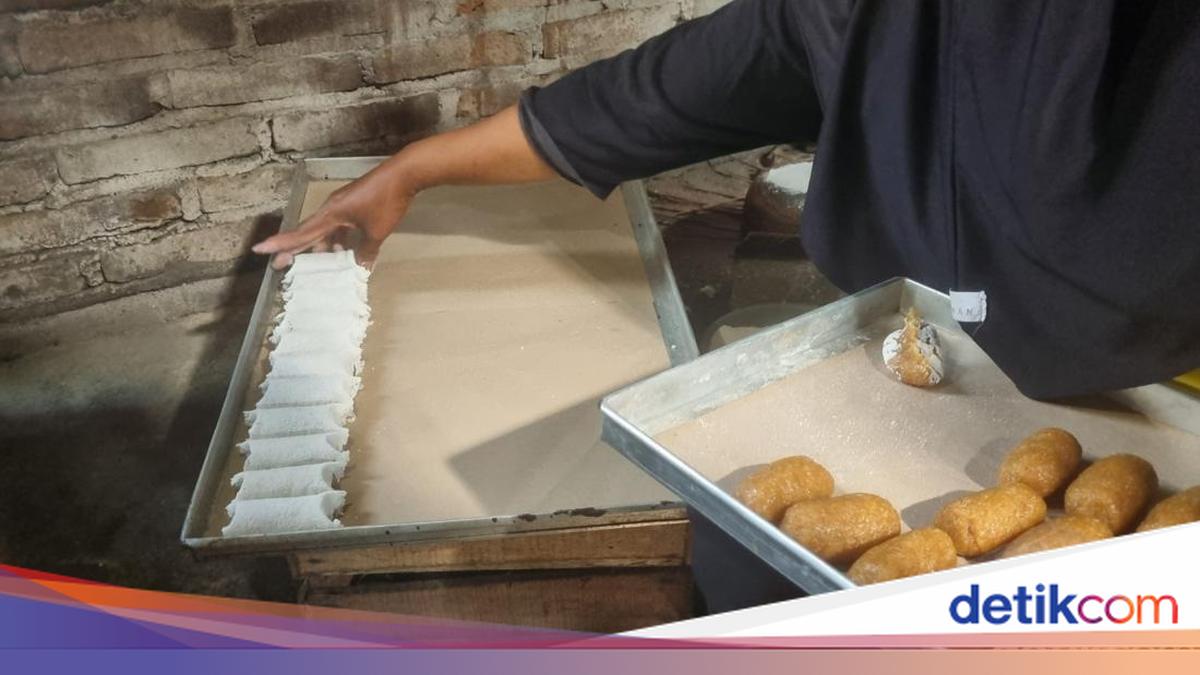
A woman from Wonorejo 2, Gadingsari, Sanden, Bantul, has described the ups and downs of keeping production of the old-fashioned rolled sagon snack going. The business, which shut down during the COVID-19 pandemic, is now being revived by her.
Muryati, 54, said she initially helped her parents, who began producing rolled sagon in 1991.
At the time, her parents sold the sagon themselves after making it, selling only at a market near their home. “Then, in 1997, someone started selling it for us and the market grew. We could even get through 50 kilogrammes of ingredients in a day,” she told reporters at her home in Gadingsari, Sanden, Bantul, on Friday (9 October 2026).
However, the COVID-19 pandemic caused production of rolled sagon to fall sharply. Her parents were also getting older, and eventually decided to stop making it.
“Then COVID-19 came, ingredients became expensive and we stopped production. I only started making it again six months ago because I wanted to continue my parents’ family business,” she said.
Although she has managed to resume the family business, Muryati said she is not yet able to make rolled sagon every day.
This is because people’s purchasing power is limited at present. She usually starts production again only after the stock she has left at shops has sold out.
“I leave it at small shops and other stores, so I have to wait until it sells out before making more. If there are no orders, I make it three times a week, or 12 times a month,” she said.
Muryati declined to disclose her turnover in detail. She said, however, that the proceeds from making and selling rolled sagon were not enough to cover her daily living expenses.
“Each batch uses five to six kilogrammes of ingredients, and one kilogramme makes 50 pieces of rolled sagon. So one batch makes 250 to 300 pieces, which sell for Rp2,000 each,” she said.
She therefore still works in the rice fields to make ends meet.
“Thankfully, the income is enough, because alongside making sagon I also work in the fields,” Muryati added.
Even so, Muryati is determined to continue making rolled sagon, given that it is a family business passed down through generations and an old-fashioned snack.
“The challenge is that not many people know about rolled sagon, but that’s all right. I’ll keep continuing my parents’ business,” she said.
Muryati said the production process is fairly simple, as are the ingredients: grated coconut, glutinous rice flour and palm sugar.
“To make it, the glutinous rice flour is milled. The coarser part is mixed with grated coconut, while the fine flour is used for the white outer layer. The flour and coconut are mixed and steamed, then stir-fried with palm sugar. The mixture is then wrapped in the flour layer, which has been fried,” she said.
Source: jawawa.id (https://jawawa.id/newsitem/muryatis-efforts-to-preserve-bantuls-traditional-rolled-sagon-snack-1791532244)
Originally published by detikJogja (https://www.detik.com/jogja/bisnis/d-8699548/perjuangan-muryati-lestarikan-jajanan-sagon-gulung-khas-bantul), translated from Indonesian