
Muna's Unifying 'Dulang' Tradition Earns MURI World Record with 1,228 Servings
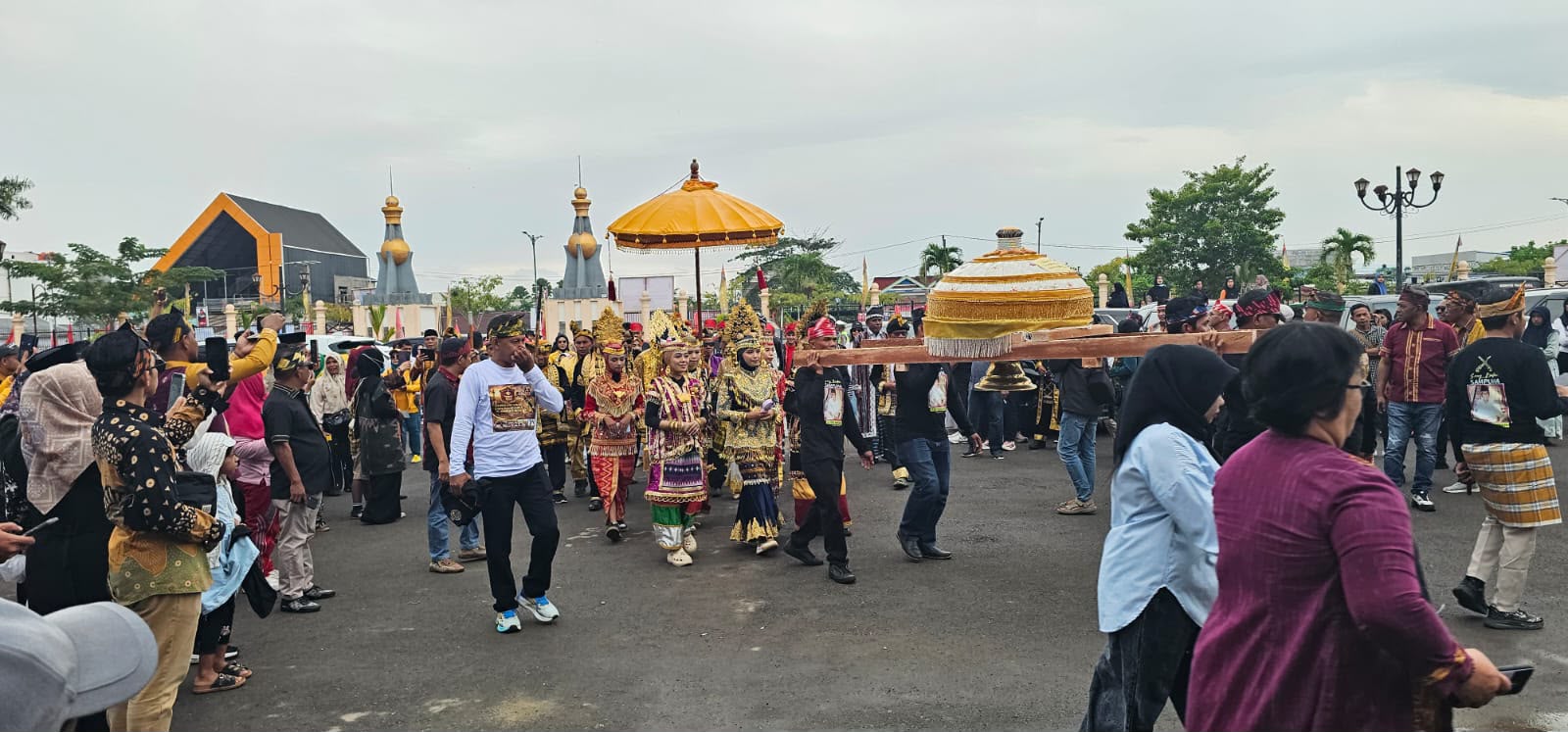
The cultural traditions of the Muna people have once again made history. A total of 1,228 dulang, traditional platters filled with local cuisine, were presented during the Grand Gathering of the Muna Community Family Association (KKMM) of Southeast Sulawesi at the former MTQ site and Religious Monument area in Kendari City on Sunday (19/7), officially earning the culture a World Record from the Indonesian World Records Museum (MURI). This achievement marks a significant milestone in efforts to preserve the Nusantara’s cultural heritage while introducing the ancestral legacy of the Wuna community to the international stage.
La Ode Darwin, Chairman of the Southeast Sulawesi KKMM, expressed his appreciation for the cooperation of the entire Muna community in making this major cultural event a success. He stated that the Grand Gathering was not merely a meeting of the extended Muna family, but a momentum to strengthen unity and demonstrate that local culture can serve as a national identity on a global scale. “Today, Southeast Sulawesi looks to the world through culture. The dulang is not just a place to serve food, but a symbol of unity, prayer, mutual cooperation, and respect that lives in every aspect of Muna society,” said La Ode Darwin.
He noted that the success of presenting 1,228 dulang and receiving MURI world record recognition is a source of pride for the entire Muna community, as well as proof that ancestral traditions are still well preserved. According to Darwin, the dulang holds a very important position in every traditional Muna ceremony because it symbolises togetherness. “One dulang is enjoyed together by 10 to 15 people, and can even reach 30 people for a larger size. This philosophy teaches that the Muna people live in a spirit of sharing, mutual respect, and prioritising unity over differences,” he said. He emphasised that the dulang culture is capable of uniting various groups within society regardless of social background or interests. “The dulang is a unifying symbol. Everyone sits together enjoying food from one container as a symbol of brotherhood. This is the value we want to continue passing on to the younger generation,” he added.
The award received by the Southeast Sulawesi KKMM was not merely a national record. A MURI representative present at the location explained that after a thorough verification and counting process, the number of dulang reached 1,228, surpassing the committee’s initial target of 1,200. With this achievement, MURI designated the Muna community’s dulang presentation as a World Record. The award was given for the category of “Haroa Ritual with the Most Food Servings Using Dulang.” According to MURI, the dulang is not just a food container, but a symbol of prayer, hope, respect for guests, and a spirit of togetherness that forms part of the Muna people’s cultural identity.
The KKMM Sultra Grand Gathering carried the theme “Weaving Brotherhood, Preserving Customs in the Noble Spirit of Kawunaha Towards a Golden Indonesia 2045.” The activity was attended by approximately 10,000 participants, comprising extended Muna families from various districts and cities, traditional leaders, academics, government officials, youths, students, and the general public. The Chairman of the Organising Committee, Bariun, stated that the success of the event was the result of mutual cooperation from all elements of society. “This success is not just about the number of dulang, but the success of maintaining the spirit of Muna brotherhood. The values of Kawunaha remain alive and are our collective strength,” he said.
Beyond breaking the MURI World Record, the community was also treated to various Wuna cultural attractions that are now rarely performed. The series of events began with the Kabasano Haroa, a communal prayer ritual as an expression of gratitude and a request for safety. This was followed by performances of various distinctive Muna arts and traditions, including Ewa Wuna, a traditional Muna martial art; Modero, a social dance that strengthens brotherhood; and Kantola, a tradition of exchanging pantun in the Muna language. There was also Kambero, a horse-fighting attraction depicting agility, courage, and sportsmanship; Lariangi, a traditional dance symbolising the elegance of Muna women; and the Linda dance, a traditional dance showcasing the beauty of movement and cohesiveness of the dancers. The performances received an enthusiastic response from the thousands of visitors who packed the former MTQ area in Kendari.
La Ode Darwin hopes that the achievement of the MURI World Record will be a starting point for Muna culture to become more widely recognised internationally. He noted that Muna Island possesses extraordinary cultural wealth and civilisation, including the Liang Kobori prehistoric site, which is known as one of the areas with the oldest cave paintings in the world based on scientific research. According to him, this cultural wealth must become a key asset in developing the community’s tourism and creative economy sectors. “Through this activity, we want the world to know that Muna has an extraordinary cultural heritage. Not only the dulang tradition, but also the arts, customs, and prehistoric sites that are the pride of Indonesia. We hope that Muna culture will become increasingly known globally and be able to drive the progress of tourism on Muna Island and West Muna,” concluded La Ode Darwin.