
Multi-business forestry could boost forest economic value tenfold: Ministry
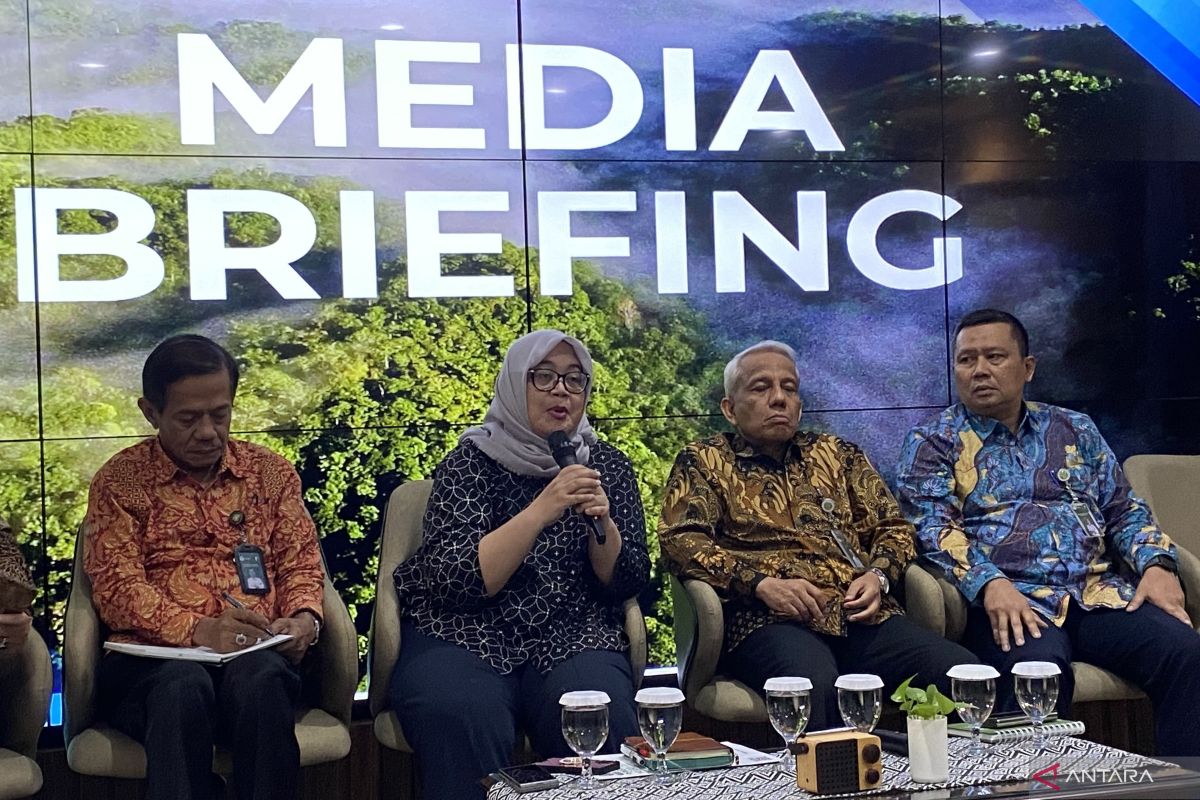
Jakarta (ANTARA) - The Ministry of Forestry is encouraging the transformation of forest area utilisation through a forestry multi-business scheme, which is assessed to have the potential to increase the economic value of forests up to ten times compared to conventional business models that rely solely on timber products.
Laksmi Wijayanti, Director General of Sustainable Forest Management at the Ministry of Forestry, stated during a media briefing in Jakarta on Thursday that the low economic value of forests remains one of the primary challenges in sustainable forest management. This condition often results in forest areas losing competitiveness against other land uses deemed more economically profitable.
“If we continue with our current business model, the value per hectare of the forest remains low. When we look at what the forest contains, it is clearly underpriced. It is natural, then, for people to consider replacing it with other uses,” she said.
Several studies indicate that the direct economic value of forests is still relatively low. A study by the Faculty of Forestry and Environment at IPB University noted the value is approximately Rp4 million per hectare per year, significantly lower than oil palm plantations, which can reach around Rp40 million per hectare per year.
To address this, Laksmi stated that the government is working to improve these conditions through the development of forestry multi-businesses. This allows for the simultaneous utilisation of various forest potentials, ranging from timber and non-timber forest products, agroforestry, and environmental services to nature tourism and carbon trading.
She noted that this scheme could significantly increase the economic value of forest areas while simultaneously maintaining their ecological functions. “We hope that through multi-business models, the value will increase tenfold. We are currently utilising agroforestry multi-business for food reserves. That alone automatically increases the value tenfold,” she added.
Laksmi further noted that this transformation is necessary because the forestry business model, which has traditionally relied on timber, faces significant competitiveness challenges.