
MUI's Notes on the Destruction of Plecostomus Fish Buried Alive
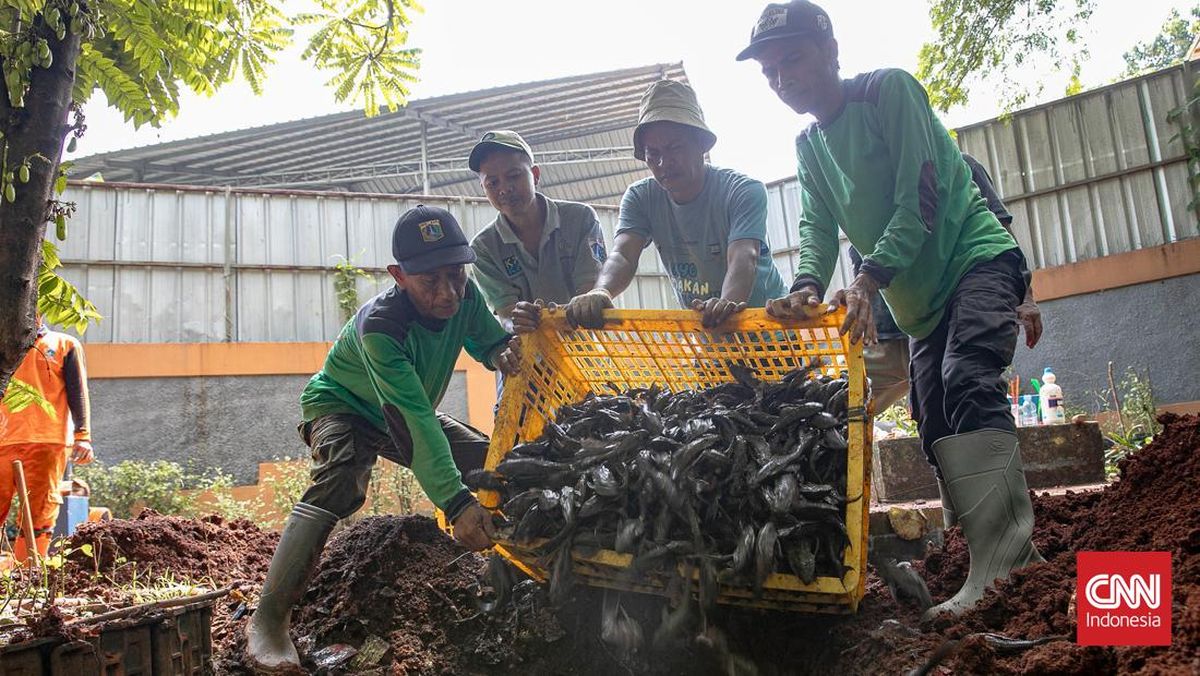
The Indonesian Ulema Council (MUI) has provided notes regarding the destruction of plecostomus fish (ikan sapu-sapu) by burying them en masse while still alive.
Secretary of the MUI Fatwa Commission, KH Miftahul Huda, reminded that this approach contravenes two principles: rahmatan lil ’alamin and animal welfare.
Miftah acknowledged that the DKI Provincial Government’s policy in controlling plecostomus fish is beneficial or serves a maslahah, as it falls under hifẓ al-bī’ah (environmental protection). This is because the fish damage river ecosystems and threaten local fish species.
“It aligns with maqāṣid syariah, specifically in the category of modern ecological ḍharūriyyāt,” said Kiai Miftah during a conversation with MUI Digital in Jakarta on Saturday (18/4).
Miftah explained that this environmental policy also falls under hifẓ an-nasl (preservation of living beings), as it can maintain biodiversity and prevent the extinction of local species. Thus, the balance of generations of living beings can be preserved.
However, from a Sharia perspective, it presents a problem. Killing animals is permitted if there is a maslahah, but the method of burying plecostomus fish alive involves an element of torture because it prolongs death.
Miftah stated that this is not in line with the principle of ihsan (kindness) as per the Prophet’s hadith.
The next issue, he said, is from the perspective of animal welfare ethics. Burying live fish is considered inhumane. One of the general principles of animal welfare is to minimise suffering.
“That method is considered to cause unnecessary suffering,” he said.
Regarding this, Jakarta Governor Pramono Anung stated that he will seek input from experts who understand Sharia regarding the procedures for burying animals.
“Regarding the earlier question, there are suggestions and criticism from MUI, later I will ask the experts to adjust the procedures,” he said.
Pramono noted that the plecostomus fish capture policy is being implemented because their population in Jakarta’s waters has become dominant. According to him, the presence of these fish has disrupted the ecosystem balance.
“Indeed, plecostomus fish in Jakarta’s aquatic biota are already more than 60 percent. Even KKP reported more than 70 percent, but I stated more than 60 percent,” he said.
Previously, the DKI Jakarta Provincial Government officially began simultaneous plecostomus fish capture operations in five administrative city areas on Friday (17/4).
In the activity, 6.98 tonnes of plecostomus fish were successfully netted in the five areas during the capture operation from 07:30 to 11:00 WIB.