
MUI Weighs In on Controversy Over Non-Muslim Hajj Officials
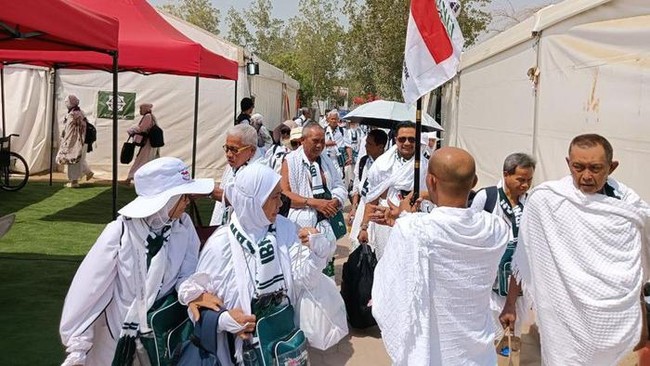
Jakarta, CNBC Indonesia – Indonesian Ulema Council (MUI) Deputy Chairman KH M Cholil Nafis has responded to a proposal to involve people of different faiths in organising the Hajj pilgrimage. He said participation by members of other religions was possible, but should be limited according to their duties and functions.
Cholil stressed that officials directly involved in conducting and guiding the Hajj must be Muslim. Non-Muslims, meanwhile, could be involved in technical work or field duties not directly connected with the rites of the pilgrimage.
His comments came in response to a proposal from Deputy Minister for Hajj and Umrah Dahnil Anzar Simanjuntak, who has encouraged people from different religious backgrounds to take part in services for Hajj pilgrims.
“Field staff are permissible, but not officials responsible for religious rites. Those carrying out the rites of the Hajj must not be non-Muslim,” Cholil Nafis said, according to his official website, as quoted by CNBC Indonesia on 3 November 2026.
He said that while Muslim workers were available, opportunities should preferably be given to them.
He noted that the Hajj is a religious ritual governed by specific provisions in Islamic law. For that reason, tolerance and fraternity between religious communities must still respect the boundaries set by those provisions.
“As long as Muslims are available, it is better to choose Muslims, because the Hajj is a religious rite specifically for Muslims. Tolerance and fraternity have their place and their limits,” he said.
Proposal to involve people of different faiths
Earlier, Deputy Minister for Hajj and Umrah Dahnil Anzar Simanjuntak put forward the idea of involving people from different religious communities in supporting services for Hajj pilgrims during a visit to Manado, North Sulawesi, on Friday, 30 October 2026.
Dahnil said members of Christian, Catholic, Buddhist, Hindu and other religious communities could contribute to the organisation of the Hajj. He said this could be a practical expression of tolerance, diversity and Indonesia’s spirit of mutual cooperation.
He argued that services for Hajj pilgrims were not solely the responsibility of Muslims, and that people from all parts of society could take part in a spirit of humanity and social concern.
Dahnil also cited North Sulawesi as a region with a highly diverse population. He said he had asked relevant officials to encourage other religious groups to help support Hajj services in the province.
In his view, diversity should not prevent people from working together and contributing to the common good.
Through this proposal, the Ministry of Hajj and Umrah hopes that Hajj arrangements will not only prioritise the quality of services for pilgrims, but also reflect unity, tolerance and mutual cooperation as part of Indonesia’s national character.
Source: jawawa.id (https://jawawa.id/newsitem/mui-weighs-in-on-controversy-over-non-muslim-hajj-officials-1793692314)
Originally published by CNBC Indonesia (https://www.cnbcindonesia.com/lifestyle/20261103132229-33-781876/mui-buka-suara-soal-kontroversi-petugas-haji-non-muslim), translated from Indonesian