
MUI Warns Further Delay to 2026 Mandatory Halal Policy Could Trigger Public Trust Crisis
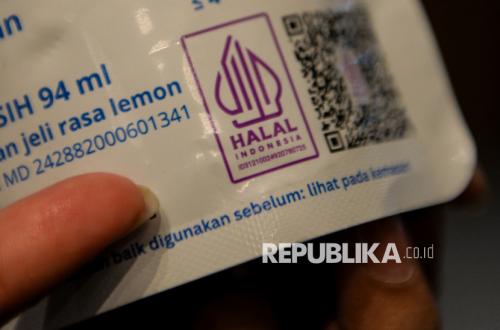
JAKARTA — The Indonesian Ulema Council (MUI) has warned the government against postponing the mandatory halal policy, which is due to take effect on 18 October 2026. Repeated delays could trigger a crisis of public confidence in the government’s commitment to protecting people’s rights, particularly those of Muslim consumers.
MUI Deputy Secretary-General for Fatwas, KH Aminudin Yakub, said a further delay to the policy scheduled for 18 October 2026 could lead to widespread public distrust of the government’s commitment to guaranteeing protection for people’s rights. He said this risk needed to be addressed to prevent disruption to the integrity of the government’s social security programmes.
Aminudin said sectoral policies seen as slow and unresponsive could damage the government’s reputation more broadly. Coordination between ministries and agencies therefore needed to be improved immediately.
“Regarding the impact, this could give rise to public distrust, and of course we must prevent that,” Aminudin said, as quoted by Republika from the MUI Digital website on Sunday (18 October 2026).
He said public distrust was a real threat that could undermine various national strategic agendas. The government was expected to act quickly to address existing bureaucratic obstacles.
He cautioned that weak coordination or a lack of readiness at sectoral level should not damage the reputation and efforts of President Prabowo Subianto, who is building a social security system and promoting more equitable development. Technical oversights should not be allowed to harm major national agendas.
Aminudin stressed that institutional unreadiness and internal bureaucratic dynamics must not compromise the state’s fundamental role in protecting the public. The state must provide certainty and comprehensive protection.
“Sectoral policies like this must not affect the government’s reputation as a whole,” he said.
Aminudin added that the state’s role in guaranteeing religious protection for all Indonesians was a sacred mandate that must not be tarnished by policies that appear to disregard public concerns. Protecting religious rights was a primary constitutional obligation.
He said halal product assurance was not merely a technical matter or an administrative requirement for business permits, but a fundamental form of religious protection enshrined in the Constitution. This is set out in Law No. 33 of 2014 on Halal Product Assurance (JPH), which requires all products distributed in Indonesia to be halal-certified.
Under the regulatory timeline, an initial five-year socialisation period should have meant the halal certification requirement came fully into force in 2019. However, citing institutional restructuring, the target was successively deferred to 2021, 2024 and 2026, and has now reportedly been pushed back again to 2028.
“This delay could be seen as postponing the fulfilment of the public’s rights, which I think needs to be criticised,” Aminudin said.
He urged the government to end the cycle of repeated delays so that the public would not conclude that it was neglecting the protection of Muslim consumers’ rights. Decisive government action was needed to ensure legal certainty.
Aminudin also called on the relevant ministries and agencies to quickly reduce and resolve the technical obstacles that had been cited to justify postponements. The certification process should be simplified without lowering halal standards.
He added that the halal product assurance system needed to be accelerated and improved, without further delays in fulfilling the public’s constitutional rights. Protecting Muslim consumers’ rights should be a top priority.
Aminudin said he hoped cross-sector coordination would be strengthened promptly to preserve legal certainty, consumer protection and public confidence in the integrity of government policy. Cooperation between stakeholders was key to implementing mandatory halal certification successfully.
Source: jawawa.id (https://jawawa.id/newsitem/mui-warns-further-delay-to-2026-mandatory-halal-policy-could-trigger-public-trust-crisis-1792309833)
Originally published by Republika (https://halalhub.republika.co.id/berita/tn3cbn423/mui-ingatkan-penundaan-wajib-halal-2026-picu-krisis-kepercayaan-publik), translated from Indonesian