
MUI Warns BPJPH Not to Prioritise Speed Over Accuracy in Halal Certification
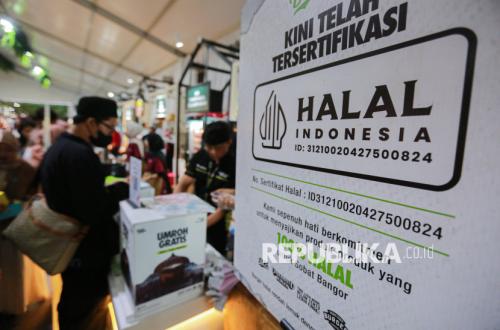
The Indonesian Ulema Council (MUI) has reminded the Halal Product Assurance Agency (BPJPH) not to merely chase time efficiency or speed in the issuance of halal certificates. The MUI emphasised that the quality of inspection, adherence to standards, and Sharia compliance must remain the top priority to guarantee the rights of Muslim consumers in Indonesia.
The Vice Chairman of the MUI, KH Muhammad Cholil Nafis, underscored the importance of balancing bureaucratic responsiveness with the accuracy of determining a product’s halal status. He also highlighted the dynamics of halal certification, particularly the ‘self-declare’ pathway (self-declaration by business actors), which currently accounts for up to 90 per cent of the halal certification process for Micro, Small, and Medium Enterprises (MSMEs).
“One must distinguish between speed and accuracy. We must know which self-declarations are accountable and which require the regular process. More comprehensive research is certainly needed. We must not allow speed to come at the expense of accuracy,” said Kiai Cholting, as quoted from the MUI Digital website on Tuesday (29/09/2026).
The caretaker of Pondok Pesantren Cendekia Amanah in Depok, West Java, added that leniency or weaknesses in verification in the name of efficiency risks allowing products through that have not been comprehensively tested for halal compliance. According to him, the standards of the Halal Product Assurance System (SJPH) in Indonesia carry a significant moral and spiritual responsibility, not only nationally but also internationally, given that Indonesian halal references often differ from those of other countries.
“This concerns products within the MSME sector. Therefore, halal standards and halal compliance must be guaranteed. Because when we talk about halal, there are values we are fighting for and we are guaranteeing the fundamental rights of the Muslim community, although this does not exclude non-Muslims,” he stated.
Beyond critiquing the technical aspects of halal determination, Kiai Cholil emphasised the need for consistent public education to change the perceptions of the public and business actors regarding halal certification. The CEO of Amanah Zakat urged that halal certification should no longer be viewed as a bureaucratic hurdle or a burdensome cost, but rather as a value-add that enhances the class and credibility of products in the market.
“Halal certification is not a burden, but a value-add. It adds value to what is being certified. If it is perceived as a burden, people will be afraid because it will become expensive. It is important to campaign that halal is elite, halal is good, and halal is a lifestyle. Halal does not make things difficult; rather, it provides comfort,” he explained.
To ensure the success of the October 2026 Halal Obligation agenda, the MUI plans to collaborate with various parties, including Islamic organisations, academics, preachers, as well as influencers and public figures such as Willy Salim and Ustaz Deri Sulaiman. This collaborative step is intended to ensure that socialisation regarding the importance of halal compliance and the value-add of halal certification can reach the younger generation and a wider market segment massively.
The MUI hopes that the synergy between the BPJPH as the regulator and the MUI as the holder of fatwa authority can work in tandem without sacrificing accountability. Thus, the implementation of the October 2026 Halal Obligation can produce a national halal ecosystem that is not only fast and responsive but also scientifically and Sharia-verified for accuracy.